Crucial Protein Discovered to be Beneficial or Detrimental for Cancer Patients depending on Cancer Type
Professor Katrin Mani's team found that the protein Glypican-4 tracks with worse outcomes in glioblastoma but better survival in lung adenocarcinoma, and switching it off had opposite effects.


Scientists from Lund University, led by Professor Katrin Mani, have uncovered a complex and sometimes contradictory role for a specific protein involved in cancer growth. Their study, published in the International Journal of Molecular Sciences, explores how this protein, known as Glypican-4, influences cancer development differently depending on the type of cancer. The research suggests that Glypican-4 could serve as both a marker for predicting outcomes and a potential target for new cancer treatments.
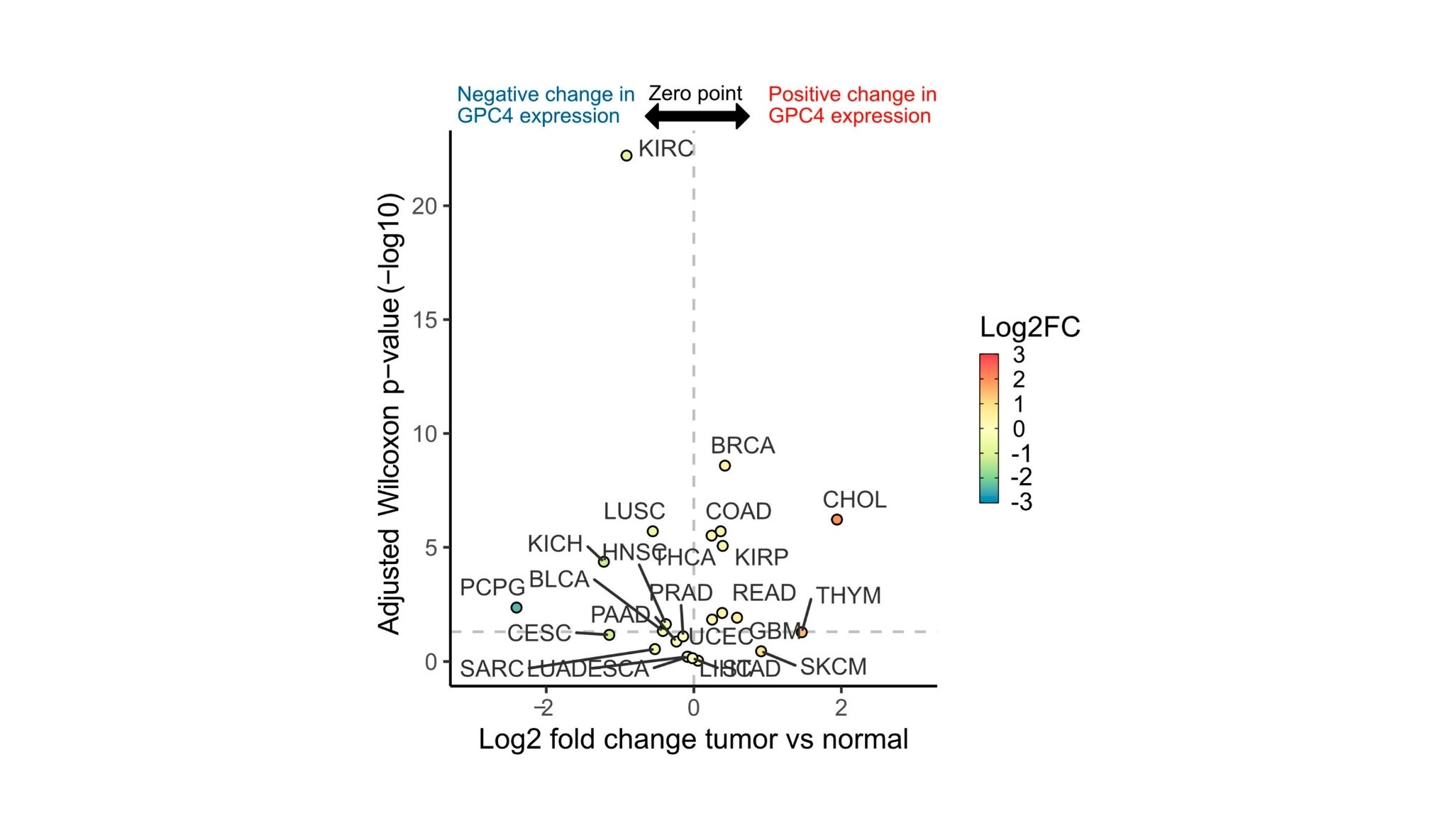
Glypican-4 is part of a group of proteins that play a crucial role in how cells communicate with each other, which is important in the development of cancer. The research team analyzed how this protein behaves in various types of cancer by examining data from a large cancer database called The Cancer Genome Atlas. Their findings showed that the activity level of this protein can change significantly depending on the type of cancer, with both high and low levels being linked to cancer progression in different situations.
For example, the study revealed that Glypican-4 is more active in glioblastoma, a type of brain cancer, and in liver cholangiocarcinoma, a cancer of the bile ducts. In these cases, higher activity of the protein is associated with worse outcomes for patients. In contrast, in non-small cell lung adenocarcinoma, a common type of lung cancer, higher levels of Glypican-4 are linked to better survival rates. The research team, with significant contributions from Victor Chérouvrier Hansson, employed advanced gene-editing technology to deactivate the protein in cells from both glioblastoma and lung adenocarcinoma. Their findings showed that turning off Glypican-4 slowed the growth of glioblastoma cells, while surprisingly accelerating the growth of lung adenocarcinoma cells.
Professor Mani emphasized the significance of these findings, noting, “Our findings reveal an association between elevated levels of Glypican-4 and poor prognosis in glioblastoma, while indicating a favorable outcome in lung carcinoma patients.” This highlights the dual role of Glypican-4 in cancer, where in some cases, it promotes cancer growth, while in others, it appears to suppress it.
To gain a deeper understanding of these effects, the researchers looked at how Glypican-4 affects the activity of various genes that play a role in cancer. In glioblastoma, the protein appears to boost the activity of genes that help cancer cells grow and survive, including those involved in key signaling pathways that drive cancer progression. However, in lung adenocarcinoma, Glypican-4 seems to have the opposite effect, reducing the activity of these same pathways, which aligns with the better outcomes observed in patients with higher levels of the protein.
In the article it is stated that “A survival analysis using TCGA cancer patient data reveals divergent effects of Glypican-4 expression across various cancer types.” This indicates that the protein’s role is highly dependent on the type of cancer, and its impact can vary widely.
The researchers believe that the different roles Glypican-4 plays in various cancers could be related to how it interacts with the tumor’s environment, which can differ greatly between types of cancer. Professor Mani noted that while the diverse effects of this protein make it a promising marker for cancer, they also highlight the need for treatment strategies that are tailored to each specific type of cancer.
The study’s findings pave the way for future research aimed at developing treatments that target Glypican-4 in a way that is specific to the type of cancer being treated. By understanding why Glypican-4 behaves differently in different cancers, scientists could develop more effective and personalized treatment strategies for patients.
About the researchers

Katrin Mani
Katrin Mani is a renowned professor at Lund University, where she earned both her MD and PhD degrees. Her research is centered on the role of proteoglycans in health and disease, with a particular focus on cancer and neurodegenerative disorders. Prof.… Mani has made substantial contributions to understanding how proteoglycans influence the onset, progression, and potential regression of these conditions. Her work has been featured in leading scientific journals, reflecting her commitment to advancing biomedical research and improving therapeutic strategies.

Victor Chérouvrier Hansson
Victor Chérouvrier Hansson is a medical student and PhD candidate at the Department of Experimental Science, Glycobiology Unit, Lund University. His research focuses on exploring the role of glypicans in cancer. Victor is working under supervision of Prof. Katrin Mani.
Journal reference
Chérouvrier Hansson, V., Cheng, F., Georgolopoulos, G., & Mani, K. (2024). “Dichotomous Effects of Glypican-4 on Cancer Progression and Its Crosstalk with Oncogenes.” International Journal of Molecular Sciences, 25(3945). DOI: https://doi.org/10.3390/ijms25073945