Enhanced Bone Regeneration Using Plasma-Treated Materials and Stem Cells
Dr. Maja Miletić's team found that a bone-graft material pretreated with cold plasma and seeded with periodontal ligament stem cells improved bone healing and reduced inflammation in rabbits.


Repairing bone injuries could soon be as simple as combining natural stem cells with enhanced materials. This exciting possibility is becoming a reality thanks to innovative research in bone regeneration. By using advanced techniques to treat materials and harnessing the power of stem cells, scientists are developing new ways to promote faster and more effective healing of bone defects. This groundbreaking approach could revolutionize treatments for patients with challenging bone injuries, offering new hope for improved recovery and better outcomes.
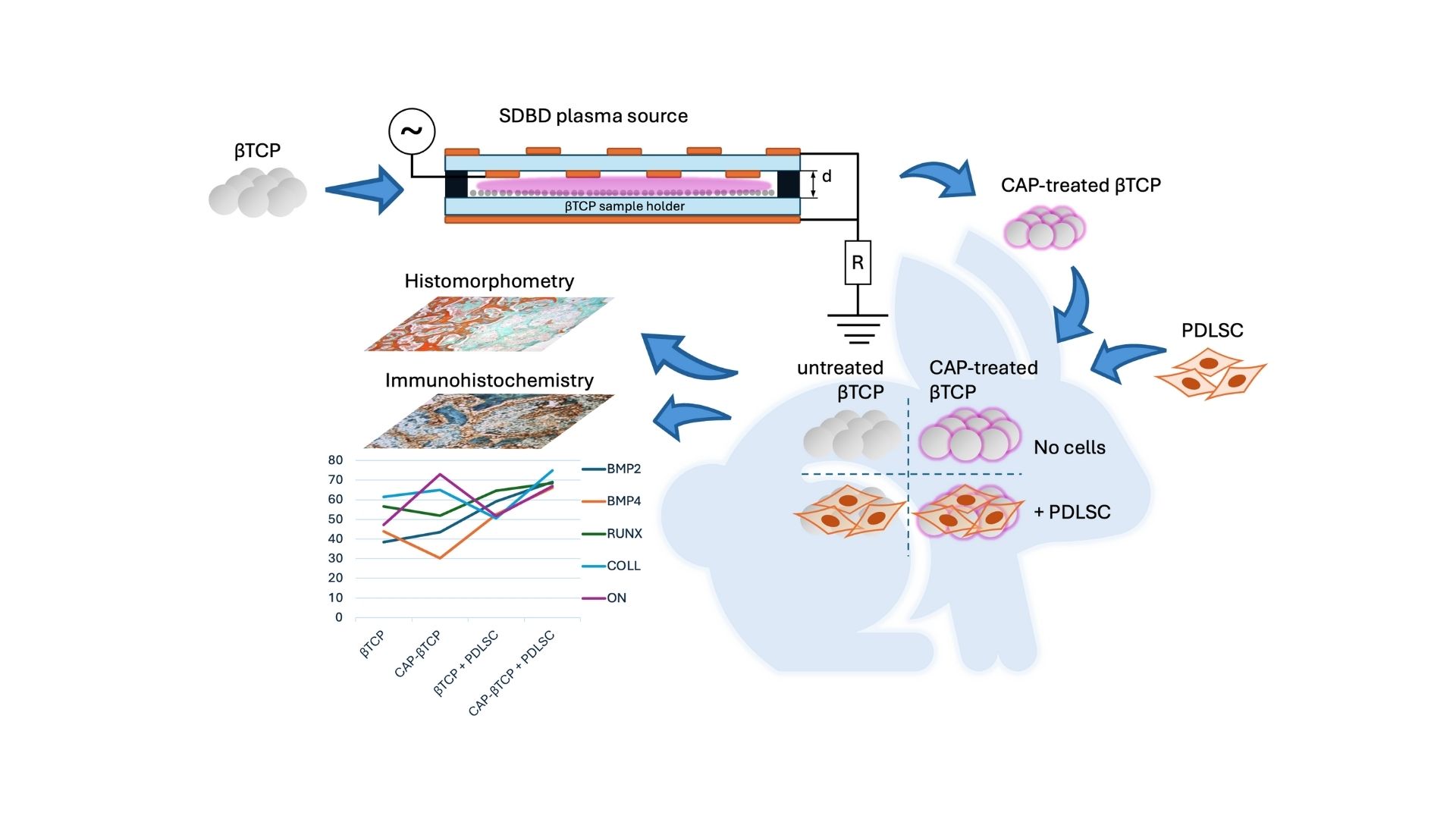
Researchers Dr. Maja Miletić, Dr. Slavko Mojsilović, and their colleagues from the University of Belgrade have recently demonstrated a significant advancement in bone regeneration using periodontal ligament stem cells (PDLSCs) combined with cold atmospheric plasma (CAP)-pretreated beta-tricalcium phosphate (β-TCP). Their study, published in the journal Applied Sciences, highlights the enhanced osteogenic potential and reduced inflammation associated with this innovative treatment method.
The researchers explored the regenerative capacity of β-TCP when pretreated with CAP and seeded with PDLSCs. The in vivo study utilized a rabbit calvarial critical-size defect model to assess bone healing over two and four weeks. Histological and histomorphometric analyses revealed a substantial improvement in bone regeneration and a reduction in inflammatory response in the defects treated with CAP-pretreated β-TCP combined with PDLSCs compared to β-TCP alone.
Dr. Miletic explained, “Our results showed that the combination of CAP-treated β-TCP and PDLSCs significantly enhanced bone regeneration and reduced inflammation, indicating a promising therapeutic approach for osteoregeneration.”
The study identified significant increases in bone morphogenic proteins (BMP-2 and BMP-4), runt-related transcription factor 2 (Runx-2), collagen-1, and osteonectin, which are critical markers of bone healing. The expression of these markers was significantly higher in the group treated with CAP-pretreated β-TCP and PDLSCs, demonstrating an accelerated initial phase of bone formation.
Dr. Mojsilović emphasized the importance of surface modifications in enhancing the regenerative potential of biomaterials. He noted, “The CAP treatment alters the surface chemistry of β-TCP, improving its interaction with stem cells and the host tissue, which is crucial for successful bone regeneration.”
This study opens new avenues for developing advanced bone tissue engineering strategies that combine stem cell therapy with CAP technology. The promising results suggest that this combined approach could be an effective and relatively simple method to treat bone defects, potentially improving outcomes for patients with challenging bone lesions.
In conclusion, the innovative use of CAP-pretreated β-TCP and PDLSCs by Dr. Miletić, Dr. Mojsilović, and their team marks a significant step forward in bone regeneration research. The findings provide a foundation for future studies to explore the broader applications of this combined approach in regenerative medicine. This breakthrough not only offers a promising therapeutic strategy for patients with complex bone injuries but also opens new pathways for enhancing the effectiveness of existing treatments. As research progresses, this combined technique could potentially lead to more accessible and efficient bone repair solutions, ultimately improving patient outcomes and quality of life. This work underscores the importance of interdisciplinary collaboration in advancing medical science and developing innovative solutions to long-standing health challenges.
About the researchers

Maja Miletić
Maja Miletić, associate professor at the University of Belgrade, School of Dental Medicine, is a doctor of dental medicine and has an MSc in dentistry, and a PhD in medical sciences.… She is currently the head of the Pathophysiology Department and actively participates in the PhD academic studies, the Basic and Clinical Research in Dentistry study programme, where she supervises three courses. Until now she has been a mentor for several PhD theses at the School of Dental Medicine, University of Belgrade. Her current research focus is the influence of an inflammatory microenvironment on the regenerative properties of mesenchymal stromal cells, the pathogenesis of periapical processes and applications of non-thermal atmospheric plasma in biomedicine. She has participated in three national and two international research projects: “Getting controls under control: the selection and analysis of different oral tissues as appropriate counterpart of apical periodontitis lesions” (2019-) and “Assessment of genetic factors in the development of apical periodontitis – a multicentre study” (2023-) funded by the European Society of Endodontology. She has also actively participated as a member of the management committee in the multidisciplinary COST Action, Therapeutical applications of Cold Plasmas (PlasTHER) - CA20114. To date, she has published 22 papers in SCI-indexed journals. The number of citations according to the Scopus database is 523, and the Hirsch index is 14. She is a member of several societies, and one of the founders of the Serbian Society for Stem Cell Research.

Slavko Mojsilović
Slavko Mojsilović, senior research associate, is a medical doctor and specialist in immunology with a PhD in medical sciences. He is currently employed at the University of Belgrade, Institute for Medical Research, in Group for Hematology and Stem Cells.… His research focuses primarily on the study of the effects of the inflammatory and tumor microenvironment on the immunomodulatory and regenerative properties of mesenchymal stromal cells and hematopoietic cells. His areas of interest include the study of stem cells in the context of inflammation, hematopoiesis, regenerative medicine, and oncology. To date, he has participated in numerous research and technological development projects funded by the Ministry of Science and Technological Development of the Republic of Serbia, as well as several international research projects and collaborations, including COST actions, bilateral projects, and a 6th Framework Programme for Research and Technological Development of European Union (FP6) project. He has authored 81 publications, cited 1158 times‚ with h-index of 18. He reviewed numerous manuscripts for journals and several project proposals, guest edited two editions of Frontiers in Cell and Developmental Biology, and mentored one master and one doctoral thesis. He has been acting as a Secretary of the Scientific Committee of the Institute of Medical Research for the past six years, and he is currently a Board Member of the Immunological Society of Serbia.

Dr. Nevena Puač
Dr. Nevena Puač is a principal research fellow at the Institute of Physics Belgrade working in the low temperature plasma physics field - low and atmospheric pressure plasmas, expert in numerous diagnostics methods and application of plasmas in biology, medicine and agriculture.… She obtained her PhD at the University of Belgrade with a part of the thesis completed at the Instituto Superior Tecnico, Lisbon, Portugal. She was a PI of national technological project (TD 23016, Ministry of Education, Science and Technological Development, 2008-2010), multidisciplinary project (III41011, Ministry of Education, Science and Technological Development, 2011-2019) and PI at several bilateral projects. Currently she is the Action Chair and coordinator of the multidisciplinary COST Action, PlAgri-CA19110, “Plasma Agriculture for smart and sustainable agriculture” and was a leader of Marie Sklodowska Curie ITN project (Nowelties 812880) at the Institute of Physics. She has published more than 70 articles in international journals and publications. Her h-index is 29 with more than 2400 citations. Most of the highly cited papers that she has published are in the field of applications of plasma in biology and medicine. Until now she has supervised several PhD and Master and Diploma theses. She was co-chair and organizer of several conferences and workshops.

Dr. Nikola Skoro
Dr. Nikola Skoro, principal research fellow, works at the Institute of Physics, University of Belgrade in the Centre for non-equilibrium processes.… Scientific research topics belong to the field of cold plasma diagnostics (spatially and temporally resolved plasma optical emission spectroscopy and ICCD imaging; power measurements) and applications of plasma in treatments of sensitive surfaces, polymers and textiles in low-pressure plasmas and treatments of biomedical and liquid samples using atmospheric pressure plasmas (decontamination, plasma activated water and medium, treatment of cells). He is currently a principal investigator in a proof-of-concept project and several projects of bilateral cooperation, and a work package leader at multidisciplinary project APPerTAin-BIOM (no. 7739780) financed by the Science Fund of the Republic of Serbia. He was a Marie Curie fellow and participated in several international and national projects as task leader. He has published 27 articles in international journals, his h-index is 14 with more than 350 citations. Most of the highly cited papers that he published belong to the field of plasma applications in biology, medicine and for treatment of liquid targets. He has given more than 15 invited lectures at renowned international conferences.
Journal reference
Maja Miletic, Nevena Puac, Nikola Škoro, Božidar Brković, Miroslav Andrić, Bogomir Bolka Prokić, Vesna Danilović, Sanja Milutinović-Smiljanić, Olivera Mitrović-Ajtić, and Slavko Mojsilović. “Bone Regeneration Potential of Periodontal Ligament Stem Cells in Combination with Cold Atmospheric Plasma-Pretreated Beta-Tricalcium Phosphate: An In Vivo Assessment.” Applied Sciences (2024). DOI: https://doi.org/10.3390/app14010016