Say Goodbye to Water Pollution with This Clever Invention
Professor Milenko Roš's team showed in a pilot plant that ceramic membrane filtration followed by ozone treatment removed microfibers and remaining bacteria from treated wastewater, producing water suitable for reuse.


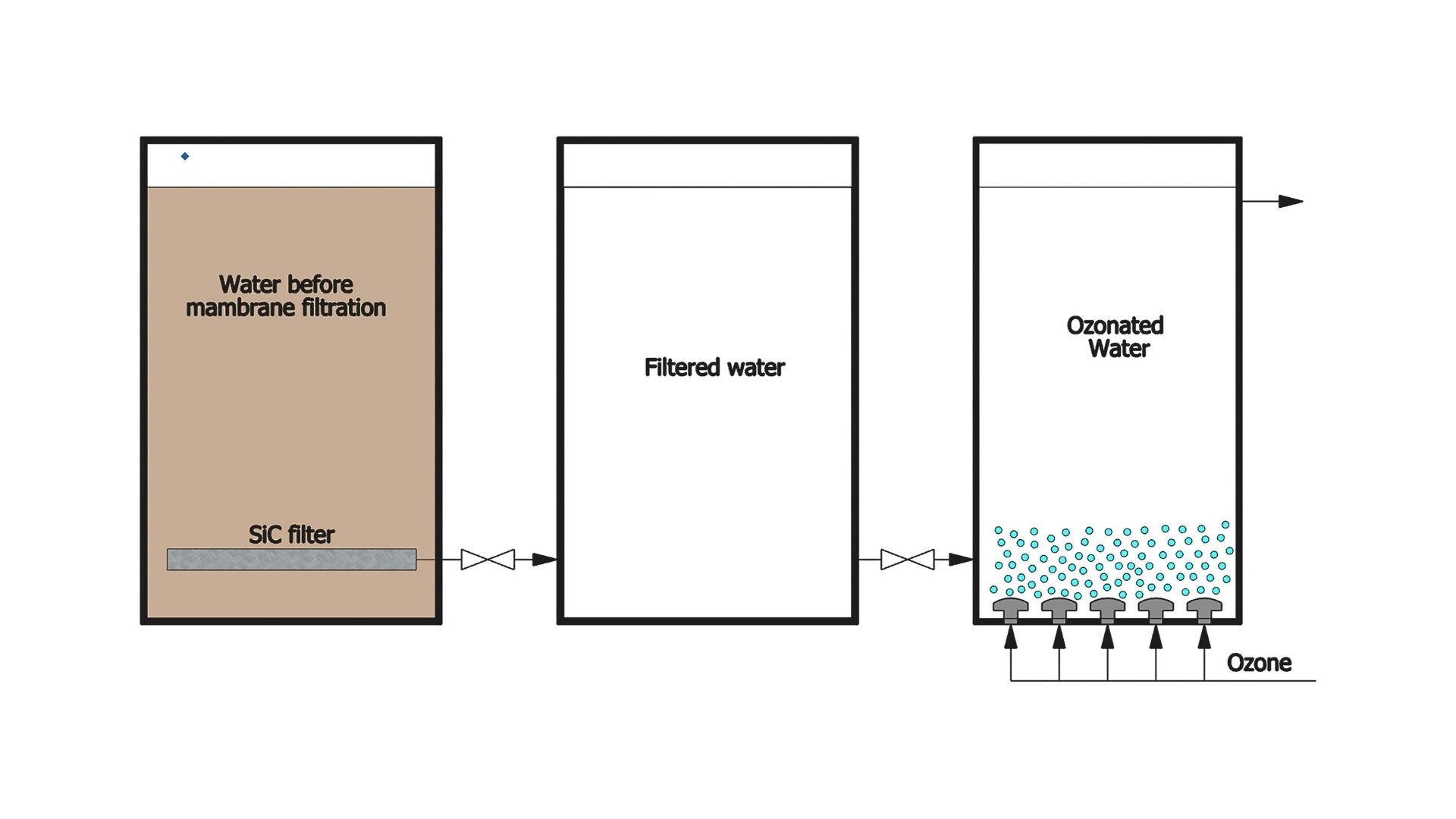
The rising presence of microfibers, which are tiny synthetic fibers, and harmful bacteria in wastewater has presented a critical environmental and public health challenge. Researchers led by Professor Milenko Roš, including Jolanda Rihter Pikl, Professor Aleksandra Lobnik, Hakim El Khiar, and Nataša Uranjek from the University of Maribor, the Faculty of Environmental Protection in Velenje, and AQUA LAB have developed an innovative method to address this issue. Their study, recently published in the journal Cleaner Engineering and Technology, explores an efficient system combining membrane filtration, a technique using thin barriers to separate impurities, and ozonation, a method that uses highly reactive oxygen to kill microorganisms, to purify wastewater.
Professor Roš’s team’s motivation stems from the urgent need to reduce pollutants like microplastics, small plastic particles that pollute water systems, and pathogens in treated water. Traditional wastewater treatments often fall short of adequately removing microfibers and bacteria, which pose significant threats to aquatic ecosystems and human health. “Our objective was to make treated wastewater suitable for reuse in agriculture and recreation by eliminating nearly all microfibers, microplastics, and microorganisms,” explained Professor Roš.
By employing a specialized ceramic filter with tiny openings, the team achieved remarkable results in filtering out suspended solids and microfibers. A subsequent ozonation process—where ozone gas is used to disinfect water—completely eliminated harmful bacteria, rendering the treated water highly suitable for applications such as irrigation and bathing. The research described a two-step treatment process that exceeded traditional methods, with microfiltration alone removing most harmful bacteria.
The significance of this innovation lies in its ability to achieve near-complete removal of pollutants while being adaptable to various wastewater treatment contexts. The study utilized a pilot plant system, a small-scale setup used to test and refine industrial processes, to analyze water samples from the Šalek Valley wastewater treatment facility. Results showed that the filtering system greatly reduced unwanted particles in the water, while ozonation effectively eliminated residual pathogens.
Professor Roš and his team also developed a new system designed to detect microfibers to accurately measure the prevalence of microplastics in treated wastewater. This system, using advanced techniques to study materials, provided critical insights into the performance of the filtration process. “The combination of microfiltration and ozonation demonstrated unmatched efficiency in producing water that meets high safety standards for reuse in various applications,” said Professor Roš.
This innovative system is poised to play a vital role in promoting water sustainability by aligning with the circular economy model, which focuses on reusing resources to minimize waste, where resources are reused efficiently. The treated water can support agriculture, reduce freshwater demand, and minimize environmental pollution. The researchers believe that implementing similar systems worldwide could revolutionize wastewater management.
By addressing both environmental and public health concerns, Professor Roš and colleagues’ study offers a pathway to a more sustainable future. The technology represents a significant leap in wastewater treatment, ensuring cleaner water for communities and ecosystems alike.
About the researchers

Prof. Dr. Milenko Roš
Prof. Dr. Milenko Roš has been employed at the Chemical Institute in Ljubljana for over 39 years, of which he spent 25 years as the head of the Laboratory for Water Chemistry, Biology, and Technology. His work has focused on wastewater treatment, the management of sludge from biological treatment plants, and metrology in chemistry.… As a professor of pollution and water protection, he has lectured at numerous domestic institutions (the University of Ljubljana, the University of Maribor, and the Faculty of Environmental Protection in Velenje) as well as at foreign universities (the Vienna University of Technology and the Warsaw University of Technology). Milenko is the author and co-author of numerous scientific articles, textbooks, and over 15 books on wastewater treatment. In the past, he served as the president of the Slovenian Society for Water Protection and is an active member of various national and international associations concerned with water protection and environmental sciences. Milenko Roš is a recipient of the William Dunbar Medal, awarded by the European Water Association for his outstanding contribution to applied technical development in wastewater and waste treatment.

Prof. Dr. Aleksandra Lobnik
Prof. Dr. Aleksandra Lobnik received her PhD in 1998 at the Institute of Organic Analytical Chemistry of Graz University, Austria. Since 2009, she has been employed as a full professor at the Faculty of Mechanical Engineering at the University of Maribor. In 2006, she co-founded a spin-off company, IOS Ltd., where she is the CEO.… In 2021, she became a member of the Slovenian Academy of Engineering; she was also the President of the International Sol-Gel Society (ISGS). She has participated in more than 50 national and international research projects as a project manager. Aleksandra Lobnik is also active in the promotion of science. She is regularly invited to various conferences and workshop committees. She gives a wide range of interviews on recycling technologies for plastic/textile wastes, sensors, nanosciences, knowledge transfer in widely accessible media, and round tables.

Jolanda Rihter Pikl, MSc
Jolanda Rihter Pikl, MSc, has spent the past 18 years committed to discovering innovative solutions in wastewater treatment. Her academic journey began with a degree in Environmental Protection, followed by a master's in ecotechnology from the Faculty of Environmental Protection in Velenje.… Currently, she is pursuing doctoral research at the Faculty of Mechanical Engineering in Maribor, where her focus lies in leveraging membrane technologies to eliminate microplastics and disinfect bacteria using ozonation. As a master of ecotechnology at the Ministry of Natural Resources and Spatial Planning, Jolanda leads initiatives to enhance wastewater collection and treatment infrastructure. Her environmental engineering expertise allows her to significantly contribute to improving water quality and achieving national and European ecological objectives. With a holistic approach that combines advanced scientific research with effective project management, Jolanda plays a pivotal role in transforming wastewater management and environmental infrastructure. Her work underscores the potential of innovative technologies to tackle pressing global challenges related to water scarcity and environmental pollution.

Hakim El Khiar, MSc
Hakim El Khiar, MSc, has been at the forefront of drinking water filtration systems since 1996, engaging in developing, prototyping, and industrialisation of innovative filter technologies. He has also devised effective techniques for purifying drinking water in emergencies and specialises in recycling wastewater from various industrial applications.… Additionally, he has created a microplastic sampling method that enables rapid and simple detection of microplastics in drinking water. Hakim’s groundbreaking innovations have garnered multiple awards from the Slovenian Chamber of Commerce. He co-authors several research papers and a book on removing microplastics using membrane technology. Many of his products are internationally patented, including an uninterrupted water filtering system with automatic filter cleansing, a device for continuous water filtration, a portable gravity water filtration device, and various multi-stage water purification systems. Hakim contributes significantly to water filtration and environmental protection through his extensive work and patented technologies.

Nataša Uranjek, BSc
Nataša Uranjek, BSc, graduated in chemical engineering from the Faculty of Chemistry and Chemical Technology in Ljubljana. She heads the technology and supervision department at the Velenje Public Utility Company. Her expertise encompasses the treatment and quality control of drinking water and optimising and enhancing processes in wastewater treatment and biological sludge management.… She designs and supervises water treatment and processing facilities as a certified engineer. Nataša has published contributions to academic journals, participated in national and international conferences, and collaborated on various research projects with esteemed institutions. She has also received multiple innovation awards from the Savinja-Šalek Chamber of Commerce and the Slovenian Chamber of Commerce. Nataša has been an active Slovenian Water Protection Association member for over a decade and represents the state in the European Federation of National Associations of Water Services. She is pursuing her doctoral studies at the Faculty of Mechanical Engineering at the University of Maribor while serving as a senior lecturer at the Faculty of Environmental Protection in Velenje, Slovenia.
Journal reference
Rihter Pikl J., Lobnik A., Roš M., El Khiar H., Uranjek N. “Microfibres and coliforms determination and removal from wastewater treatment effluent.” Cleaner Engineering and Technology, 2024. DOI: https://doi.org/10.1016/j.clet.2024.100806