Sustainable Management of Crop-Eating Insects
Dr David Hunter's review sets out best practice for managing locusts and grasshoppers, combining accurate outbreak forecasting, aerial searches and early targeted treatments that use less chemical pesticide.


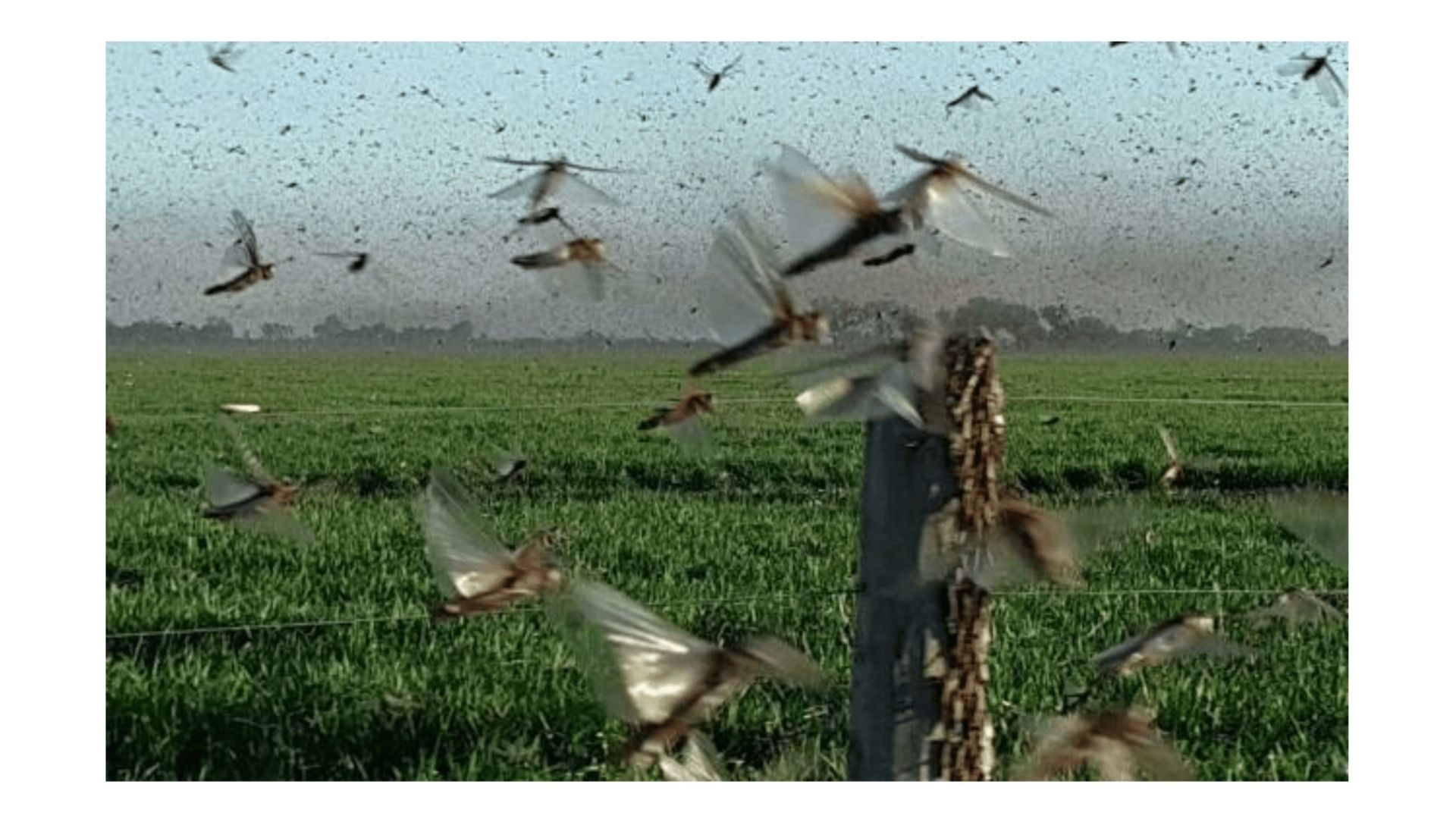
Locusts and grasshoppers have long caused major problems for farmers, often leading to widespread crop damage and putting food supplies at risk worldwide. Recent improvements in how these pests are managed offer new hope for more sustainable solutions. Dr David Hunter of the Locust and Grasshopper Control Unit in Red Hill, Australia, has enumerated practical and advanced strategies to reduce the harm caused by these insects. The findings were presented at an International Conference on Sustainable Management and published in the well-respected journal Agronomy.
Dr Hunter’s study explains an innovative way to handle locust and grasshopper problems, focusing on accurate predictions and quick action to control outbreaks while using fewer chemical pesticides. By using mapping tools like Geographic Information Systems, which are computer-based tools that analyze and visualize data related to locations, experts can predict where outbreaks are more likely to happen by studying rainfall, plant growth, and other environmental factors. “This system helps us find problem areas quickly so we can act fast and effectively,” said Dr Hunter. The research also stresses the need for countries to work together since locusts often migrate across borders.
One significant benefit of this system is that it reduces the use of chemical pesticides. Traditional methods often involved spraying large areas, which could harm the environment and human health. Instead, there has been a shift to targeted approaches such as spraying narrow strips of land where pests are concentrated at high densities. Natural pesticides made from fungi and other biological agents, substances derived from natural living organisms, have also been shown to be highly effective. Dr Hunter pointed out that these methods not only reduce environmental damage but are also becoming more affordable for farmers and governments.
Another major improvement is the use of aircraft and drones to locate dense groups of locusts quickly. These technologies, which include unmanned flying devices controlled remotely, make it possible to scan large and difficult-to-reach areas efficiently. These search techniques need to be adapted to the behaviour of the species concerned: for some, early morning flights are especially effective because locusts are easier to spot when they are resting, while others are more easily detected later in the day. Combining these aerial surveys with data from mapping systems ensures that treatments are timely and accurate.
Dr Hunter also emphasizes the need to address the underlying causes of locust outbreaks, such as changes in climate and the environment. By understanding how rainfall and plant growth influence locust populations, scientists can improve their predictions. This proactive approach has already been successfully implemented in places like Australia, China, as well as in Africa and Asia by the United Nations Food and Agriculture Organization where advanced management systems, which integrate technology and expert knowledge for better decision-making, are now in place.
In summary, the latest research and development has provided a clear plan for managing locusts and grasshoppers in a way that is both effective and environmentally friendly. By focusing on quick action, reducing the use of chemical pesticides, and adopting modern technology, farmers and governments can protect crops and preserve natural ecosystems. “We must keep improving these methods and make sure they are used more widely,” Dr Hunter said. His work lays the foundation for better control of locust and grasshopper outbreaks with minimal harm to the environment.
About the researcher

David Hunter
David Hunter completed his B.Sc and M.Sc, at Simon Fraser University in Vancouver and his Ph D in the University of Queensland. David then worked for the Australian Plague Locust Commission for more than 25 years, as Entomologist undertaking research on aspects of locust biology aiding their control.… He was part of a research team that developed Metarhizium acridum as a biopesticide for locusts, and supervised the first operational use of this biopesticide, where 25,000 ha of locust infestations were treated with Metarhizium during the 2000 locust upsurge in Australia. David then focused on introducing Metarhizium use in a number of countries as part of preventive management of locusts and grasshoppers, before serving as Executive Director (2013-2019) and President (2019-2023) of the Orthopterists Society.
Journal reference
Hunter, D. “World’s Best Practice Locust and Grasshopper Management: Accurate Forecasting and Early Intervention Treatments Using Reduced Chemical Pesticide.” Agronomy, 2024; 14(10): 2369. DOI: https://doi.org/10.3390/agronomy14102369