Male Birth Control Is Finally Here and It Actually Works
Professor Gunda Georg's team found that the oral non-hormonal compound YCT-529 reversibly halted sperm production in male mice and monkeys without changing testosterone, making it a candidate for testing in men.


With nearly half of all pregnancies worldwide being unintended, the need for effective, reversible male contraceptives remains urgent. Despite decades of research, men still have very few birth control choices, mainly condoms or irreversible surgery to block sperm from reaching the egg. Hormonal and non-hormonal treatment regimens tested in the past for men have yet to make it to the market due in part to undesirable side effects. Scientists have known for nearly a century that metabolites of dietary vitamin A play an important role in sperm production. Building on this knowledge, a group of researchers has created a new compound that targets this pathway in a very specific way. This approach offers a promising new avenue for a male birth control pill that does not affect their hormones.
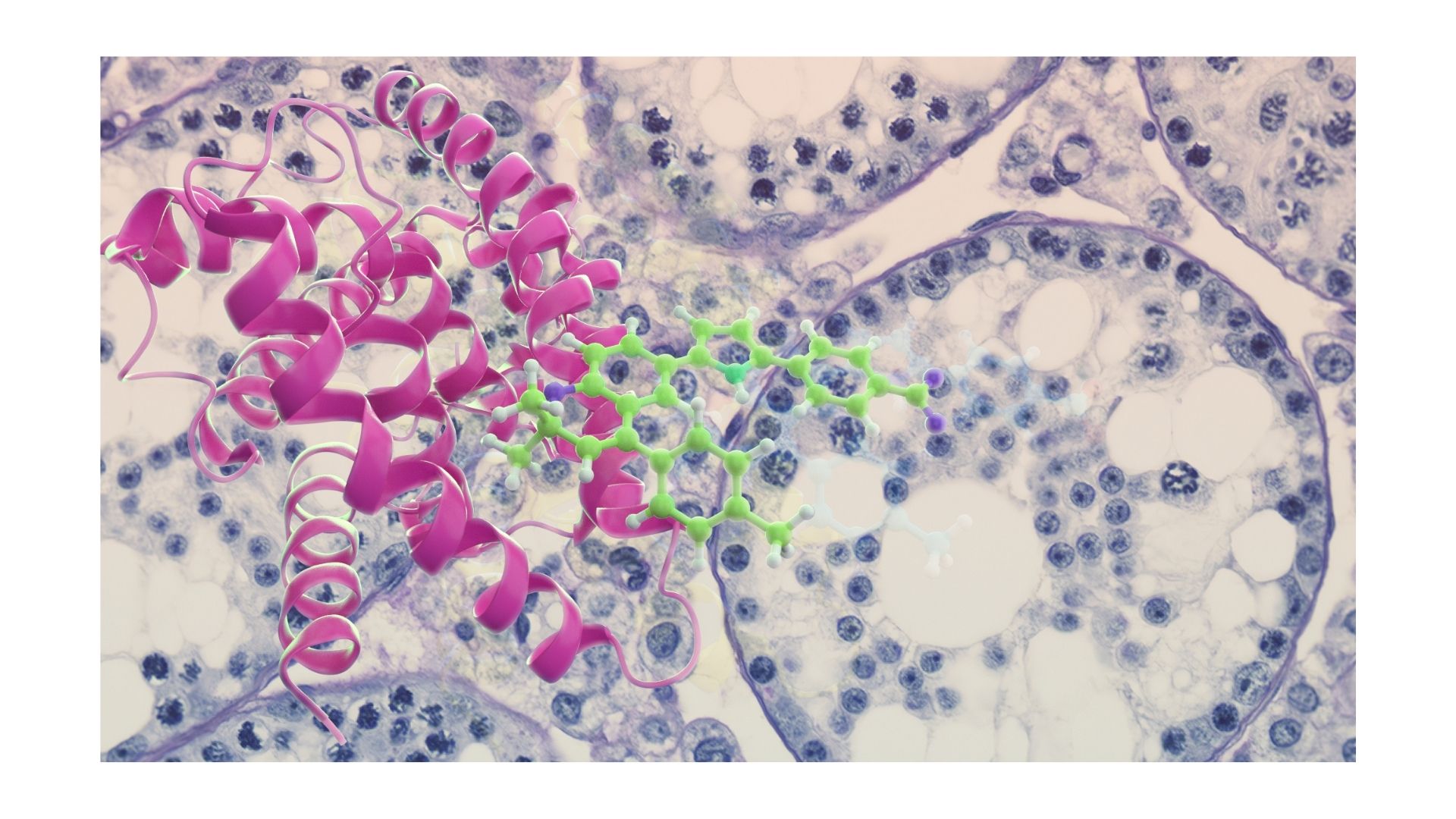
Professor Gunda Georg has led a team from the University of Minnesota in collaboration with investigators from Columbia University College of Physicians & Surgeons (Professor Debra Wolgemuth and Dr. Sanny Chung) and YourChoice Therapeutics (Dr. Nadja Mannowetz and Mr. Akash Bakshi) which has developed and tested a compound called YCT-529. Their findings, now published in the Nature portfolio science journal Communications Medicine, describe how YCT-529 blocks a protein called retinoic acid receptor alpha that helps the body use the vitamin A metabolite retinoic acid to support sperm development.

The team discovered that within a month of oral dosing with YCT-529, male mice became temporarily infertile because they stopped making sperm but were otherwise normal. Critically for possible contraceptive application, the mice regained their fertility a few weeks after stopping the treatment. In male monkeys, the drug showed similar effects: sperm levels dropped shortly after starting treatment and the animals showed no negative health effects, including no changes in behavior or in levels of the male sex hormone testosterone. After the treatment ended, sperm production returned to normal within a few months.
“Our study describes the development of YCT-529, a highly selective retinoic acid receptor-alpha blocker, meaning it only blocks the protein linked to sperm production, which temporarily reduces sperm counts in male mice and male monkeys,” said Professor Georg. She pointed out that the drug does not interfere with hormones like testosterone, which has been a major obstacle in previous efforts to develop birth control for men.
This success represents a major step forward in the search for a reliable and reversible male birth control method that does not affect hormone levels. Professor Wolgemuth, whose laboratory has studied the molecular genetic mechanisms of retinoid signaling in sperm production for over 20 years, emphasized “the importance of basic research in identifying targets for possible pharmacological intervention and ultimately, clinical application”. The study suggests that YCT-529 works by blocking a specific signal in the body needed to produce sperm, in this case the vitamin A-related signal, but without interfering with other body functions. The drug was found to be well tolerated, readily absorbed by the body, and free of harmful side effects, making it a strong candidate for clinical testing in men.
Professor Georg and colleagues believe their findings confirm that retinoic acid receptor alpha, the protein involved in sperm production, is an important target for developing male birth control strategies. They suggested that YCT-529 could become one of the first oral, non-hormonal contraceptives, potentially serving as “the pill for men”.
About the researchers

Gunda I. Georg
Gunda I. Georg earned a B.S. in pharmacy and a Ph.D. in Medicinal Chemistry from Philipps Universität Marburg, Germany. After postdoctoral studies (University of Ottawa in Canada), she became a faculty member in the Department of Medicinal Chemistry at the University of Kansas.… In 2007, she joined the University of Minnesota Department of Medicinal Chemistry and leads the Institute for Therapeutics Discovery and Development. She was Editor-in-Chief of the Journal of Medicinal Chemistry (2012-2020). She is an AAAS Fellow and an American Chemical Society Fellow. In 2017, she was elected to the Hall of Fame of the Medicinal Chemistry Division of the American Chemical Society. In 2020, she received the Alfred Burger Award in Medicinal Chemistry from the American Chemical Society and, in 2023, the Carl Mannich Medal from the German Pharmaceutical Society. Her research interests are medicinal chemistry, drug discovery, contraception, and cancer. She is co-inventor of one marketed drug and three drugs in clinical trials, including YCT-529. She has trained over 100 students, postdocs, and visiting scientists.

Dr. Nadja Mannowetz
Dr. Nadja Mannowetz is a co-founder of YourChoice Therapeutics, Inc. and serves as its chief science officer (CSO). She is a sperm biologist with extensive experience in microscopy, imaging and sperm patch-clamp to study the molecular mechanisms regulating sperm motility.… In her role as CSO, she is experienced in designing pre-clinical studies, as well as writing clinical study protocols and other documents related to clinical trial applications. Currently, she is advancing the first hormone-free birth control pill for men, and with her combined skills she will further the development of novel contraceptives and thus shape the future of modern family planning. Dr. Mannowetz received her Ph.D. from the Eberhard Karls University, Tübingen (Germany) in Biology.

Dr. Sanny S. W. Chung
Dr. Sanny S. W. Chung is an Associate Research Scientist at Columbia University College of Physicians and Surgeons. She led research focused on germ cell development and differentiation using knockout mouse models with infertility phenotypes in the laboratory of Professor Debra Wolgemuth. Dr.… Chung is internationally recognized for her expertise in the morphological assessment of testicular defects in these models. Together with Professor Wolgemuth, she has made significant contributions to characterizing and establishing the mechanisms underlying retinoic acid receptor alpha (RARα)-mediated retinoid signaling during spermatogenesis. These studies, published in peer-reviewed research journals, have defined the critical roles of nuclear transcriptional regulators at multiple stages of male germ cell development. Notably, their pioneering work was among the first to investigate the use of orally available pan-RAR antagonists as potential non-hormonal male contraceptives, laying the groundwork for current research into RARα-specific antagonists in this context. Dr. Chung earned her Ph.D. in Molecular and Cell Biology from the University of Hong Kong. Her doctoral research was conducted under the mentorship of Professor Will Lee at the University of Hong Kong and Dr. C. Yan Cheng at the Population Council, located on The Rockefeller University campus.

Dr. Soma Maitra
Dr. Soma Maitra received her undergraduate degree in India before moving to US to pursue her Ph.D. at the University of Kansas where she worked on natural product synthesis. She conducted her postdoctoral studies at the University of Minnesota in the Georg lab where she contributed significantly to the discovery and synthesis of YCT-529.… She joined the medicinal chemistry group at Biogen in 2021 where she contributed to several CNS small molecule programs. She is currently working at Vertex Pharmaceuticals as senior research scientist.

Md Abdullah Al Noman
Md Abdullah Al Noman earned his Ph.D. in Medicinal Chemistry from the University of Minnesota, where he conducted doctoral research under the supervision of Dr. Gunda Georg focused on the development of nonhormonal male contraceptives targeting the retinoic acid receptor alpha (RARα).… He is currently a postdoctoral researcher at Stanford University, working at the interface of medicinal chemistry and chemical biology to advance small molecule therapeutics for oncology, neurodegeneration, infectious diseases, and rare disorders. Noman is driving multiple drug discovery programs, drawing on his expertise in medicinal chemistry, project management, and cross-functional collaboration. He remains committed to translating academic innovation into impactful, real-world therapies.

Dr. Henry L. Wong
Dr. Henry L. Wong graduated cum laude with a BS in biology from Brooklyn College (City University of New York) and received a PhD in Biology/Immunology from Case Western Reserve University and the Cleveland Clinic.… He completed a post-doctoral fellowship at Hoffman-LaRoche/Roche Institute for Molecular Biology in Nutley, NJ focusing on cytokine biology and drug discovery. He then left industry to spend 5 years at the National Institutes of Health (NIH) exploring macrophage regulation of the immune response. Following his return to the biotech industry, Dr. Wong focused on proprietary oncology and immunology/inflammation drug discovery programs either as a member or leader of multi-disciplinary project teams. This enabled him to be involved in all aspects of drug development from target identification, screening, lead optimization, proof of concept, efficacy, PK/PD, mechanism of action, biomarker development to the planning of Phase I clinical strategies. Some of the successes that were achieved included being a member of the original pre-clinical development team responsible for the regulatory approval of the proteasome inhibitor bortezomib (Velcade) and a member of the team that was responsible for the BLA filing of the anti-angiogenic antibody mimetic pegdinetanib (Angiocept). Currently, Dr. Wong is Director of the Pharmacology Core at the University of Minnesota’s Institute for Drug Discovery & Development (ITDD) where he provides drug discovery/development expertise and introduces translational approaches to both intra- and extra-mural basic research programs.

Dr. Narsihmulu Cheryala
Dr. Narsihmulu Cheryala is a Research Assistant Professor and Senior Principal Scientist in the Department of Medicinal Chemistry at the University of Minnesota. He brings 20 years of experience in medicinal chemistry, with research spanning antiviral, anticancer, antiepileptic, and non-hormonal male contraceptive drug discovery. Dr.… Cheryala focuses on designing small molecules that tackle challenging biological problems and address unmet clinical needs. Dr. Cheryala also has prior industry experience, which strengthens his translational approach to early drug discovery. He earned his Ph.D. in Synthetic Organic Chemistry from the Indian Institute of Chemical Technology (IICT), India, where he specialized in the total synthesis of bioactive natural products and the development of novel synthetic methodologies.

Akash Bakshi
Akash Bakshi is a co‑founder of YourChoice Therapeutics, Inc. and serves as its chief executive officer (CEO). A serial biotech entrepreneur, he has a track record of translating academic science into first‑in‑class medicines, including his previous tenure as CEO of ANA Therapeutics, and COO of Neurobo Pharmaceuticals where he led the rapid development of a COVID‑19 therapy. Mr.… Bakshi earned his B.S. in Biochemistry and Cell Biology from the University of California, San Diego, received his Master of Biotechnology at the University of Queensland in Australia, and is an alumnus of Y Combinator’s Winter 2019 cohort.

Dr. Debra J. Wolgemuth
Dr. Debra J. Wolgemuth is Professor Emerita of Genetics & Development at the Columbia University College of Physicians and Surgeons. She is an internationally recognized leader in the field of genetic control of mammalian germ cell development and differentiation.… Her laboratory has made seminal contributions to understanding the role of mitotic and meiotic cell cycle control, of germ line-specific bromodomain-containing proteins, and of transcriptional regulation via the retinoid-signaling pathway during spermatogenesis in the mouse model. In collaboration with her colleague Associate Research Scientist Dr. Sanny Chung, she showed that the nuclear transcriptional regulator retinoic acid receptor alpha (RARα) is required at several stages of male germ cell differentiation. These studies involved extensive morphological and biochemical characterization of the infertility phenotype of Rara-/- knockout mice, germ cell stem cell transplantation, and more recently the effects of pharmacologic inhibition of RARα in vivo with pan-RAR antagonists. They showed that orally available RARα antagonists inhibited spermatogenesis and cause male-specific sterility, which importantly, was reversible upon cessation of treatment. These combined studies provided the rationale for the present studies developing RARα-specific antagonists to target RARα function in male contraception. Dr. Wolgemuth received her PhD in Human Genetics and Developmental Biology from Columbia University, undertook post-doctoral training in Regulation of Oncogenesis at the Memorial Sloan Kettering Institute and in Molecular Cell Biology at the Rockefeller University prior to returning to the Columbia University Irving Medical Center where she served on the faculty for 43 years providing leadership in the departments of Genetics & Development and Obstetrics & Gynecology, the Institute of Human Nutrition, and the Herbert Irving Comprehensive Cancer Center.
Journal reference
Mannowetz N., Chung S.S.W., Maitra S., Noman M.A.A., Wong H.L., Cheryala N., Bakshi A., Wolgemuth D.J., Georg G.I. “Targeting the retinoid signaling pathway with YCT-529 for effective and reversible oral contraception in mice and primates.” Communications Medicine, 2025. DOI: https://doi.org/10.1038/s43856-025-00752-7