Transforming Atmospheric Science with Insights into Gas Dynamics
Professor Vladimir Kossov's team combined experiments and modelling to map when gas mixtures containing a greenhouse gas switch from slow diffusion to convective mixing.


Delving into how gas mixtures behave under different conditions is essential for advancing environmental and industrial technologies. This exploration highlights the subtle shifts between diffusion and convective mixing in gas mixtures, providing pivotal insights for their practical handling. Diffusion, where gases mix due to concentration gradients, and convective mixing, involving collective gas movement, are crucial for enhancing our mastery of atmospheric compositions. Understanding these processes not only broadens our knowledge but also opens avenues for innovative approaches to managing atmospheric gases, heralding notable progress in environmental preservation and industrial practices.
A team of researchers led by Professor Vladimir Kossov, with contributions from Magzhan Zhaneli at the Abai Kazakh National Pedagogical University, and Dr. Olga Fedorenko, Dr. Mansiya Asembaeva, and Maira Moldabekova from Al-Farabi Kazakh National University, has made significant strides in understanding the dynamics of gas mixtures. Published in the International Journal of Thermofluids, their work meticulously examines how gas mixtures behave under transitions between diffusion and convective mixing, under uniform temperature conditions. Focusing on a variety of gases including methane, R12 refrigerant, argon, nitrogen, and n-butane, the results of their investigation offer profound insights into optimizing gas management and distribution. This heralds new possibilities for advancements across both environmental and industrial sectors.
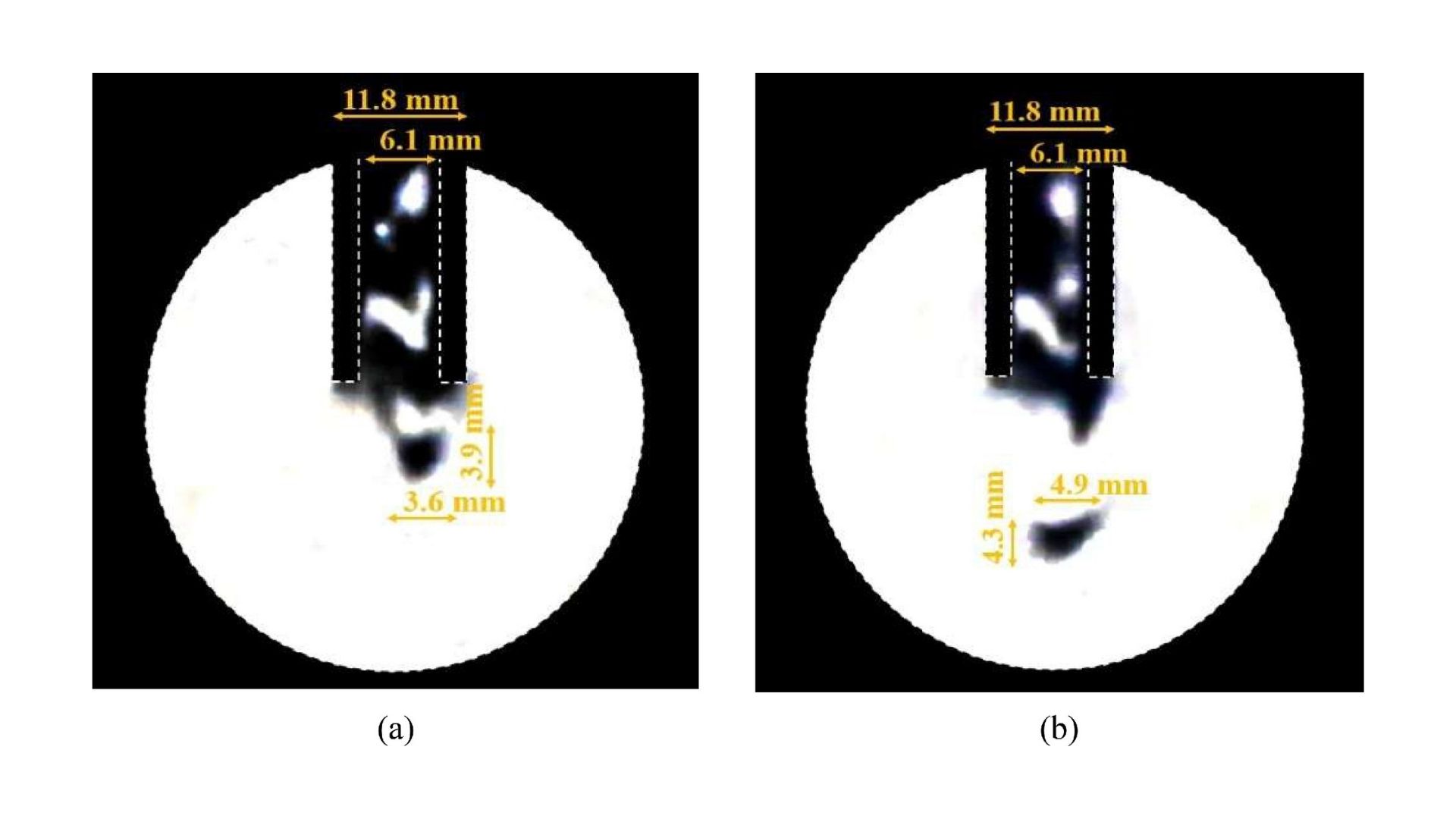
One of the study’s most pivotal revelations lies in pinpointing the exact circumstances that precipitate a shift from diffusion, a process where gases naturally intermingle from regions of high to low concentration, to convective mixing, which involves the large-scale, collective movement of gases. This critical insight for strategies aimed at managing greenhouse gas concentrations in our atmosphere is emphasized by Professor Kossov. He notes, “Experimental studies have shown that for the systems under consideration… despite the initial conditions favoring a density gradient where mixture density decreases with height, both diffusion and convective types of mixing have been recorded.” This pivotal observation underscores the innovative approaches that can be employed to manage greenhouse gases more effectively.
The methodology that underpins this research is as compelling as its outcomes. Through a harmonized blend of experimental studies and theoretical modeling, the team meticulously analyzed how varying the pressure and composition of the gas mixtures influenced their mixing behavior. This comprehensive approach enabled the researchers to demarcate the stability of these mixtures across different conditions, shedding light on the delicate interplay between diffusion and convection within these systems.
Professor Kossov further elaborates on the theoretical framework that supported their conclusions: “The numerical solution of the system of diffusion equations allowed us to determine, for the specified parameters, distributions of component concentrations and mixture density within a vertical diffusion flat channel. These findings are presented graphically and discussed in extensive detail.” This predictive model stands as a powerful tool for anticipating the behavior of gas mixtures under a range of conditions, providing a solid foundation for designing advanced control mechanisms.
A particularly innovative aspect of the study is the introduction of stability maps. These tools effectively distinguish regions where gas mixtures display stable diffusion behaviors from those prone to convective instability. Professor Kossov highlights the maps’ utility, stating, “The stability maps enable us to identify the types of mixtures and clarify the conditions leading to convection, especially in scenarios where the gas mixture density at the outset is lower at the top of the diffusion channel than at the bottom.” These maps offer invaluable guidance for scientists and engineers, directing efforts to optimize conditions for the preferred mixing outcomes, whether for industrial applications or environmental management.
This collaborative research not only deepens our comprehension of gas mixture dynamics under varying conditions but also lays out practical measures for enhancing our control over these mixtures. Through their meticulous examination of the transitions between diffusion and convective mixing in gas mixtures, Professor Kossov, alongside his esteemed colleagues, sets the stage for groundbreaking strategies in gas management, potentially redefining our approach to various environmental and industrial challenges.
About the researchers

Kossov Vladimir
Kossov Vladimir. He is a Doctor of Physical and Mathematical Sciences, Professor, corresponding member of the National Academy of Sciences of the Republic of Kazakhstan (2012) and academician of the National Academy of Sciences of the Higher School of Kazakhstan (2017).… His research interests include multicomponent diffusion of gases, transport properties of mixtures, convective stability and turbulence, energy-saving technologies and ecology. Under his leadership, Kazakhstan is developing a scientific direction related to the study of diffusion and convective instability in multicomponent media. He has published more than 300 scientific articles and 15 patents. He has his own scientific school, within which he has trained 2 doctors of physical and mathematical sciences, 8 candidates of physical and mathematical sciences and 2 PhD (Physics). He was the holder of the state scientific scholarship for scientists and specialists who made an outstanding contribution to the development of science and technology of the Ministry of Education and Science of the Republic of Kazakhstan in the field of physical and mathematical sciences and a DAAD fellow. He received the following awards: the medal of the Cambridge International Biographical Center "For scientific achievements in the field of thermophysics" (2007) and the badge of the Ministry of Education and Science of the Republic of Kazakhstan “For Merits in the development of science of the Republic of Kazakhstan” (2013).

Dr. Olga Fedorenko
Dr. Olga Fedorenko is an associate professor at the Department of Thermal Physics and Technical Physics of the Physics and Technology Faculty, Al-Farabi Kazakh National University. Her research work focuses on thermal physics, heat and mass transfer in gases. She was the owner of a state scientific scholarship for talented young scientists for 2013-2014.… As a co-author, she took part in the innovative project “Device for separating a hydrocarbon gas mixture”, which was presented at the EXPO-2017 International exhibition in the Nur Alem national pavilion at the “Creative Energy” exposition. She participates in scientific projects funded by the Committee of Science of the Ministry of Science and Higher Education of the Republic of Kazakhstan.
Journal reference
Vladimir Kossov, Magzhan Zhaneli, Olga Fedorenko, Mansiya Asembaeva, Maira Moldabekova, “Diffusion Instability in Three-Component Gas Mixtures Containing Greenhouse Gas.” International Journal of Thermofluids, 2023. DOI: https://doi.org/10.1016/j.ijft.2023.100495