Revolutionizing Blood Tests with the Power of Ultrasound
Dr. Vytautas Ostasevicius's team found that low-frequency ultrasound altered hemoglobin and platelet measures in blood samples in the lab, and machine learning could predict the platelet changes.
Read the original paper
A groundbreaking study from the Kaunas University of Technology and the Lithuanian University of Health Sciences has revealed new insights into the effects of low-frequency ultrasound on blood parameters. The team, led by Dr. Vytautas Ostasevicius, investigated the impact of varying ultrasound intensities and durations on blood samples. Their findings, published in the journal Applied System Innovation, show that low-frequency ultrasound can significantly alter blood parameters, offering potential new avenues for medical diagnostics and treatments.
The study involved a multidisciplinary team including Professor Agne Paulauskaite-Taraseviciene, Professor Vaiva Lesauskaite, Dr. Vytautas Jurenas, Dr. Vacis Tatarunas, Professor Edgaras Stankevicius, Agile Tunaityte, Dr. Mantas Venslauskas, and Dr. Laura Kizauskiene. Their work explored how ultrasound exposure influences erythrocyte and platelet aggregation, with predictions enhanced by machine learning algorithms.
Dr. Ostasevicius explained the motivation behind their research: “We aimed to understand how low-frequency ultrasound can influence various blood parameters, which could pave the way for new diagnostic tools and treatment methods. Our findings suggest that ultrasound has a significant impact on blood parameters, particularly on hemoglobin in red blood cells and platelet aggregation.”
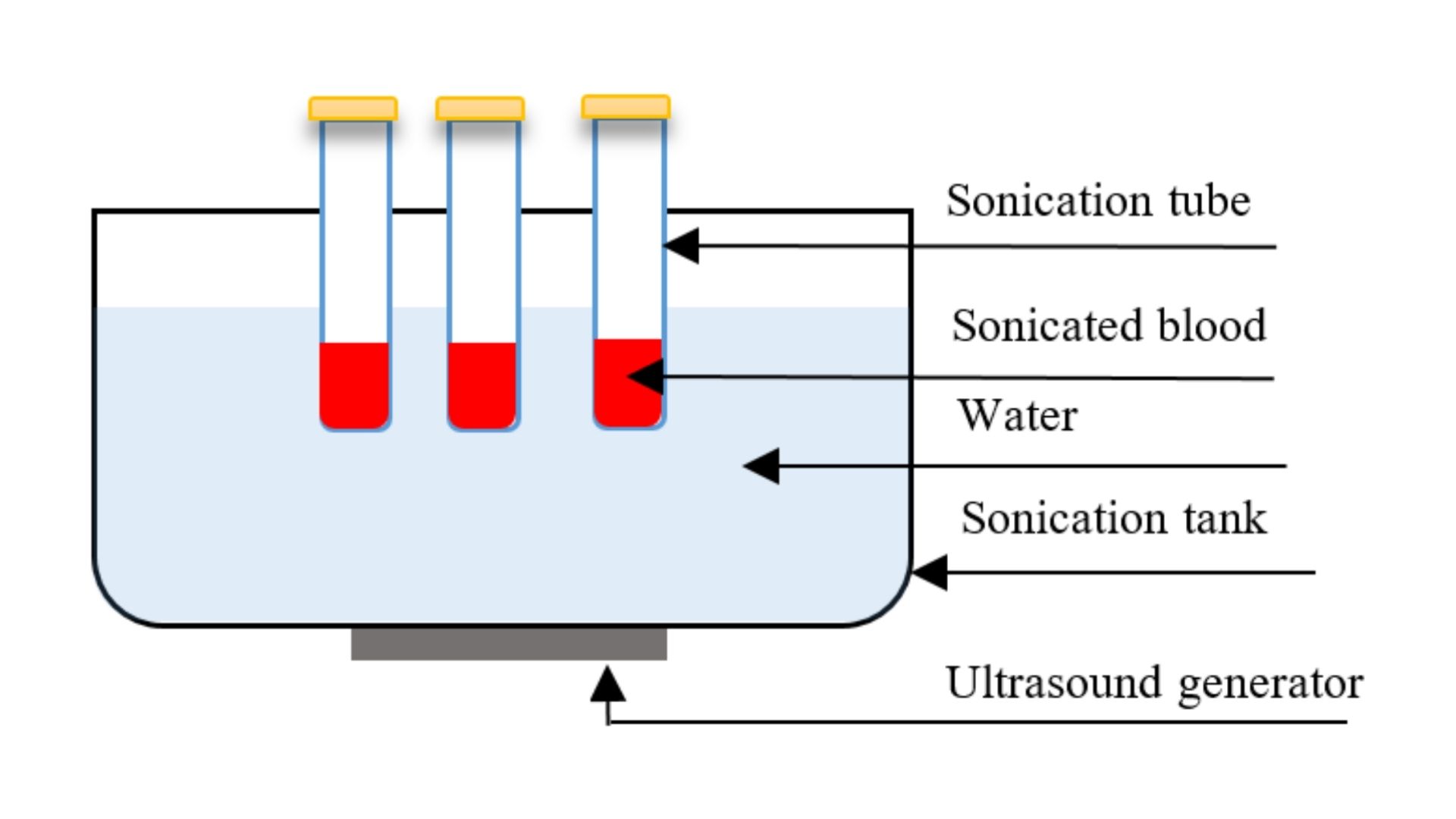
The researchers exposed a significant number of blood samples to low-frequency ultrasound in a water bath operating at a frequency of around 46 kHz. They used statistical analyses, including ANOVA and the non-parametric Kruskal-Wallis method, to evaluate the effects of ultrasound on various blood parameters. The results indicated statistically significant variations in blood parameters due to ultrasound exposure, particularly with high-intensity signals applied for different durations.
One of the significant findings was the impact of ultrasound on hemoglobin in red blood cells. The study found that ultrasound exposure had a more pronounced effect on hemoglobin levels compared to platelet aggregation. This highlights the potential of ultrasound to facilitate oxygen transfer from the lungs to bodily tissues, which could have far-reaching implications for medical treatments.
The research team employed five machine learning algorithms to predict ultrasound’s impact on platelet counts. Among these, support vector regression (SVR) exhibited the highest prediction accuracy, yielding an average prediction error of around ten percent. This indicates that machine learning can effectively predict changes in blood parameters induced by ultrasound, offering a powerful tool for future diagnostics.
The study’s findings suggest that low-frequency ultrasound can significantly influence various blood parameters, providing a new method for medical diagnostics and potentially improving treatment outcomes. The researchers propose that future studies should focus on the clinical implications and therapeutic potential of ultrasound treatment, particularly in relation to hematological changes and disease treatments.
As Dr. Ostasevicius remarked, “Our research opens new avenues for utilizing ultrasound in medical diagnostics and treatments. The ability to predict changes in blood parameters with high accuracy using machine learning algorithms could revolutionize how we approach diagnostics and personalized medicine.”
In summary, this study highlights the potential of low-frequency ultrasound as a non-invasive method to alter blood parameters, with significant implications for medical diagnostics and treatments. The use of machine learning to predict these changes further enhances the potential for personalized medicine, making this research a crucial step forward in medical science.
About the researcher

Dr. Vytautas Ostaševičius
Dr. Vytautas Ostaševičius is a Lithuanian mechanical engineer holding a habilitated doctorate (1988). He serves as Director of the Institute of Mechatronics at Kaunas University of Technology (KTU) and has led the Department of Engineering Design and the Santaka Valley (integration of science, studies, and business) project.… He is a full member of the Lithuanian Academy of Sciences (2011–2023), a foreign member of Sweden’s Royal Academy of Engineering Sciences (since 2010), and previously an expert evaluator for European Commission programs. His research encompasses dynamics of mechanical structures, nonlinear mechanical systems, MEMS, IoT for Industry 4.0, energy harvesting, healing devices, and process prediction using AI.
Journal reference
Ostasevicius, V., Paulauskaite-Taraseviciene, A., Lesauskaite, V., Jurenas, V., Tatarunas, V., Stankevicius, E., Tunaityte, A., Venslauskas, M., & Kizauskiene, L. (2023). “Prediction of Changes in Blood Parameters Induced by Low-Frequency Ultrasound.” Applied System Innovation. DOI: https://doi.org/10.3390/asi6060099