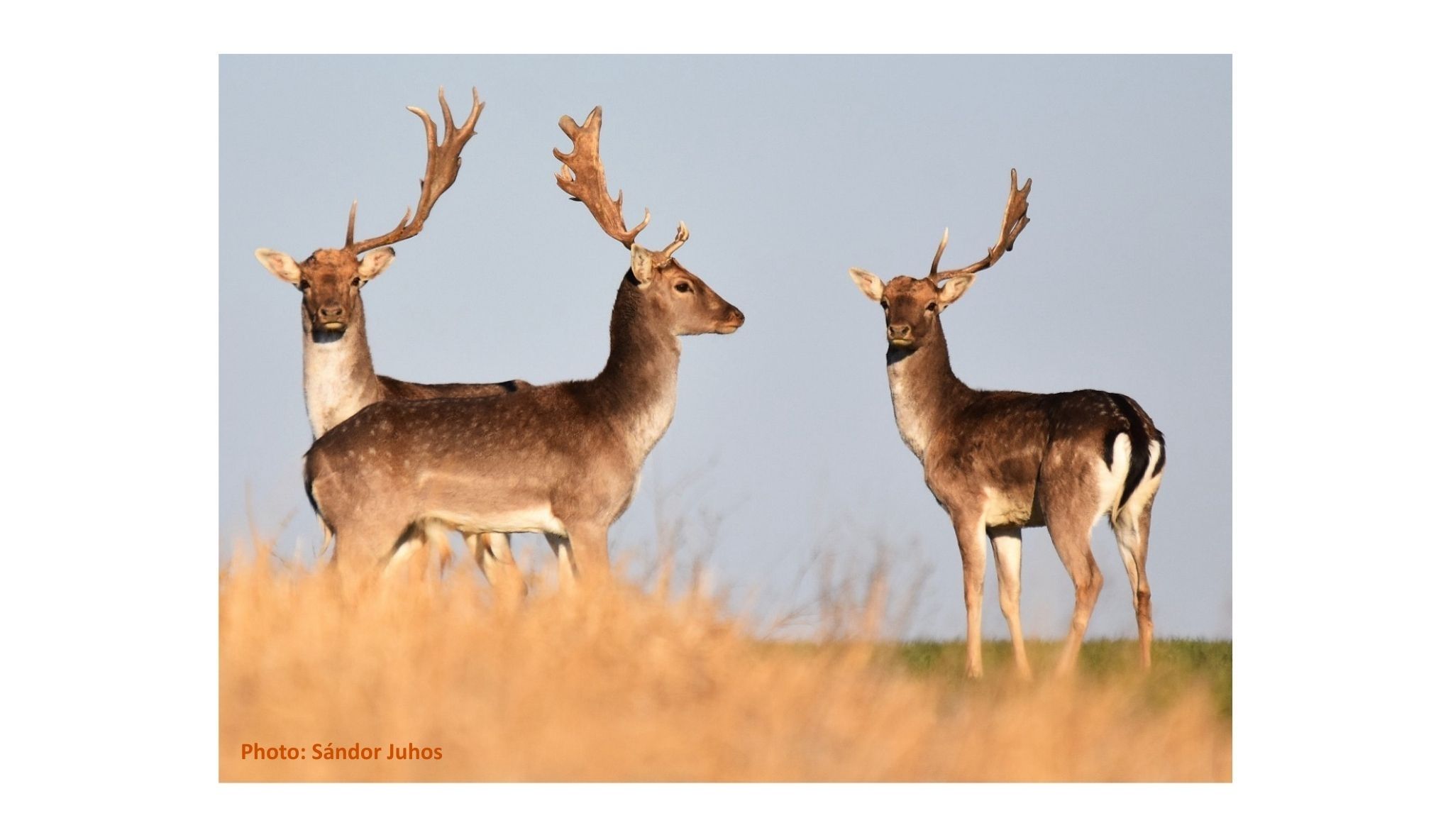
The Most Common Antler Abnormality: A Misunderstood Disease?
Dr. Farkas Sükösd's team identified a previously unrecognised inflammatory disease of the antler base, linked to poor healing after antlers are cast, that underlies many antler deformities in Hungarian deer.


People who enjoy deer hunting or watching wildlife often admire antlers as symbols of health, strength, and good genetics. When antlers grow in strange, uneven, or incomplete ways, most believe it’s due to past injuries. But new research offers a different explanation—one that could change how we understand deer health across Europe and other regions.
Scientists led by Dr. Farkas Sükösd from the University of Szeged, along with a large team mainly from the Hungarian University of Agriculture and Life Sciences, have identified a previously unrecognized disease that affects the base of the antler, known as the pedicle. The pedicle is the bony structure that anchors the antler to the skull. Their work, published in the journal Animals, introduces this condition as Pedunculitis Chronica Deformans, which causes long-term inflammation that disrupts normal bone growth.

Dr. Sükösd’s team studied unusual antlers from fallow deer, roe deer, and red deer collected in Hungary. They found signs that many of these deformities were not caused by injuries, as once thought, but instead linked to long-lasting inflammation at the spot where antlers grow. This inflammation seems to begin after deer naturally shed their antlers, a process known as casting, which leaves behind a wound similar to an open bone fracture. If that wound doesn’t heal properly, scar tissue can develop and interfere with the next antler’s growth.
“Experts believe that inflammation during the healing process after antlers fall off, and the scar tissue that forms afterward, can lead to this disease,” Dr. Sükösd explained. “The most typical antler deformity comes from a kind of bone damage linked to this condition, which may also lead to dangerous infections in the brain, such as meningoencephalitis, meaning inflammation of the brain and its surrounding tissues, and brain abscesses”.
Specialists created a checklist to help identify signs of this condition by looking at four parts of the deer’s head: the rose, which is the rough ring at the base of the antler, the antler itself, the pedicle, and the skull. Using this method, they were able to sort the unusual antlers into different levels of severity.
Findings revealed that fallow deer were much more likely to be affected than other Hungarian cervid species. In many cases, deer had antlers that were misshapen, uneven, or did not fully develop. In more serious cases, scans using computed tomography, a medical imaging technique that shows detailed cross-sections of the body, revealed holes or damage in the skull bones, which were signs of possible infection consistent with chronic osteomyelitis.
Published photographs indicate that similar lesions have been observed in elk in northern Arizona, mule deer in central Utah and north-central Kansas, and white-tailed deer populations in Georgia. In a study spanning 12 U.S. states and four Canadian provinces, pedicle, skull, and antler abnormalities were found in 2.2% of 4,500 white-tailed deer, some associated with inflammation of the central nervous system. Together, these observations point to a disease generally affecting cervids, with species-specific manifestations.
Close-up studies of tissue samples under a microscope showed that these deformities weren’t just skin deep. They were symptoms of an inflammation that affects antler bone growth. “Antlerogenic stem cells in the periosteum covering the surface of the pedicle do not form healthy layers of bone as they should,” Dr. Sükösd noted. “Instead, fewer antler-forming cells and cell groups dispersed throughout the scar tissue give rise only to irregular, antler-like projections.”
Surprisingly, the research team also found that a small but important area where the skin meets the base of the antler—what they now call the pedicle-skin junction, a zone where the pedicle connects tightly with the surrounding skin and soft tissue—plays a critical role. If this area is damaged, it may allow bacteria to get into the wound, making it harder for the area to heal and increasing the chance of long-term inflammation.
Dr. Sükösd emphasized how meaningful this finding could be: “If we are able to identify this condition, we can better understand the extent to which it may be the most widespread abnormality—according to our current knowledge—even though its exact prevalence remains unknown, and what it means for the health of wild deer populations”.
Several factors may contribute to this disease, whose central feature is a healing disorder of the casting wound accompanied by scarring and the inhibition of antlerogenic stem cells. When even mild alterations are taken into account, the process is usually present on both sides, suggesting involvement of the organism as a whole—an effect that would be expected to be symmetrical. The striking differences observed instead are likely shaped by superimposed environmental influences, such as variations in secondary bacterial infections.
The casting wound represents a short-lived ‘point of least resistance’—known in scientific terms as a locus minoris resistentiae—temporarily rendering the animal vulnerable to infection. In healthy individuals, however, regeneration proceeds without complication. Researchers therefore hypothesize that a reduction in immune defense and wound-healing capacity, mediated through cellular inhibition, may underlie the disease, with environmental factors playing a fundamental role in its development. But Dr. Sükösd and colleagues stress that being able to tell the difference between normal and unhealthy antlers is crucial. Without proper identification, many deformed antlers go unreported, and the scale of the issue remains hidden.
Despite the often striking degree of antler asymmetry, the animals hold their heads upright and move with remarkable coordination. As Dr. Sükösd explains, this is only possible if their musculature and nervous system have had time to adapt to the gradually developing imbalance in weight—further evidence that what we are observing is not the aftermath of a sudden accident. Spanning multiple antler-casting cycles, the process progressively worsens, making the early recognition of warning signs critically important.
Reframing antler deformities as a health issue instead of just an injury-related problem could change wildlife management. Better awareness may help caretakers improve the well-being and survival of deer. Thanks to better land management, deer populations continue to grow in many parts of Europe. Recognizing and tracking this disease may soon become a necessary part of conservation and decisions about which animals qualify for trophy evaluations.
About the researchers

Farkas Sükösd, MD, PhD
Farkas Sükösd, MD, PhD, is a consultant surgical pathologist and molecular pathologist specializing in human diagnostics.… While his primary research focuses on the genetic basis of cancer, he is also actively involved in developing experimental animal models aimed at treating various diseases — such as the use of adipose-derived stem cells in canine osteoarthritis or genetically modified bacteria in inflammatory bowel disease.This broad scientific and clinical background has enabled him, as a human pathologist, to investigate antler development abnormalities in cervids with an unbiased perspective.He identified the pathological nature of this common antler abnormality and described the morphological features of its severity grades, revealing their association with fatal inflammatory diseases of the central nervous system. He proposed a possible pathomechanism and identified predisposing factors based on existing knowledge. He was also the first to define the pedicle–skin junction as a distinct histoanatomical unit.

István Lakatos
István Lakatos is an agricultural engineer and wildlife biologist. He serves as the regional chief game warden of the Kapos–Tolna landscape unit within the Department of Game Management of the Hungarian Ministry of Agriculture.… He is a PhD candidate at the Hungarian University of Agriculture and Life Sciences.He has been involved in cynology (dog breeding) for nearly forty years and has worked as an international dog conformation judge for more than fifteen years.Approximately eight years ago, he began systematically collecting and cataloguing the unusually large number of abnormal cervid trophies and shed antlers appearing in his region. He made fundamental observations on their morphological characteristics and laid the foundations for their systematic classification.To investigate these abnormalities at a scientific level, he organized a multidisciplinary research group. Recognizing their connection to reproductive biological problems also present in the area, he extended his research in this direction and was the first to publish evidence of placental transfer of mycotoxins into fallow deer fetuses. He also identified the role of deer as bioindicators of environmental mycotoxin exposure and viral infections.

Zsuzsanna Szőke
Zsuzsanna Szőke, PhD, is a senior research fellow at the Hungarian University of Agriculture and Life Sciences. She has experience in reproductive biology and mycotoxicology.Her team mainly focuses on exposure to relevant, persistent, organic, endocrine disruptor pollutants and their induced effects affecting mainly reproductive functions of organisms.… For the purpose, they develop reagents and or even whole assays for necessary measurements of agents, and deal with inter alia practical immunoassays or for example bacterial inhibition-based detection (BI) systems. Notably, their BI test, designed for detecting harmful antibiotics in honey, has been recognized among the "Top 100 Hungarian Innovations."They are also engaged in a Ministry of Agriculture (of Hungary) project that investigates the etiology of antler pedicle disease in deer, and also measure mycotoxins, and relevant metabolites, or cytokines, steroids in domestic and wild animals.She was the first to demonstrate a strong association between mycotoxins and antler abnormalities and, based on available models, outlined their potential causal role in the development of the disease. She made fundamental observations on the effects of mycotoxins on reproductive biology and on the role of wild animals as bioindicators of environmental exposure.
Journal reference
Sükösd F., Lakatos I., Ürmös Á., Karkas R., Sükösd Á., Palánki G., Arany Tóth A., Erdélyi K., Misó M., Gőbölös P., et al. “When Antlers Grow Abnormally: A Hidden Disease Behind Common Cervid Trophy Deformities, Introducing Pedunculitis Chronica Deformans.” Animals, 2025. DOI: https://doi.org/10.3390/ani15111530