Polycystic Ovary Syndrome and Daily Life: Pandemic Lessons
Professor Jerilynn Prior's pilot diary study found that women with PCOS had menstrual cycles and moods much like controls during the early pandemic, but reported more outside stress.


Polycystic Ovary Syndrome (PCOS) is a multifaceted condition affecting approximately one in ten menstruating individuals. Known for its complex impact on reproductive, metabolic, and mental health, the daily experiences of those living with PCOS remain underexplored. A recent study led by Professor Jerilynn Prior and her team including Kaitlin Nelson, MSc candidate, Dr. Sonia Shirin, and Dharani Kalidasan from the University of British Columbia, sought to bridge this knowledge gap by examining the menstrual cycle and daily life experiences of women with PCOS during the early stages of the SARS-CoV-2 pandemic. Their findings were published in PLOS ONE.
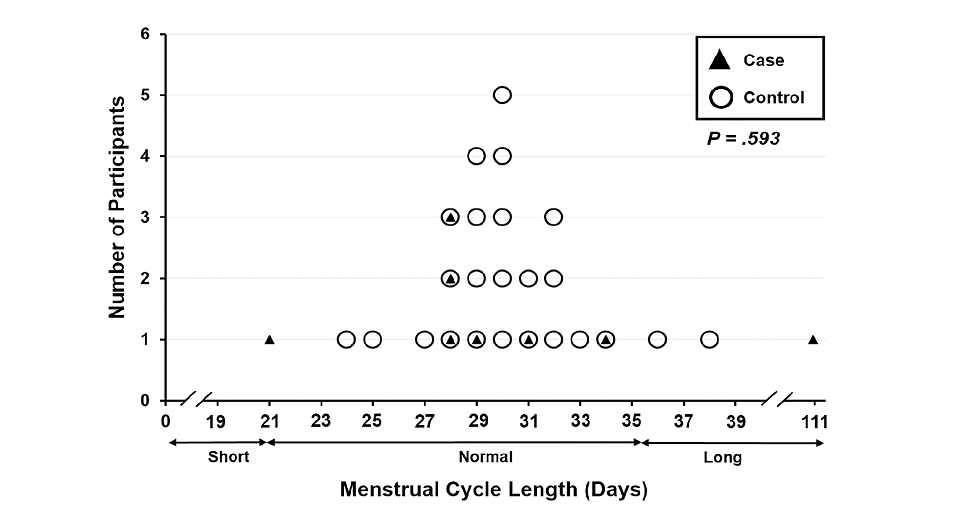
Professor Prior and her colleagues at the Centre for Menstrual Cycle and Ovulation Research (CeMCOR) initiated the Menstruation & Ovulation Study 2 (MOS2) with a number of scientific objectives including to investigate the daily experiences of women with PCOS. The study included eight women with physician-diagnosed PCOS, matched with 24 age- and BMI-matched controls. The participants, all from Metro Vancouver, maintained daily Menstrual Cycle Diary© entries and recorded an array of physical and emotional experiences, such as menstrual flow, cramps, breast tenderness, feeling of energy and self-worth and negative moods.
Contrary to initial hypotheses that women with PCOS would be without ovulation and have longer cycles, the study found no significant differences in menstrual cycle lengths or luteal phase durations between the PCOS and the control groups. Professor Prior stated, “We expected to see more menstrual irregularities and shorter luteal phases in women with PCOS, but surprisingly, the cycle characteristics were quite similar to those of the controls.” This unexpected finding suggests that regular, month-apart cycles in women with PCOS may be more common than previously thought, especially as women age into their 30s and 40s.
The study also explored the emotional and psychological impacts of PCOS. Although it was hypothesized that women with PCOS would experience lower self-worth and more negative moods, the results did not support these assumptions. Both groups reported similar levels of frustration, depression, and anxiety. However, women with PCOS did report significantly higher levels of “outside stress.” Kaitlin Nelson commented, “The increased outside stress observed in women with PCOS could be indicative of the broader societal and health challenges faced by these individuals, exacerbated during the pandemic.”
One of the study’s strengths was its use of validated tools such as the Quantitative Basal Temperature© (QBT©) method to assess ovulation, and the comprehensive Menstrual Cycle Diary©. Daily entries minimized recall bias. This rigorous approach provided detailed insights into the daily lives of women with PCOS, revealing that the majority of their experiences during the pandemic were not significantly different from those of the control group in most respects.
The researchers also highlighted the broader implications of their findings. “Understanding the day-to-day experiences of women with PCOS is crucial for developing effective interventions and support systems,” said Professor Prior. This study’s insights could inform healthcare providers and policymakers, emphasizing the need for tailored resources and support for individuals with PCOS.
In conclusion, the MOS2 study offers valuable insights into the menstrual and daily experiences of women with PCOS, challenging some common assumptions about the condition. It underscores the importance of considering individual variability and the potential for greater menstrual regularity in mid-life. The findings pave the way for further research to explore the diverse experiences of women with PCOS and to develop strategies that improve their quality of life.
About the researchers

Dr. Jerilynn Prior
Dr. Jerilynn Prior, 2019 Michael Smith British Columbia Clinician-Scientist, is a professor of endocrinology at UBC with an H-Index of 74. She is the founder (in 2002) and scientific director of the UBC Centre for Menstrual Cycle and Ovulation Research (CeMCOR). Dr.… Prior’s 45+ year academic career prospectively researches ovulation and progesterone within women’s menstrual cycles, during adolescence and perimenopause, and progesterone stimulating bone formation and preventing osteoporosis. CeMCOR is the pioneering, world’s first and sole ovulation-focussed research centre. It’s website (www.cemcor.ubc.ca) garners ~3,000 page-views/day in >200 countries, providing practical, science-based discoveries on cramps, heavy flow, polycystic ovary syndrome, perimenopausal night sweats. Dr. Prior and CeMCOR are innovators of unique reproductive physiology concepts and therapy information. April 2024

Kaitlin Nelson
Kaitlin Nelson is pursuing a Master of Science in the Experimental Medicine program at the University of British Columbia, where she works under the guidance of endocrinology expert, Dr. Jerilynn Prior.… Her research focuses on assessing the health-related quality of life changes in those living with androgenic PCOS following a 6-month treatment with Cyclic Progesterone and Spironolactone. In addition to her academic pursuits, Kaitlin contributes her time and expertise to the Centre for Menstrual Cycle and Ovulation Research, focusing on knowledge translation, and to the Cedar Cottage Community Garden, where she assists in labor and grant writing. As she progresses in her studies and volunteer work, Kaitlin is committed to deepening our understanding of PCOS and enhancing healthcare for women through both innovative research and active community engagement. https://kaitlinnelson.ca/ kaitlin.nelson@ubc.ca
Journal reference
Nelson, K., Shirin, S., Kalidasan, D., & Prior, J. C. (2023). Experiences of women living with Polycystic Ovary Syndrome: A pilot case-control, single-cycle, daily Menstrual Cycle Diary study during the SARS-CoV-2 pandemic. PLOS ONE. DOI: https://doi.org/10.1371/journal.pone.0296377