Cutting Emissions: Autonomous Electric Tow Trucks Transform Aircraft Taxiing
Stefano Zaninotto and colleagues developed an algorithm that plans conflict-free routes and schedules for autonomous electric tow trucks moving aircraft, and simulations suggest it can cut taxiing fuel use.
Read the original paper
A new algorithm for autonomous tow trucks promises to revolutionize aircraft taxiing, potentially saving the aviation industry millions of dollars in fuel costs while significantly reducing emissions and noise pollution. This innovative solution, developed by Stefano Zaninotto, Dr. Jason Gauci, and Dr. Brian Zammit from the University of Malta, is detailed in their recent study published in the journal Aerospace.
Stefano Zaninotto with his colleagues, has created an algorithm designed to manage taxi operations using autonomous tow trucks. “Our algorithm aims to minimize taxi-related delays and route lengths while maximizing the efficient use of tow trucks,” says Zaninotto. The aviation industry has long been grappling with the environmental and economic impacts of aircraft taxiing. Traditionally, aircraft use their engines for taxiing, leading to high fuel consumption and significant emissions. In 2022, taxiing phases constituted about 1 in 7 of the total duration of intra-European flights, consuming approximately five million tonnes of fuel annually.
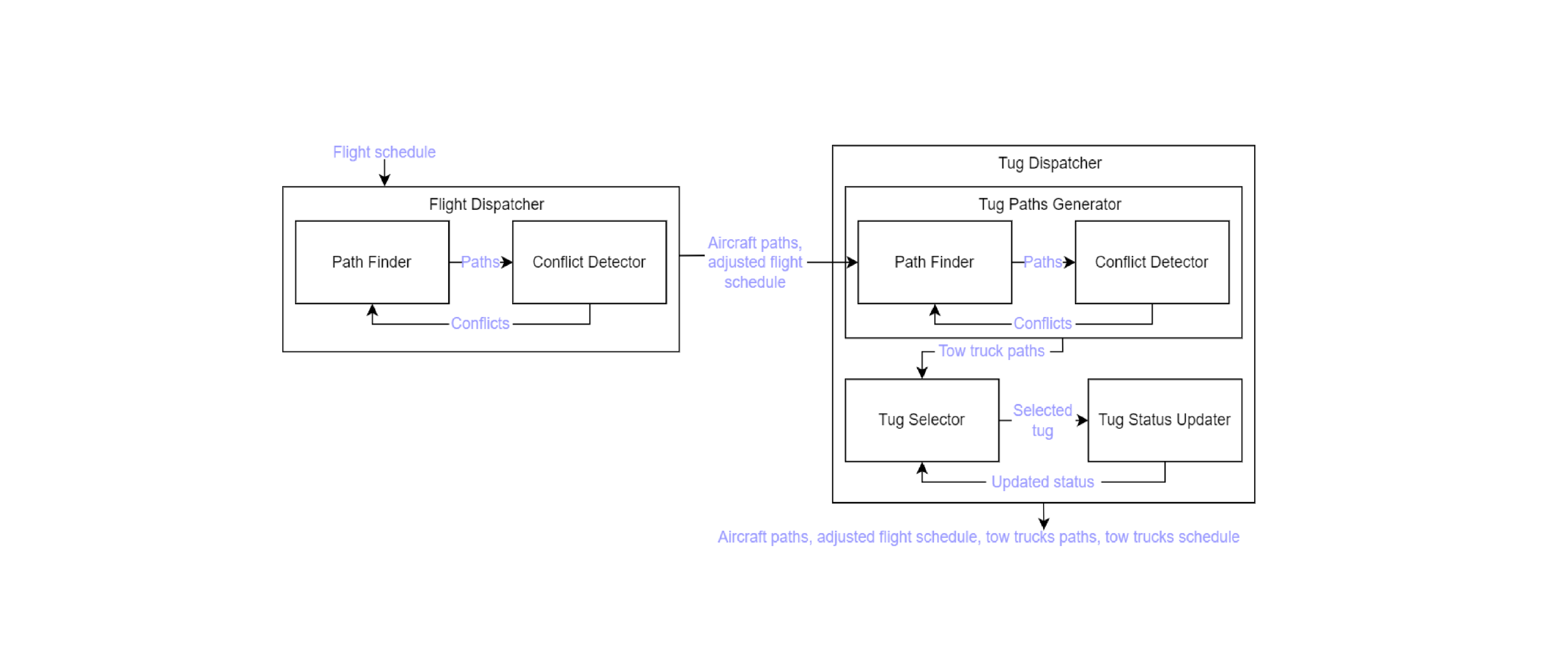
The novel algorithm focuses on optimizing ground operations by deploying electric tow trucks to move aircraft between gates and runways. This system operates strategically, employing a centralized approach to pre-plan all routes, adjust schedules, and assign tow trucks. By doing so, it aims to eliminate traffic conflicts and enhance overall efficiency.
The study highlights several key findings. Firstly, the algorithm successfully reduces taxi delays and emissions. It considers various factors, such as the battery state of charge of the tow trucks and the availability of charging stations, ensuring that the tow trucks can operate without interruptions. The system is also scalable and adaptable, having been rigorously tested across different airport layouts and traffic volumes.
Zaninotto explains, “Our system addresses the deficiencies of existing approaches by focusing on conflict-free solutions and efficient tow truck utilization. It can manage multiple active runways and allocate tow trucks strategically.” This adaptability is crucial, given the diverse and dynamic nature of airport environments.
Moreover, the study’s simulations indicate significant fuel savings. The researchers estimate that using tow trucks for taxiing can reduce fuel consumption compared to conventional methods. This not only cuts costs for airlines but also supports environmental sustainability goals. “Reducing fuel consumption during taxiing is a critical step towards achieving carbon neutrality in aviation,” notes Zaninotto.
The system also enhances safety by continuously monitoring for potential conflicts during taxiing operations. This includes checking for conflicts between aircraft and tow trucks, as well as among the tow trucks themselves. The algorithm employs advanced techniques to ensure that all movements are coordinated and safe.
In summary, this groundbreaking algorithm represents a major advancement in airport ground operations. By leveraging autonomous tow trucks, it offers a practical and effective solution to the challenges of aircraft taxiing. The researchers’ work paves the way for greener, more efficient airports, aligning with global sustainability targets.
About the researcher

Dr. Gauci
Dr. Gauci holds a degree in Electrical Engineering from the University of Malta (Malta) and a PhD in Aerospace Engineering from Cranfield University (UK). He is a senior lecturer at the Institute of Aerospace Technologies at the University of Malta, and an adjunct assistant professor at Embry-Riddle Aeronautical University (Worldwide).… His research interests include: Unmanned Aerial Vehicles (UAVs), Machine Learning for aviation applications, Air Traffic Management (ATM), avionics, and Human-Computer Interaction (HCI). Dr Gauci has been involved in several national- and European-funded research projects and is the author/co-author of over 35 academic papers. He is also one of the inventors on several patent applications. Dr Ing. Brian Zammit has been involved in avionics-related research since joining the University in 2005, where he worked as a research assistant on European-funded projects. His work has led to authoring and co-authoring of several papers and patents related to aircraft operation and optimisation. Dr Zammit obtained his PhD in 2015 from the University of Malta and has since supervised, co-supervised and examined several undergraduate, MSc and PhD candidates. Currently, he is a senior lecturer within the Department of Electronic Systems at the University of Malta where he teaches Fundamentals of Electronics, Instrumentation and Data Acquisition Systems.
Journal reference
Zaninotto, Stefano, Jason Gauci, and Brian Zammit. “An Autonomous Tow Truck Algorithm for Engineless Aircraft Taxiing.” Aerospace 2024, 11, 307. DOI: https://doi.org/10.3390/aerospace11040307