New Seedless Nagpur Mandarin Set to strengthen Citrus Industry
Dr. Vijayakumari Narukulla's team grew seedless triploid Nagpur mandarin plants from cultured fruit endosperm, and early trials showed their fruits were commercially seedless.


A significant advancement for citrus farming has been achieved as researchers have successfully developed a triploid seedless variety of Nagpur Mandarin (Citrus reticulata Blanco) through the innovative technique of endosperm rescue. Nagpur Mandarin, also known as Nagpur Santra, is highly regarded across India for its sweet flavor and vibrant color. Traditionally, this fruit contains numerous seeds, which can be a deterrent for consumers and limit its processing potential. By creating a seedless variety, the researchers aim to meet consumer preferences and open new markets. This breakthrough not only represents a technological milestone but also holds significant economic promise, potentially promoting the citrus industry by increasing the acceptance of Nagpur Mandarin both domestically and internationally.
The research team, led by Dr. Vijayakumari Narukulla, comprised Yogesh Lahane, Shashi Pandey, Krutika Fiske, Priya Uge, and KartikiKawale from the ICAR-Central Citrus Research Institute in Nagpur, India, along with Dr. Vasileios Ziogas from the Hellenic Agricultural Organisation. Their work was published in the peer-reviewed journal Agronomy.
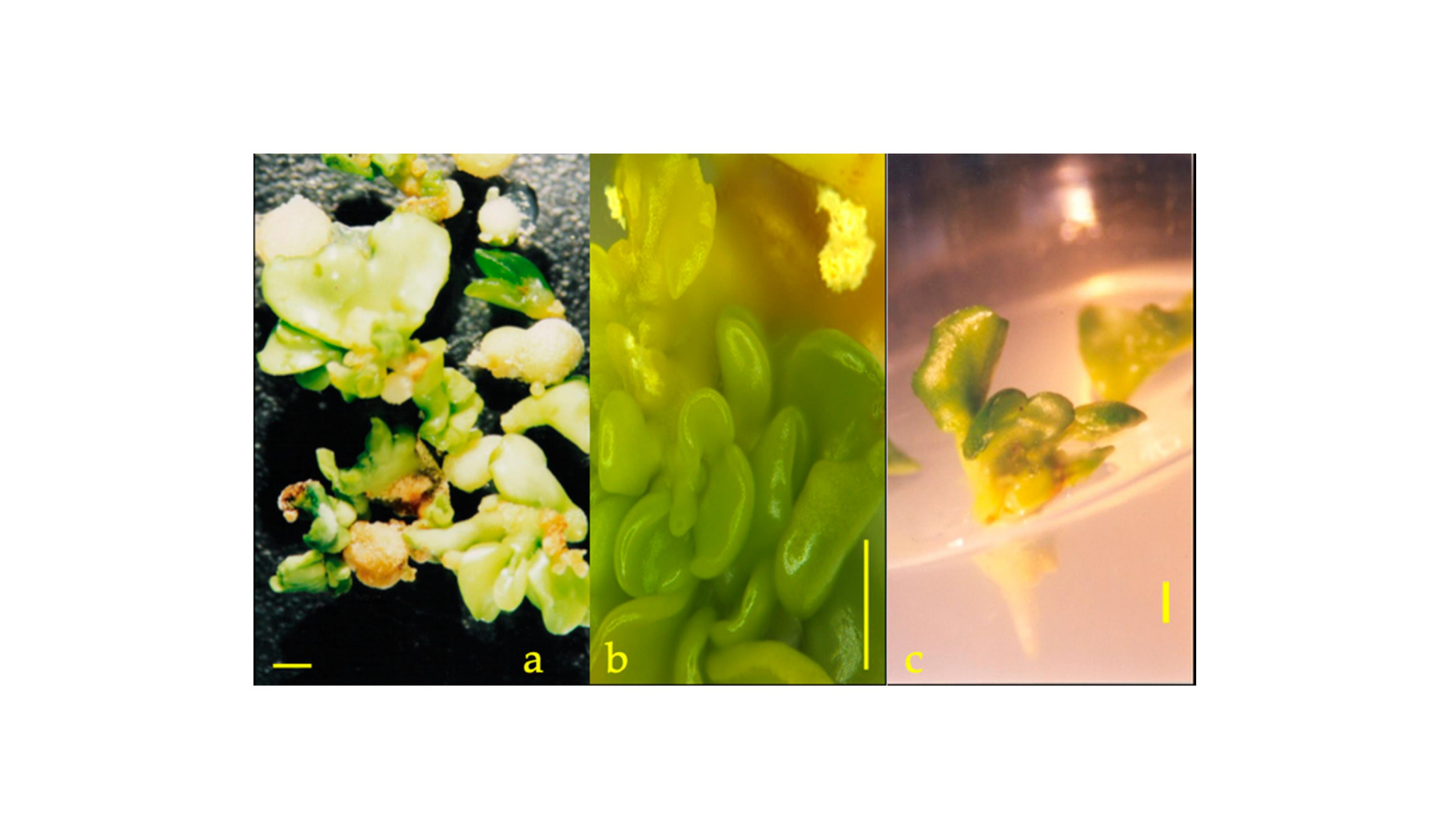
The innovative process began with the selection of high-yielding trees of Nagpur Mandarin from the CCRI experimental farm. Thousands of flowers were tagged during the flowering season, and the immature fruits were harvested a few months post-anthesis. The endosperms from these fruits were excised and cultured in a controlled laboratory environment. The researchers experimented with various media formulations to induce primary callus and promote embryogenesis.
Maximum response and survival rates for primary callus induction were achieved using a medium containing Murashige and Tucker (MT) supplemented with Malt Extract, Casein Hydrolysate (CH), and 2,4-dichlorophenoxyacetic acid. The transition from callus to greenish embryogenic form occurred when the cultures were shifted to media containing MT, CH, adenine sulphate, and Benzyl Adenine (BA). This combination resulted in the highest percentage of cotyledonary embryoids.
The subsequent stages involved in vitro shoot and root regeneration from the embryoids. The highest response for shoot differentiation was observed in MT medium supplemented with adenine sulphate, Gibberellic Acid (GA3), and BA. The triploid shoots developed were mini-grafted onto five-month-old rough lemon rootstocks, which were then transferred to the field.
The confirmed triploid plants, which were field-planted on the CCRI experimental farm, displayed promising results. “Our research has demonstrated the successful regeneration of stable triploids from hybrid endosperm via somatic embryogenesis, which is a pioneering achievement in Citrus triploid breeding in India,” said Dr. Vijayakumari.
Initial evaluation trials indicated that the fruits from these triploid trees were commercially seedless, making them highly desirable for both local consumption and international export. The dark green leaves and other morphological features of the triploid plants further confirmed their distinct characteristics compared to diploid counterparts.
This breakthrough in developing seedless Nagpur Mandarin could stimulate the citrus industry by reducing the limitations posed by high seed content. It also opens new avenues for breeding other seedless citrus varieties using similar biotechnological approaches.
Dr. Vijayakumari and her research team plan to continue their work by optimizing the process and exploring the commercial viability of the seedless mandarins on a larger scale. This innovation not only holds potential for higher profitability for farmers,processing industries but also enhances the competitiveness of Indian mandarins in the global market.
About the researcher

Dr. (Mrs) Vijayakumari Narukulla
Dr. (Mrs) Vijayakumari Narukulla obtained her PhD from IARI, New Delhi in the Horticulture, Olericulture (Vegetable breeding) Genetics and Pomology in 1990. She is an alumni of ANGRAU, Hyderabad and IARI, New Delhi and joined as a scientist at CCRI, Nagpur in 1991.… She had contributed significantly for Citrus Improvement Programs in the fields of Varietal Improvement through Clonal Selection & Sanitation, Introduction & Quarantine of Exotic Germplasm, and Micro-budding of Citrus. She has also worked on Mutation breeding, Hybridization and Salinity screening. She was instrumental in developing research facilities viz., full fledged Tissue culture laboratory, Molecular Markers Laboratory, 13 Green Houses, Field and Protected foundation blocks etc at CCRI, Nagpur. She has successfully standardized protocols of (i) “in-vitro shoot tip grafting (STG)”,(ii) Double grafting, (iii) Micro budding (iv) In vitro regeneration protocols of important citrus scions and rootstocks and (v) worked on molecular markers. The STG based protocol is being successfully used at CCRI for ‘Large Scale Production and supply of disease free planting stock of Nagpur Mandarin’. About 5.51 Lakh budlings were supplied to farmers/ nursery men from all over the country till March 2024 and a revenue of Rs.2.93 crore was generated. 10 MoUs were signed for technology transfer for large scale multiplication of planting stock between 2014-23. This technology is being adopted by all the Citrus growing regions of India. Cleaned 23 citrus exotic cultivars and widened the citrus gene pool. She is one of the authors in the granted patent on “DNA BASED DIAGNOSTICS FOR IDENTIFICATION OF CITRUS ROOTSTOCK CULTIVARS” in year 2022. Micro-budding technology had facilitated shortening of citrus nursery phase and resulted in savings in costs and time. Currently she is working on polyploidy manipulation for seedlessness. Attended International Conference at Turkey in 2022 and Italy in 2023. Mrs. Vijayakumari was a recipient of Dr. Harbhajan Singh award and a gold medal for the year 1991. She was conferred the prestigious ICAR award ‘‘Dr. Punjabrao Deshmukh Outstanding Woman scientist Award’’ for the year 2011. Recipient of Shri. Giridhari Lal Chadhdha memorial gold medal in fruits from the National Academy of Horticultural Science, New Delhi in 2017. The technology titled “Retrofitting nursery phase for optimizing production cost of citrus planting stock” developed by Dr. Vijayakumari N. was certified by ICAR, New Delhi, on 16th July, 2023.
Journal reference
Narukulla, V., Lahane, Y., Pandey, S., Fiske, K., Uge, P., Kawale, K., &Ziogas, V. (2023). “Development of Triploid Seedless Nagpur Mandarin (Citrus reticulata Blanco) through Endosperm Rescue.” Agronomy, 13(2814). DOI: https://doi.org/10.3390/agronomy13112814