Coastal Villages’ Carbon Emissions and Reduction Strategies
Dr. Guanhua Qu's team found that building energy use and transport dominate carbon emissions in coastal Hebei villages, and that different village types need tailored reduction strategies.


Coastal villages are vital hubs of human activity, blending traditional lifestyles with the demands of modern living. With increasing attention on reducing carbon footprints, these communities face unique challenges and opportunities. Their strategic locations and diverse industrial patterns make coastal villages both significant contributors to carbon emissions and promising candidates for carbon reduction. Understanding the specific factors that influence emissions in these areas is crucial for developing effective strategies to minimize their environmental impact.
As global climate concerns intensify, the focus on carbon reduction strategies has expanded across various sectors, including rural areas. Coastal villages, due to their unique geographical and economic characteristics, hold significant potential for carbon emission optimization. Led by Dr. Guanhua Qu along with Dr. Zejun Yu and Dr. Lei Ren from Tianjin University, Dr. Zhixin Li and Dr. Yao Wang from Tsinghua University, the team has investigated the carbon emission composition and reduction potential of coastal villages in China. Their findings, published in the journal Buildings, offer valuable insights into sustainable development in these regions.
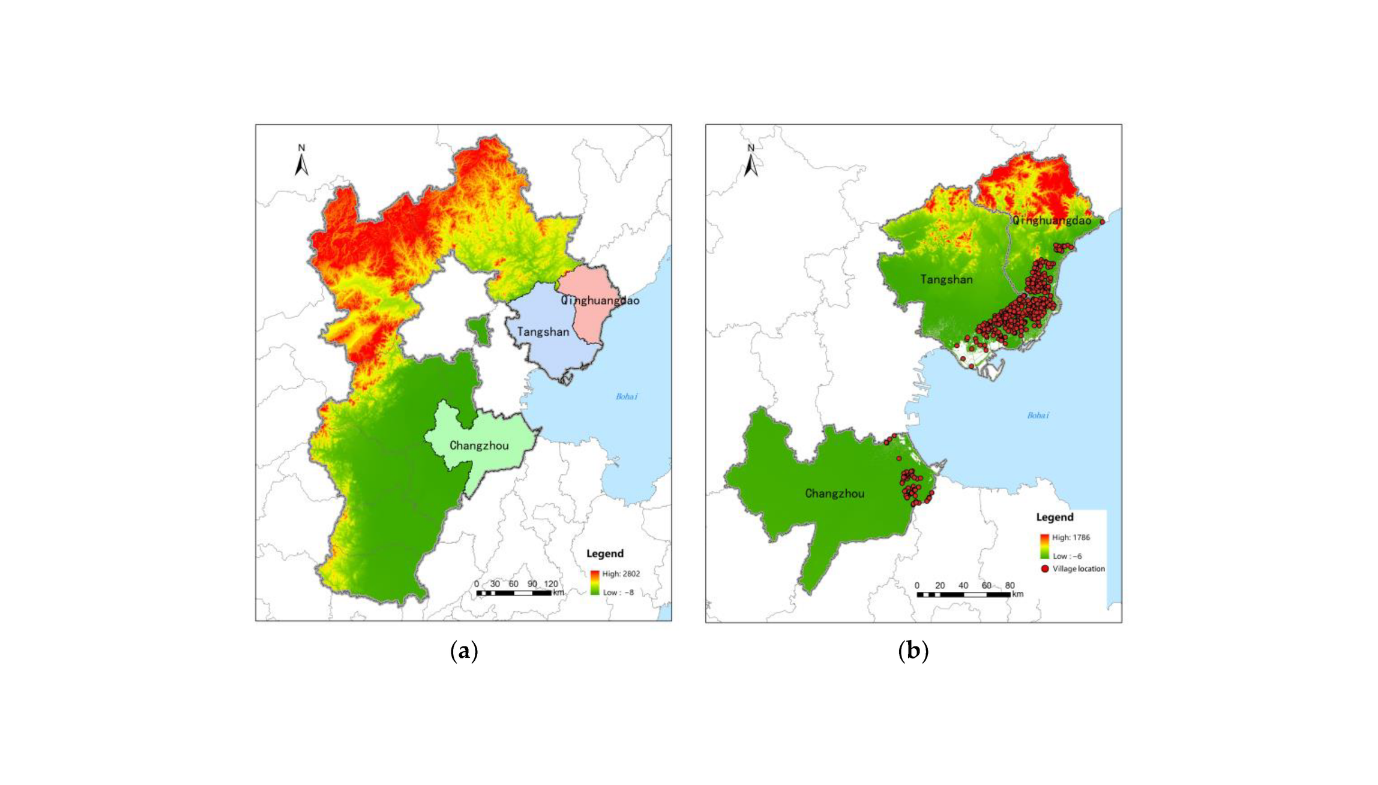
Zejun Yu and the team conducted a comprehensive study focusing on coastal villages in Hebei Province, China. The study aimed to categorize carbon emissions, identify key influencing factors, and propose tailored reduction strategies. The researchers gathered data through field research, questionnaires, and remote sensing maps, ensuring a thorough analysis of carbon emissions from various sources, including agricultural activities, residential life, transportation, and waste management.
The researchers employed a k-means clustering algorithm to classify the villages based on their carbon emission characteristics. This method allowed for the identification of three major clusters, each with unique emission profiles. The results revealed that building energy consumption and transportation were the largest contributors to carbon emissions, followed by agricultural activities and waste management. In particular, building energy consumption and waste emissions were highest in one cluster, while agricultural and transportation emissions dominated another.
“Our research demonstrates that different types of villages require tailored approaches to effectively reduce carbon emissions,” noted Qu. The study’s categorization provides a foundation for developing specific carbon reduction strategies for each type of village. The study also explored the correlation between various factors and carbon emissions through regression analysis. Key factors such as population size, cultivated land area, livestock numbers, and energy consumption were analyzed to understand their impact on overall emissions. This analysis provided a detailed understanding of the driving forces behind carbon emissions in different village types.
The research team’s findings underscore the critical role of low-carbon planning in coastal villages. With better infrastructure and economic foundations, these villages have significant potential for carbon emission reduction. By focusing on optimizing energy consumption, improving waste management practices, and promoting sustainable agricultural practices, coastal villages can contribute substantially to national and global carbon reduction goals.
In summary, the study conducted by Zejun Yu, Guanhua Qu and their colleagues offers a comprehensive analysis of carbon emissions in coastal villages and proposes targeted reduction strategies. The research highlights the importance of tailored approaches in addressing the unique challenges and opportunities in different village types. As the global climate crisis continues to evolve, such studies provide valuable insights and practical solutions for sustainable rural development.
About the researchers

Dr. Guanhua Qu
Dr. Guanhua Qu obtained his Ph.D. in Architecture from Tianjin University, where he is currently employed. He holds the LEED AP: BD+C certification awarded by USGBC and the WELL AP certification awarded by IWBI. Additionally, he serves as a reviewer for several journals and is a member of the editorial board for international conferences.… His primary research areas include the human factors impact of visual physiological characteristics, the physiological impact of indoor environments on humans, and environmental assessment. In these fields, he has published over 30 papers, applied for more than 10 invention patents, and led or participated in over 10 research projects.

Zejun Yu
Zejun Yu is a doctoral candidate at the Institute of Architectural Technology, School of Architecture, Tianjin University. His main research interests are building light ecology and building energy conservation.… At present, he is mainly engaged in exploring the status quo of rural carbon emissions in China and designing the optimal development path of rural carbon emissions, and has studied and published several important papers in this field. His scientific focus is on the status quo and optimal development path of carbon emissions in the Beijing-Tianjin-Hebei region of China.

Yao Wang
Yao Wang, a scholar at Tsinghua University, focuses on the research of intelligent construction and BIM technology. She serves as the scientific research manager of the Scientific Research Management Department, the member of the Intelligent Construction Branch of China Building Standardization Association (CECS), the engineer, the contracted author of the new construction magazine "Housing and… Real Estate" and the expert of Zoominglian Standard Acquisition Committee. She has participated in the compilation of 2 livable housing and intelligent construction standards, published more than 30 academic papers, 6 utility model patents, drafted 2 industry mongraph, participated in more than 10 research topics.

Lei Ren
Lei Ren is a doctoral candidate at School of Architecture, Tianjin University. She holds the LEED AP: BD+C certification awarded by USGBC and the WELL AP certification awarded by IWBI. Her primary research interests focus on the human factors affecting indoor environments, and the detection and prediction of environmental factors.… She has been deeply engaged in these fields for over six years, publishing more than 20 papers and applying for over 10 invention patents. Her main core achievement is revealing the impact of visual physiological factors on visual perception.
Journal reference
Yu, Z., Qu, G., Li, Z., Wang, Y., & Ren, L. Carbon Emission Composition and Carbon Reduction Potential of Coastal Villages under Low-Carbon Background. Buildings, 2023, 13, 2925. DOI: https://doi.org/10.3390/buildings13122925