Efficient Catalysts Revolutionize Sulfur Removal in Fuel Refining
Professor Antonio Araujo's team made cobalt-molybdenum catalysts on mesoporous silica supports that removed sulfur from thiophene in a model fuel stream without forming unwanted byproducts.


Sulfur in fuels is a significant environmental concern, contributing to air pollution and acid rain when burned. To address this, scientists are constantly seeking better ways to remove sulfur from fossil fuels. One promising approach involves using specially designed materials called mesoporous catalysts. These catalysts are like tiny sponges with lots of holes, which help them catch and convert sulfur compounds into harmless substances. This new research focuses on improving the efficiency of these catalysts, making the process cleaner and more effective than ever before.
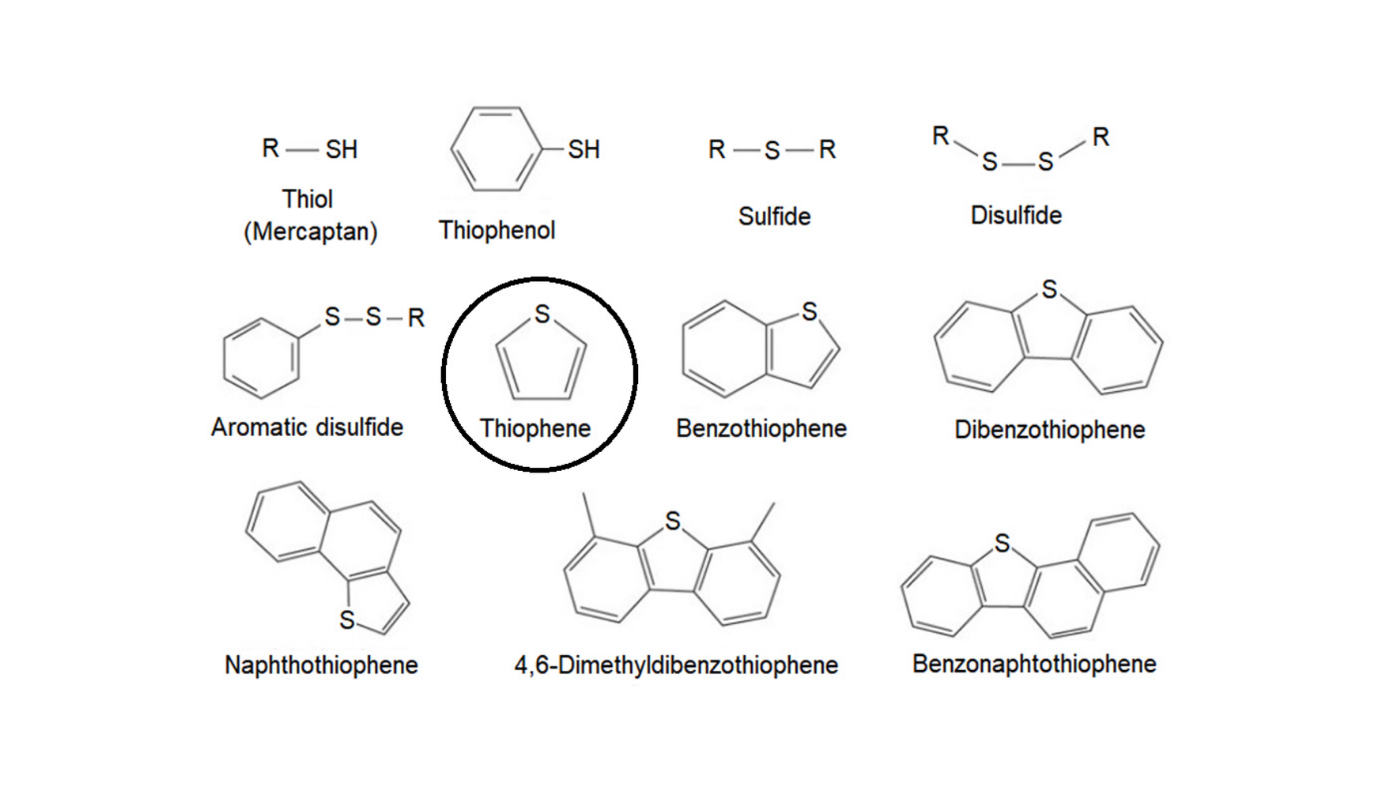
Researchers have developed innovative mesoporous catalysts that significantly improve the hydrodesulfurization (HDS) of thiophene, a sulfur-containing compound found in crude oil. The team, led by Professor Antonio Araujo along with Professor Marcio Araujo, Dr. Jilliano Silva, and Professor Valter Fernandes Jr. from Federal University of Rio Grande do Norte; Dr. Ana Coutinho from Fluminense Federal University; Professor Joana Barros from Federal University of Campina Grande; Dr. Marcelo Souza from Federal University of Sergipe; and Regina Delgado from Federal Rural University of Semi-Arid, published their findings in the journal Catalysts.
Hydrodesulfurization is a crucial process in modern refineries, aimed at reducing sulfur content in fossil fuels to meet stringent environmental regulations. The research focused on developing catalysts containing cobalt and molybdenum supported on mesoporous materials, specifically SBA-15 and AlSBA-15. These materials are known for their high specific surface area and large pore diameter, which enhance the dispersion of active metals and improve access to sulfur compounds during the HDS process.
Professor Araujo and his team synthesized the catalysts using a hydrothermal method, followed by co-impregnation with cobalt nitrate and ammonium heptamolybdate. The resulting CoMo/SBA-15 and CoMo/AlSBA-15 catalysts were characterized by various techniques, including X-ray diffraction (XRD), thermogravimetric analysis (TG/DTG), and scanning electron microscopy (SEM). XRD analysis confirmed the presence of MoO3, Co3O4, and CoMoO4 oxides, which are active in the HDS reactions.
In laboratory tests, these catalysts demonstrated impressive activity for thiophene hydrodesulfurization in a n-heptane stream, producing mainly cis- and trans-2-butene, 1-butene, n-butane, and minor amounts of isobutane. Notably, the presence of undesirable byproducts like 1,3-butadiene and tetrahydrothiophene was not detected. The researchers proposed a reaction mechanism involving desulfurization, hydrogenation, dehydrogenation, and isomerization steps to explain the observed product distribution.
The study’s significant findings highlight the advantages of using mesoporous materials as supports for HDS catalysts. “The high specific surface area and pore structure of SBA-15 and AlSBA-15 are fundamental in maximizing metal dispersion and improving the efficiency of hydrodesulfurization processes,” said Professor Araujo. These catalysts showed potential for producing ultra-low sulfur fuels, which are essential for reducing SOx emissions and meeting environmental standards.
The researchers emphasize the need for further investigation into the modification of mesoporous supports and the optimization of metal loading to enhance the performance of HDS catalysts. They also suggest exploring the use of other mesoporous materials and mixed-metal oxides to further improve desulfurization efficiency and selectivity.
This study provides a promising step towards more efficient and environmentally friendly hydrodesulfurization processes, contributing to cleaner fuel production and reduced atmospheric pollution. Professor Araujo and his colleagues are optimistic about the future applications of their findings, aiming to revolutionize the fuel industry with greener and more effective desulfurization technologies.
Photos from Araujo Lab

The Laboratory of Combutibles and Lubricants (LCL) and the Catalysis and Petrochemistry Laboratory are linked to the Graduate Program in Chemistry at Institute of Chemistry at the Federal University of Rio Grande do Norte (IQ/UFRN). These laboratories work directly in the areas of petroleum and petrochemicals, aiming at the physical-chemical characterization of petroleum and derivatives, aiming at improving the quality of automotive fuels, in addition to developing analytical methodologies for processing petroleum and industrial waste.
The LCL coordinates one of the most important programs in Brazil in the area of fuels, which is the Program of Monitoring of Quality of Combustibles (PMQC), which is regulated by the National Agency of Petroleum, Natural Gas and Biofuels (ANP). In this program, the LCL collects samples of automotive fuels in the states of RN and PB and certifies their quality, providing an important service to society.
The LCP conducts research on the development of micro and mesoporous catalysts for application in petroleum and petrochemical industry processes, aiming at improving the quality of automotive fuels. Research topics include the removal of sulfur contaminants from fuels, the use of catalytic methods for the processing of petroleum industry waste (atmospheric residue, oily sludge and vacuum gas oil), and the co-processing of polymers, aiming at chemical recycling to obtain liquid fuels, using thermal and catalytic pyrolysis methods. The studies are carried out with thermal analysis equipment and a pyrolyzer coupled to chromatography and mass spectrometry.
About the researchers

Antonio S. Araujo
Antonio S. Araujo received his PhD degree in Inorgnic Chemistry at the University of Sao Paulo (Brazil). He was visiting scientist and postdoctoral fellow at Kent State University, As a postdoctoral researcher at KSU, he was involved with synthesis, characterization and acid properties of zeolites and silica based mesoporous materials.… His interest research is pyrolysis, kinetics and thermal analysis of catalytic degradation of heavy oil, petroleum residue and plastic wastes, using zeolites and hybrid micro-mesoporous materials as catalysts, with a focus on obtaining fuels and the environment. Prof Araujo is full professor of the Institute of Chemistry and researcher of the Brazilian National Council for Scientific and Technological Development (Brazil) and was cited in the “Who is Who in Thermal Analysis and Calorimetry” book, and in “Verified Synthesis of Zeolitic Materials” edited by IZA Also he is ad hoc consultant of the ACS - Petroleum Research Fund. Prof Araujo published over 200 peer-reviewed papers with over 4000 citations, six patents, with H-index of 34, and over 20 invited lectures at congresses.

Valter J. Fernandes
Valter J. Fernandes is PhD in Analytical Chemistry from the University of São Paulo, Post-Doctorate in Environmental Chemistry from INPE, Full Professor at the Chemistry Institute of UFRN, Coordinator of the Fuels and Lubricants Laboratory of UFRN - executor of the Fuel Research and Quality Program of the National Petroleum Agency in the state of… RN, Pro-Rector of Research of UFRN from 05/2011 to 08/2016, researcher at CNPq since 1993, Scientific Consultant for FINEP, FAPESP, NSF-National Science Foundation and CNPq, among others. Coordinator of the North/Northeast Network of Fuel Laboratories, permanent professor of the Graduate Programs in Chemistry and Materials Science and Engineering at UFRN, with 37 master's and doctoral supervisions completed. Author of 155 articles in indexed scientific journals (H index = 25), and 4 industrial application patents with a patent letter granted by INPI. His main research lines are: Application of nanostructured materials for tertiary recycling of polymers. Development of analytical methods for fuels, biofuels and petroleum. Evaluation and characterization of additives for fuels and biofuels.
Journal reference
Coutinho, A.C.S.L.S.; Barros, J.M.F.; Araujo, M.D.S.; Silva, J.B.; Souza, M.J.B.; Delgado, R.C.O.B.; Fernandes Jr., V.J.; Araujo, A.S. Hydrodesulfurization of Thiophene in n-Heptane Stream Using CoMo/SBA-15 and CoMo/AlSBA-15 Mesoporous Catalysts. Catalysts 2024, 14, 198. DOI: https://doi.org/10.3390/catal14030198