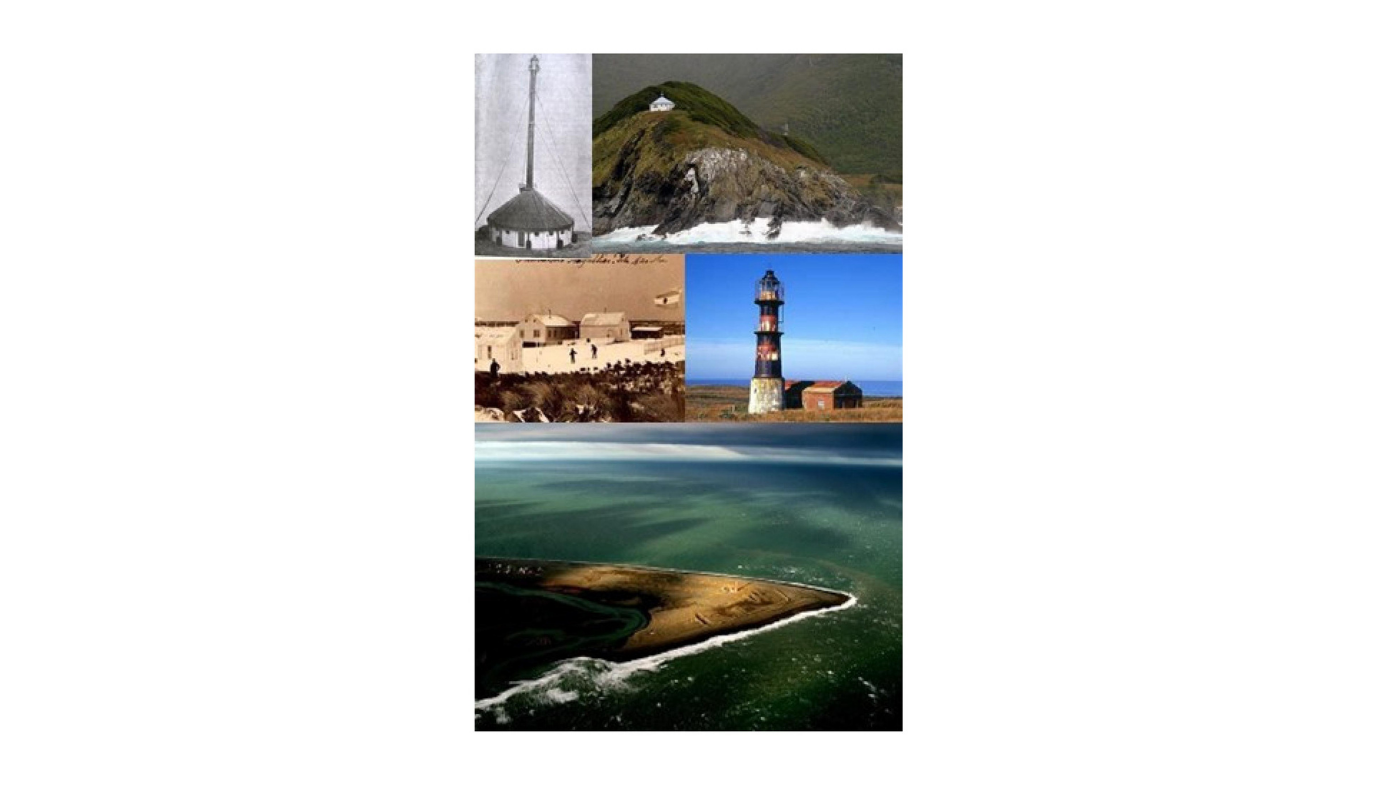
Rediscovering Weather Patterns from Patagonia’s Past
Dr. Pablo Canziani's team rescued historical weather records from Southern Patagonia, revealing a warm late nineteenth century followed by early twentieth-century cooling consistent with hemispheric records.


A time capsule revealing the secrets of weather patterns from over a century ago in one of the most remote and intriguing regions on Earth. Southern Patagonia, often referred to as the “End of the World,” offers a unique glimpse into past climates through meticulously recorded weather data. By delving into these historical observations, scientists have pieced together a climatic narrative that spans from the late XIXth to the early XXth century. This exploration not only deepens our understanding of historical climate trends but also provides critical insights that could shape future climate predictions.
Researchers have recently unveiled a detailed study of historical weather records from Southern Patagonia, shedding light on climatic trends from the late XIXth and early XXth centuries. This groundbreaking research, led by Dr. Pablo Canziani along with Professor Adrián Yuchechen from National Technological University in Argentina, Dr. Gabriela Lakkis from The Pontifical Catholic University of Argentina, and Oscar Bonfilli from the National Meteorological Service of Argentina, provides invaluable insights into the climate dynamics of this remote region. Their work, published in the journal Climate, is part of the Atmospheric Circulation Reconstructions over the Earth (ACRE) program, which aims to rescue and analyze historical climate data.
The study focuses on weather records from eleven locations across Southern Patagonia, including Tierra del Fuego, covering a span of several decades. By analyzing these records, the researchers were able to compare historical temperature trends with modern observations, providing a comprehensive view of the region’s climatic history.
Dr. Canziani emphasized the importance of these findings, stating, “Our analysis shows consistent behavior within the study region and aligns with Southern Hemisphere mean results, characterized by a warm late-XIXth century and a cooler early-XXth century. This consistency with sea surface temperature variability along the coasts of Patagonia and hemispheric records underscores the reliability of our rescued data.”
One of the key revelations from this study is the significant cooling observed in Southern Patagonia during the early XXth century. This cooling trend aligns with global temperature anomalies recorded during the same period. The team noted that the most negative temperature anomalies occurred during the early XXth century, with temperatures cooler than those observed in the previous two decades and continuing through the following decades. This pattern is consistent with other Southern Hemisphere records, suggesting a broader climatic shift during this time.
In addition to identifying temperature trends, the researchers also examined low-frequency variability, or climatic fluctuations occurring over periods longer than three years. They found that this variability in Southern Patagonia is similar to current patterns, indicating that the region’s climate dynamics have remained relatively stable over the past century. This finding is crucial for understanding long-term climate processes and improving predictive models for future climate scenarios.
The study also highlights the value of data rescue efforts in enhancing our understanding of historical climate variability. The ACRE program, which coordinated the data rescue actions, played a pivotal role in digitizing and standardizing the historical weather records used in this research. These efforts have not only preserved invaluable climate data but also provided a robust foundation for future studies on climatic trends and variability.
Dr. Canziani pointed out the broader implications of this work: “By extending our weather records back in time, we gain a better understanding of the physical processes driving climate variability. This knowledge is essential for testing and validating climate models, which in turn helps us predict future climate changes with greater accuracy.”
The comprehensive analysis conducted by Dr. Canziani and his team represents a significant advancement in our understanding of Southern Patagonia’s climate history. Their work not only fills a critical gap in historical climate records but also provides a benchmark for future research in the region. The detailed climatological insights gained from this study will inform both scientific research and policy decisions aimed at mitigating the impacts of climate change in this vulnerable part of the world.
In conclusion, Dr. Canziani and his colleagues have successfully revealed a treasure trove of historical weather data, offering a unique glimpse into the climate of Southern Patagonia over a century ago. Their findings underscore the importance of historical climate data in understanding long-term climatic trends and variability. As climate change continues to pose significant challenges globally, studies like this are vital for developing effective strategies to address its impacts.
About the researcher

Dr. Pablo Canziani
Dr. Pablo Canziani obtained his PhD.iIn Physical Sciences at the University of Buenos Aires, Argentina, in 1991, working on the existence and behavior of planetary waves in the ionosphere over the Southern Hemisphere.… Between 1992 and 1994 he was Visiting Scientist at the University of Washington Seattle as part of the Upper Atmosphere Research Satellite Science team, under the direction of Prof. James Holton. He is currently Investigador Principal (Senior Scientist) for CONICET, Argentina´s National Research Council. He is Director of the Unidad de Investigación y Desarrollo de las Ingenierías at the Facultad Regional Buenos Aires of of the National Technological University. Over the years he has been actively involved in the World Climate Research Programme with activities and membership both in SPARC and CLIVAR. He has also been active in a number of the UNEP Quadrennial Ozone Assessment Reports, both as author and reviewer, and as lead author in IPCC´s 4th Climate sasessment Report published in 2007. He has also been scientific adviser to Holy See delegations attending UN environmental conferences. He is currently a member of the Argentine Academy of Environmental Sciences. He is co-founder of UNESCO´s Centro Regional de Cambio Climatico y Toma de Decisión. His fields of expertise include timeseries analysis, space-time data analysis applied to atmospheric dynamics, climatology and dynamic climatology (climate variability and change), stratosphere-troposphere climate relationships, as well as climate change adaptation. In his career he has published over 70 peer-reviewed papers (mostly international) as well as peer-reviewed assessment and book chapters, as well as books.He is also involved in lecturing at Msc. and doctoral level at a number of universities, both in Argentina and abroad. https://www.researchgate.net/profile/Pablo-Canziani
Journal reference
Canziani, P.O., Lakkis, S.G., Yuchechen, A.E., Bonfilli, O. “Unlocking Weather Observations at the End of the World: Late-XIX and Early-XX Century Monthly Mean Temperature Climatology for Southern Patagonia.” Climate 2024, 12, 51. DOI: https://doi.org/10.3390/cli12040051