Beyond the Tag: Photo-ID for Threatened Turtles in Venezuela
María Gabriela Sandoval and Dr. Hector Barrios-Garrido found that matching photos of facial scale patterns can identify individual green turtles, with matching software proving fast and accurate alongside expert checks.


Marine turtles are among the most wide-ranging marine animals, spending much of their lives in coastal feeding areas where ongoing observation is essential for conservation. In the Gulf of Venezuela, southern Caribbean Sea, traditional tracking methods using flipper tags, small metal or plastic identifiers attached to a turtle’s flipper, have been common. However, these tags often fail due to loss, rust, or other damage. Scientists have been seeking a more affordable and non-harmful alternative, which led them to explore photo-identification — a method based on the distinct and permanent facial scale patterns unique to each turtle, much like a human fingerprint.

María Gabriela Sandoval and Dr. Hector Barrios-Garrido from the Grupo de Trabajo en Tortugas Marinas del Golfo de Venezuela and members of the Ecology Laboratory of the Experimental Faculty of Sciences at the University of Zulia (Maracaibo-Venezuela) built a collection of photographs showing individual turtles captured in the Gulf over nearly twenty years. Their research, published in the peer-reviewed Journal of Sea Research, compared two photo-matching computer programs – I3S Pattern, which analyzes patterns and shapes in images, and NaturePatternMatch, which uses advanced algorithms to detect visual similarities – with the traditional “by-eye” identification carried out by trained specialists.
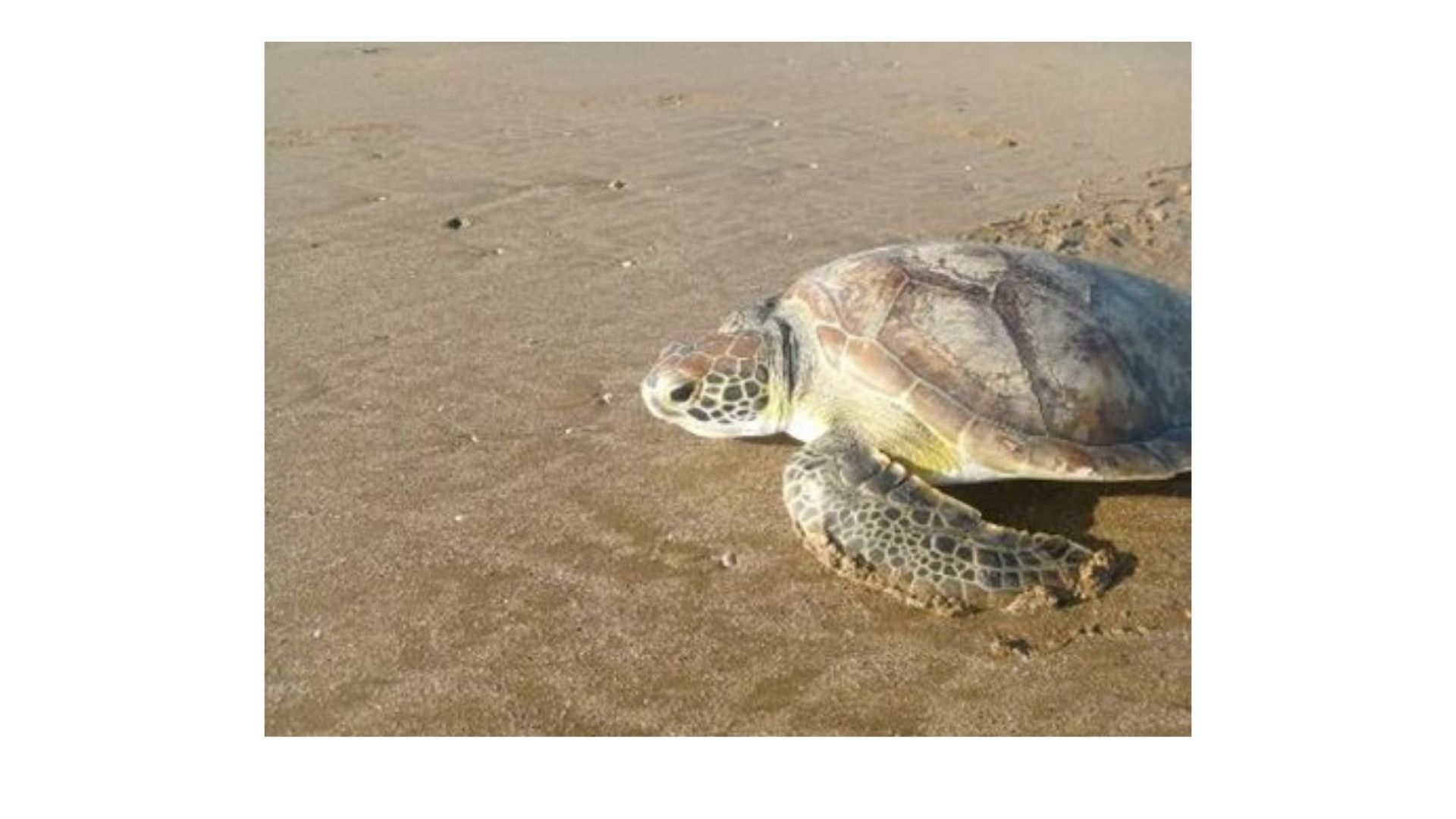
From numerous capture encounters, the team assembled a large set of clear, high-quality facial profile photos, most featuring green turtles (Chelonia mydas), a species known for its smooth carapace and herbivorous feeding habits. While manual identification by experts was flawless, it was time-consuming and impractical for managing large image collections. The I3S Pattern program reached a very high accuracy level in just seconds, performing significantly better than NaturePatternMatch. “Photo-ID lets us recognize individual turtles without handling or hardware. It’s fast, affordable, and a bridge for local participation—exactly what conservation needs in resource-limited settings and helps to reduce the problems related to the traditional tag method,” said Dr. Barrios-Garrido.

Photographic records of facial scales patterns. Photo I: A – post-ocular; B – temporal; C – sub-temporal; and D – central of green turtles in the Gulf of Venezuela. Photos II and III as example of mismatching.
One important conclusion from the research is the value of photographing both the left and right sides of a turtle’s face, since the arrangement of scales can differ greatly between the two sides. This increases the likelihood of correct identification, especially when only one side is visible during fieldwork. Sandoval and Dr. Barrios-Garrido also found that photo-identification could confirm the identity of turtles that had lost their tags, highlighting its usefulness alongside tagging. “Amid constraints, creativity matters. Led by an undergraduate, this work shows how simple, scalable tools can keep conservation moving when resources are limited”, Dr Barrios-Garrido added.
Sandoval and Dr. Barrios-Garrido’s findings show that while manual matching remains slightly more accurate, computer-aided tools like I3S Pattern are much faster for large image databases and still deliver excellent results when verified by human observers. “I3S Pattern offers a user-friendly platform and a high performance to the different evaluations in its application with marine turtles,” Dr. Barrios-Garrido explained.
Beyond its technical success, the study highlights the opportunity to involve local residents and volunteers in turtle monitoring. By training them to take consistent, clear profile photos, conservationists can gather more data and overcome challenges such as limited staff and funding. This approach is especially valuable in places like the Gulf of Venezuela, where conservation programs often face resource shortages due to current national economic constraints. “This low-cost, non-invasive approach speeds up matching across large photo libraries and opens the door for communities and volunteers to contribute meaningful data to conservation”, said Dr. Barrios-Garrido.
Sandoval and Dr. Barrios-Garrido recommend expanding the photo database, a structured collection of turtle images and related information, to include many more individual turtles. This would allow for better testing and improvement of the software, particularly for species whose facial patterns are less distinctive. Combining automated image searches with manual checks could create a robust, cost-effective system to help safeguard these threatened marine animals.
About the researchers

María Gabriela Sandoval
María Gabriela Sandoval is a biologist dedicated to the conservation of marine turtles and coastal ecosystems in the southern Caribbean. She has been actively involved with GTTM-GV (Grupo de Trabajo en Tortugas Marinas del Golfo de Venezuela), a non-governmental organization committed to the research and protection of marine turtles in the Gulf of Venezuela.… Through her work with GTTM-GV, María Gabriela has contributed to long-term monitoring programs, community outreach, and conservation strategies in one of the region's most ecologically and culturally significant coastal zones. María Gabriela holds a strong interest in applied research that bridges field science with practical conservation tools. Her work aims to support evidence-based management and enhance local capacity to safeguard marine biodiversity. She is also an active contributor to scientific publications and collaborative research networks focused on marine megafauna conservation.

Hector Barrios-Garrido
Hector Barrios-Garrido is a Venezuelan biologist and conservation social scientist with over 27 years of experience dedicated to the research and protection of marine turtles and coastal ecosystems in the Caribbean, West Africa, and Red Sea regions.… He currently serves as a Senior Marine Megafauna Specialist at King Abdullah University of Science and Technology-KAUST Beacon Development (KBD), where he leads marine turtle research and monitoring programs across Saudi Arabia’s western coastline. Hector is an honorary and founder member of GTTM-GV (Grupo de Trabajo en Tortugas Marinas del Golfo de Venezuela), an NGO with a strong grassroots conservation presence in the Gulf of Venezuela. His academic work integrates ecological research with socio-environmental perspectives, addressing issues such as indigenous use of turtle resources, conservation conflicts, and community-based monitoring approaches. Hector has authored or co-authored over 80 scientific publications, which have collectively received more than 1,200 citations, reflecting a strong regional and international impact. He is also an active member of the IUCN Marine Turtle Specialist Group and frequently collaborates on transboundary marine conservation initiatives. His research continues to bridge science, policy, and traditional ecological knowledge to inform more inclusive and effective conservation strategies.
Journal reference
Sandoval, M.G., Barrios-Garrido, H. “Photo-id as an alternative to monitor marine turtles in the Gulf of Venezuela.” Journal of Sea Research, 2025. DOI: https://doi.org/10.1016/j.seares.2025.102574