Taking Asthma Care to School: Improving Treatment, Reducing Hospital Visits, and Closing Health Disparities Gaps
Professor Kimberly Arcoleo's team found that after their school nurse began giving them daily asthma medicine, children had better asthma control and far fewer emergency visits and hospital stays.


Millions of American children live with asthma, a condition in which inflamed airways make breathing hard. Daily preventive inhalers, called controller medicines, work well and most insurance plans cover them, yet many children are undertreated. Missed doses, poor inhaler technique, ongoing exposure to triggers and infrequent follow-up care leave their asthma poorly controlled. These problems fall hardest on children from historically marginalized communities, and schools can play a crucial role in helping.
Professor Kimberly Arcoleo of Michigan State University evaluated a school-based asthma therapy program in everyday practice. She worked with Musmulyono Musmulyono and Alli Walsh, also of Michigan State University; Dr. Colleen McGovern of the University of North Carolina Greensboro; Dr. Elizabeth Allen and Dr. Mary Kay Irwin of The Ohio State University and Nationwide Children’s Hospital; Ian Dela Cruz of Nationwide Children’s Hospital; Dr. Katia Noyes of the University at Buffalo; Dr. Peter Veazie, Dr. Holly McGregor and Dr. Jill Halterman of the University of Rochester; and Dr. Samantha Harden of Virginia Tech. The work is published in the peer-reviewed journal, Journal of Allergy and Clinical Immunology: Global.
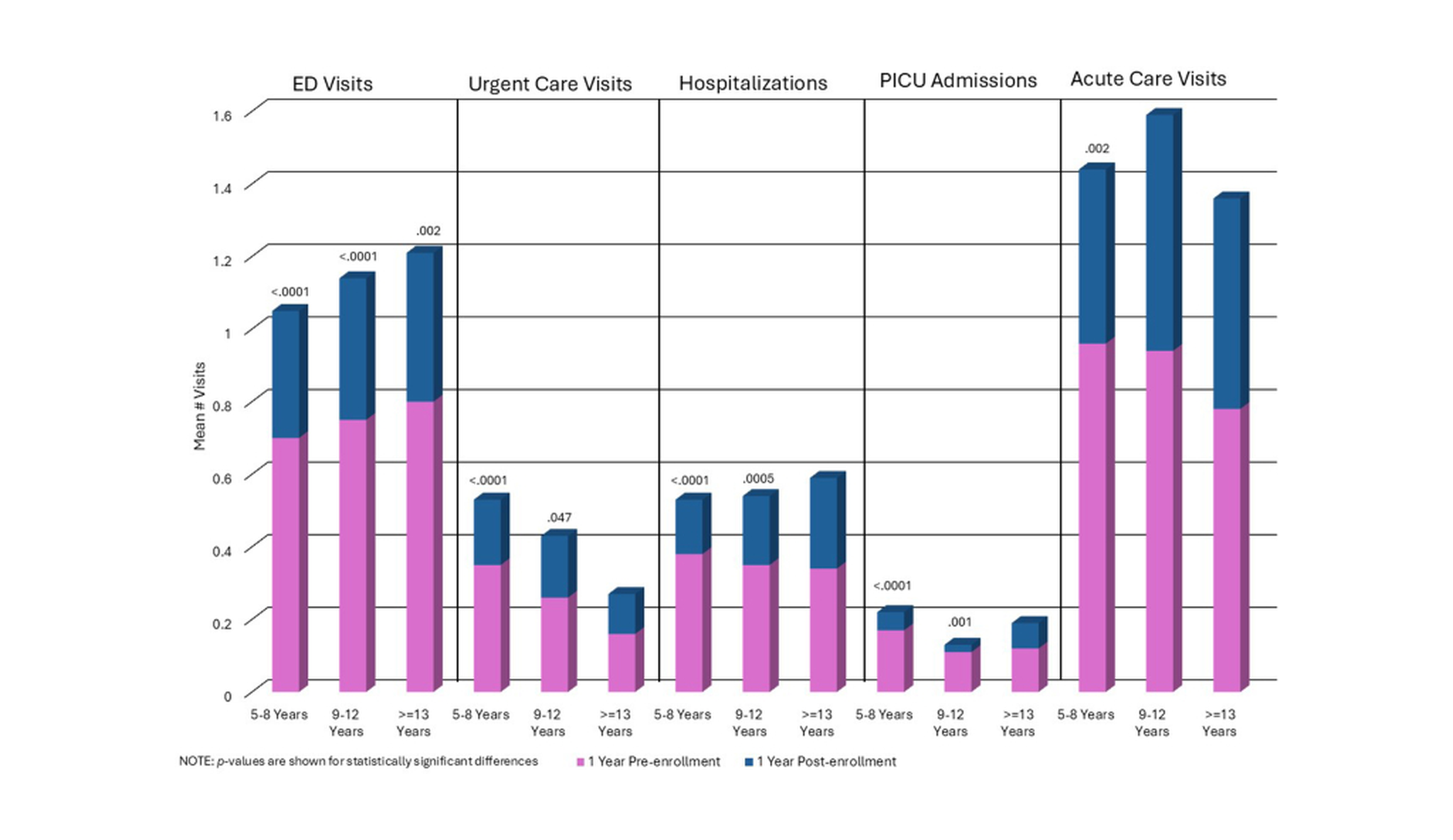
Under the program, which runs in Columbus, Ohio, a school nurse gives children with persistent asthma their daily controller medicine in person, a practice called directly observed therapy. A dedicated program nurse links school nurses, families, pharmacies and the child’s doctor. Professor Arcoleo’s team reviewed the medical records of hundreds of children from the city’s largest school districts, comparing each child’s year before enrollment with the year after. Asthma control was rated through a standard questionnaire and by health care providers, and asthma-related emergency and clinic visits, hospital stays and intensive care admissions were tallied.
Well-controlled asthma became significantly more common on both measures. Emergency visits and hospital stays each fell by about half, urgent care and office visits also declined significantly, and intensive care admissions dropped even more steeply. Better control and fewer emergency visits were seen in every age group and in both boys and girls.
Professor Arcoleo’s study is the first real-world evaluation of the program to examine results by age, sex, race and ethnicity. Before enrollment, the questionnaire showed Black and Latino children were less likely than White children to have well-controlled asthma. Afterwards, every group improved, Black and Latino children showed the largest gains in asthma control, and Black children had significant drops in every type of visit and admission measured. “Our results indicate that the program is highly effective in improving children’s asthma outcomes in a real-world setting, and we demonstrated progress in narrowing the health disparities gap for historically marginalized children with asthma,” explained Professor Arcoleo.
To confirm that the program, rather than other hospital initiatives, drove these changes, the researchers compared enrolled children with a matched group from the same hospital who never took part. Only children in the program showed significant decreases in emergency visits and intensive care admissions. Early cost estimates also suggest the program could significantly reduce overall health care costs.
Professor Arcoleo pointed to the setting as key. “The program has the potential to be high impact because school-based programs can reach children at highest risk for asthma illness and optimize their care in the setting where they spend most of their week, regardless of their contact with the health care system,” she said. Earlier trials showed the approach works under research conditions; Professor Arcoleo’s study shows it also succeeds in everyday practice.
The program could serve as a model for improving asthma care, reducing illness and closing the health disparities gap for marginalized children, many of whom have limited contact with the health care system. Wider adoption will depend on giving schools, especially in low-resource communities, the training and support to offer it. “This model could be adapted to other pediatric chronic conditions to support optimal health and academic success for these children,” concluded Professor Arcoleo.
About the researchers

Dr. Kimberly Arcoleo
Dr. Kimberly Arcoleo, Professor, College of Nursing Michigan State University, is a preeminent health services researcher, focuses on addressing health disparities among disadvantaged children with asthma, implementing large-scale, pragmatic, multisite intervention trials. Dr. Arcoleo earned her MPH and doctorate in Health Services Research from the University of Rochester School of Medicine and Dentistry.… She completed a Health Disparities Research fellowship at Arizona State University’s Southwest Interdisciplinary Research Center where she gained knowledge of the role of culture and acculturation in health. Dr. Arcoleo’s research program focuses on optimizing asthma health outcomes for disadvantaged children through evidence-based interventions at the child, family, school, and healthcare system levels. Dr. Arcoleo has experience designing and implementing multi-site, longitudinal controlled and pragmatic intervention studies. She has expertise in complex statistical analysis (e.g., structural equation modeling, latent variable, latent class and growth analyses, repeated measures analyses), comparative and cost-effectiveness research and analysis. In recognition of the impact of her research, Dr. Arcoleo was recently selected as the inaugural recipient of the 2025 Implementation Impact Award from the Midwest Nursing Society and also received the 2025 Effective Practice Award from the Maternal Child Health section of the American Public Health Association in November.

Dr. Jill Halterman
Dr. Jill Halterman, Professor, Chair of Pediatrics and Physician-in-Chief for Golisano Children’s Hospital, is a clinical investigator who leads a research program designed to understand the multifactorial contributions driving asthma disparities and to improve care for historically marginalized children with this disease.… She has led multiple large randomized trials in community settings and primary care offices to improve asthma care and reduce morbidity, and has received continuous NIH funding for over twenty years. These asthma programs are now being replicated in numerous communities across the country. She also serves as co-investigator for collaborators at various institutions across the country and has years of experience mentoring across the academic pipeline. The scientific merit of her work has been acknowledged through more than 150 peer-reviewed publications and more than $28 million in extramural funding, and her work has been cited in national asthma guidelines as well as guidelines for school health.

Dr. Samantha Harden
Dr. Samantha Harden, Associate Professor, is a behavioral psychologist and dissemination and implementation scientist, and serves as the Director of the Physical Activity Research and Community Implementation (PARCI) Laboratory in the Department of Human Nutrition, Foods and Exercise at Virginia Tech.… She has 15 years of experience leading and participating in research-practice partnerships—many of which were based on the RE-AIM (reach, effectiveness, adoption, implementation, maintenance) and PRISM frameworks. Her expertise in RE-AIM includes developing, implementing, and evaluating programs through the RE-AIM framework, consulting investigators on applying the RE-AIM framework, managing the RE-AIM.org and organizing the RE-AIM workgroup monthly meetings. She has put out a guide for using RE-AIM iteratively before, during, and after program implementation.

Dr. Elizabeth Allen
Dr. Elizabeth Allen is a pediatric pulmonologist with over 30 years of experience providing care for children with asthma. She is Emeritus Professor of Clinical Pediatrics at The Ohio State University College of Medicine, and led the NCH Keep Me Well Asthma Quality Improvement Initiative, a component of which is the Community Asthma Group. Dr. Allen served as the Medical Director for the School-Based Asthma Therapy program in Columbus.

Dr. Mary Kay Irwin
Dr. Mary Kay Irwin is the Associate Vice President, School Health Services at Nationwide Children’s Hospital. Dr. Irwin specializes in the interface between health and education systems for pediatric patients and students relative to the shared responsibility of mitigating health disparities while maximizing educational opportunities and outcomes.… She is responsible for leading and assuring the development, implementation, and evaluation of school health services delivered by Nationwide Children’s Hospital. She has successfully built the Department of School Health. At present, the department provides a unique access point for at-risk, central Ohio area students to access much needed care while at school. Services include primary care, behavioral health services, chronic disease management and more.

Dr. Katia Noyes
Dr. Katia Noyes, Associate Dean for Translational and Team Science, Director, Division of Health Services Policy and Practice, Professor and Director, Surgical Outcomes And Research (SOAR) Center.… She is a health services researcher with expertise in health outcomes and quality of care assessment, large administrative data analysis, comparative effectiveness, and economic evaluations in healthcare, as well as mixed methods and implementation research. She has worked with Drs. Arcoleo and Halterman on cost-effectiveness evaluations of the Rochester, NY and Columbus, OH School-Based Asthma Therapy (SBAT) programs.

Dr. Peter Veazie
Dr. Peter Veazie (in memoriam) was Chief of the Division of Health Policy and Outcomes Research, and Director of the Health Services Research and Policy Graduate Programs in the Department of Public Health Sciences at the University of Rochester. Dr.… Veazie's primary research interests were the decision behavior of health care providers and patients, the consequent health outcomes, and the influence of social and organizational systems on such behavior and outcomes. He was specifically interested in the structuring and use of information by patients and providers, the impact of psychological disposition and states on health care decisions, the decision strategies of healthcare providers in the management of patients with chronic illnesses, the physician/patient interaction, and how physician decision processes can lead to medical errors.

Dr. Holly McGregor
Dr. Holly McGregor, Assistant Professor of Clinical Nursing, is a social psychologist whose expertise lies in research design and methodology, with a focus on quantitative analyses for randomized controlled trials and quasi-experimental research. She provides consultation and collaboration on research projects, including evaluation research for health programs and interventions implemented across various communities.

Dr. Colleen McGovern
Dr. Colleen McGovern is a former Assistant Professor at the College of Nursing, University of North Carolina Greensboro whose research focused on the development and implementation of interventions to optimize the physical and mental health of ethnic minority and underserved children with asthma and anxiety/depressive symptoms.… During her predoctoral studies, she received a highly competitive T32 predoctoral award where she received training in intervention development, mental health, health disparities, and health services research. During her T32 postdoctoral fellowship, she gained additional skills in wearable activity monitors and objective asthma devices to measure intervention processes and outcomes. Dr. McGovern also completed a highly competitive fellowship through the National Institute on Minority Health and Health Disparities at the Health Disparities Research Institute.

Mr. Ian Dela Cruz
Mr. Ian Dela Cruz is a data analyst supporting the School Health Services team (led by Dr. Irwin) at Nationwide Children’s Hospital. He is currently pursuing a Master’s degree in Analytics at the Georgia Institute of Technology.

Ms. Alli Walsh
Ms. Alli Walsh is a Jonas Scholar and PhD student at the College of Nursing at Michigan State University and a part-time nurse in the child and adolescent psychiatry unit at C.S. Mott Children’s Hospital. Her research interests focus on the role of social media in child and adolescent mental health.

Mr. Musmulyono Musmulyono
Mr. Musmulyono Musmulyono is a PhD student at the College of Nursing at Michigan State University who holds a Master’s in Health Policy and Administration. His research focus is on hospital safety and quality and he is currently employed as a graduate research assistant in the Institute for Health Policy in the College of Human Medicine at Michigan State University.
Journal reference
Arcoleo K, McGovern C, Allen E, Irwin MK, Musmulyono M, Dela Cruz I, Walsh A, Noyes K, Veazie P, McGregor H, Harden SM, Halterman JS. School-based asthma therapy: Improving medication adherence, asthma control, and health care utilization. Journal of Allergy and Clinical Immunology: Global. 2025; 4(2):100428. DOI: https://doi.org/10.1016/j.jacig.2025.100428