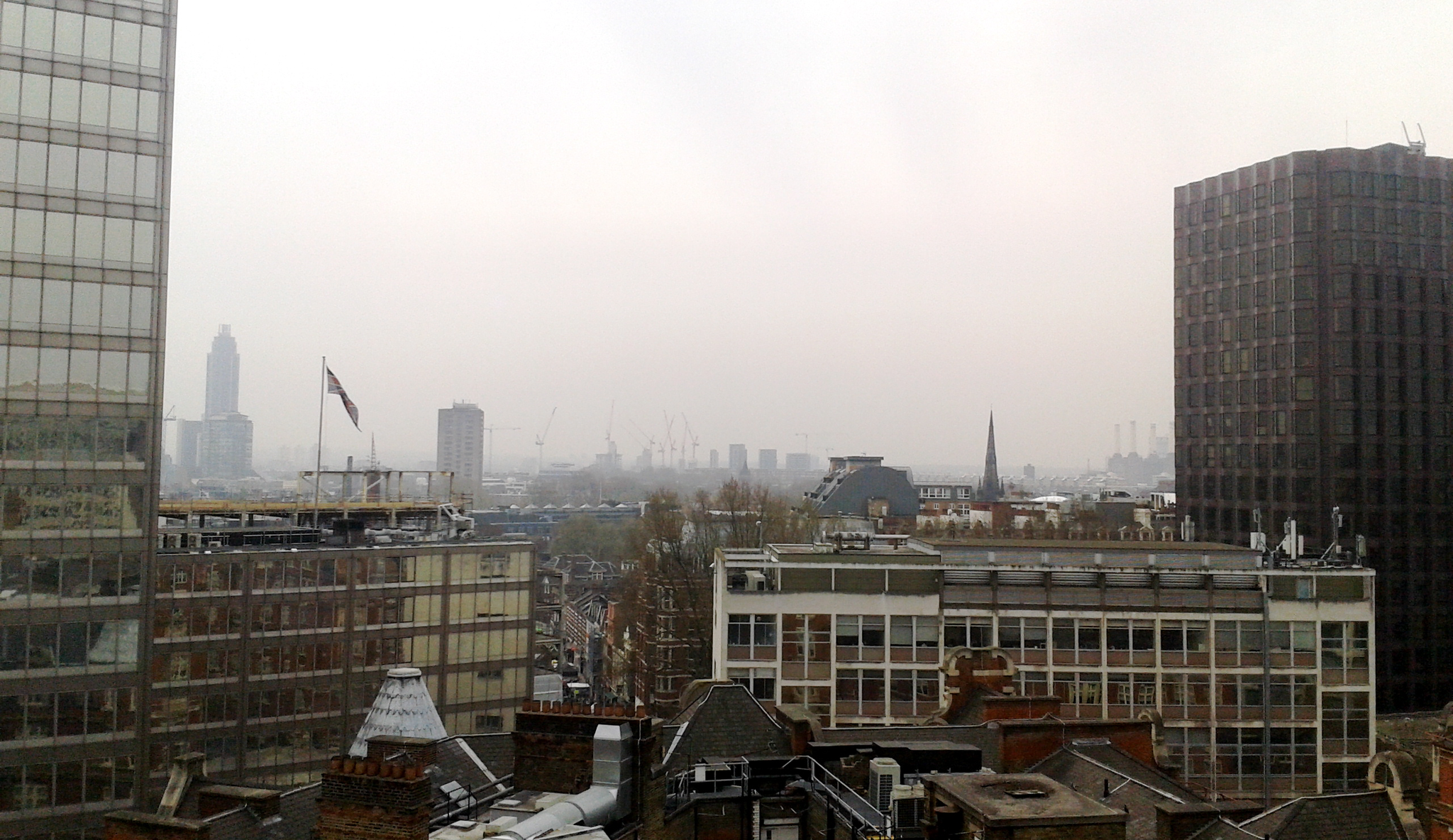
Tiny Particles in Polluted Air Linked to Faster Brain Shrinkage
Jianing Wang's study of repeat brain scans in UK adults found that higher long-term exposure to fine airborne particles was linked to faster loss of brain tissue.
Read the original paper
Outdoor air pollution is increasingly recognized as a risk to brain health in later life. Long-term exposure to tiny airborne particles may raise the risk of brain disorders such as dementia and stroke, which are preceded by years of silent change. Brain scans can capture that change as a gradual loss of brain tissue and as a build-up of small bright patches in the brain’s wiring, a sign of damage to its smallest blood vessels. Yet most scan studies of air pollution have looked at each person only once, so whether polluted air speeds up these changes has remained unclear.
Jianing Wang from Monash University, Hao Tang from the Affiliated Brain Hospital of Nanjing Medical University and Dr. Zhongpeng Dai from the University of Hong Kong examined how long-term exposure to common outdoor air pollutants relates to changes in brain structure in middle-aged and older adults. The work is published in the peer-reviewed journal, Environmental Pollution.
Wang’s team drew on the UK Biobank, a large health study of adult volunteers across Britain, and analyzed several thousand participants scanned twice, usually a few years apart. Using national air quality maps, the team estimated yearly pollution at each person’s home, averaged over the years between scans. Pollutants included fine particles and somewhat larger inhalable particles, both small enough to be breathed in, and two gases, nitrogen dioxide and the broader group of nitrogen oxides. Wang’s study then measured how fast the brain changed each year: its total volume; gray matter, the tissue packed with nerve cells; white matter, the fibers connecting brain regions; the hippocampus, a region central to memory; and the growth of the patches of white matter damage. The analysis allowed for age, sex, ethnicity, education, lifestyle, body weight, local deprivation and head size.
People exposed to more fine particles lost gray matter and total brain volume modestly but significantly faster, and their patches of white matter damage grew slightly more. Larger inhalable particles showed a similar but generally weaker pattern. By contrast, links for the two gases were close to zero, and fine particles stayed linked to faster tissue loss even when nitrogen dioxide was taken into account. No clear link appeared for white matter volume or the hippocampus. The particle links to faster tissue loss held among people whose scans were further apart, and when pollution was averaged over a fixed span of years instead, links were generally stronger and the gases were also tied to faster tissue loss.
Exploratory comparisons suggested that some particle links were stronger in women and among people living in less deprived areas, though Wang’s team advises caution because many comparisons were run. The weak results for the gases may mean that they mainly mark traffic pollution, while particles are more directly harmful to the brain. Because pollution was estimated over the same years as the brain changes, the study shows links rather than proof of cause, and the volunteers tended to be healthier and better off than the wider population.
“Although the individual-level effect sizes we observed were modest, the potential public health implications are substantial,” explained Wang. Particle levels commonly differ between neighborhoods, and large populations breathe such air for years, so small shifts in brain shrinkage and blood vessel damage could add up to more dementia, stroke and decline in thinking across a population. These links appeared even at the comparatively low pollution levels in this group.
“Our findings add to accumulating epidemiologic and experimental evidence that particulate air pollution is a modifiable environmental determinant of brain health, and they underscore the potential brain benefits of policies aimed at further reducing particulate emissions and exposure,” Wang added. Longer studies with more precise pollution estimates and tests of memory and thinking are now needed to find out whether cleaner air can slow brain aging and lower the risk of dementia.
Journal reference
Wang J., Tang H., Dai Z. Long-term air pollution exposure and brain structural decline: A longitudinal analysis. Environmental Pollution. 2026; 411:129269. DOI: https://doi.org/10.1016/j.envpol.2026.129269
Funding: This study was supported by the General Clinical Trial Project of the Nanjing Medical Science and Technology Development Fund and the Medical Research Project of the Jiangsu Commission of Health. The researchers declare no conflict of interest.