GLP-1 Agonists: Dual Benefits for Diabetes and Cancer
Dr. Mohammed Shahait's team reviewed evidence that diabetes drugs called GLP-1 receptor agonists may curb prostate cancer cell growth, noting that support so far comes mainly from preclinical studies.


Glucagon-like peptide-1 (GLP-1) receptor agonists, known for their effectiveness in managing diabetes by enhancing insulin secretion, are now under investigation for their potential impact on prostate cancer (PCa). The intriguing possibility that these agents might influence cancer progression has prompted researchers to explore their effects beyond diabetes management. This fascinating development comes from a study led by Dr. Mohammed Shahait from the University of Sharjah and his team, published in the journal Cancers.
GLP-1, an incretin hormone, is synthesized in the brainstem, pancreas, and intestines, playing a crucial role in postprandial blood sugar regulation. To counteract its short half-life, GLP-1 receptor agonists (GLP-1-RAs) have been developed, proving effective in diabetes management. However, concerns about their potential link to cancers, such as thyroid cancer, have surfaced. The evidence regarding their association with PCa remains inconclusive, prompting the authors to delve into the mechanisms through which GLP-1-RAs may influence PCa cells.
The team explored several pathways, including the PI3K/Akt pathway, which affects pancreatic duodenal homeobox 1 (PDX1) and Forkhead box O1 (FoxO1) transcription factors, essential for cell proliferation. GLP-1 inhibits FoxO1, promoting β-cell proliferation, and enhances PDX1 activity, thereby stimulating cellular proliferation. Notably, GLP-1-RAs have shown potential in inhibiting the proliferation of various cancer cells, including breast, ovarian, pancreatic, and prostate cancers.
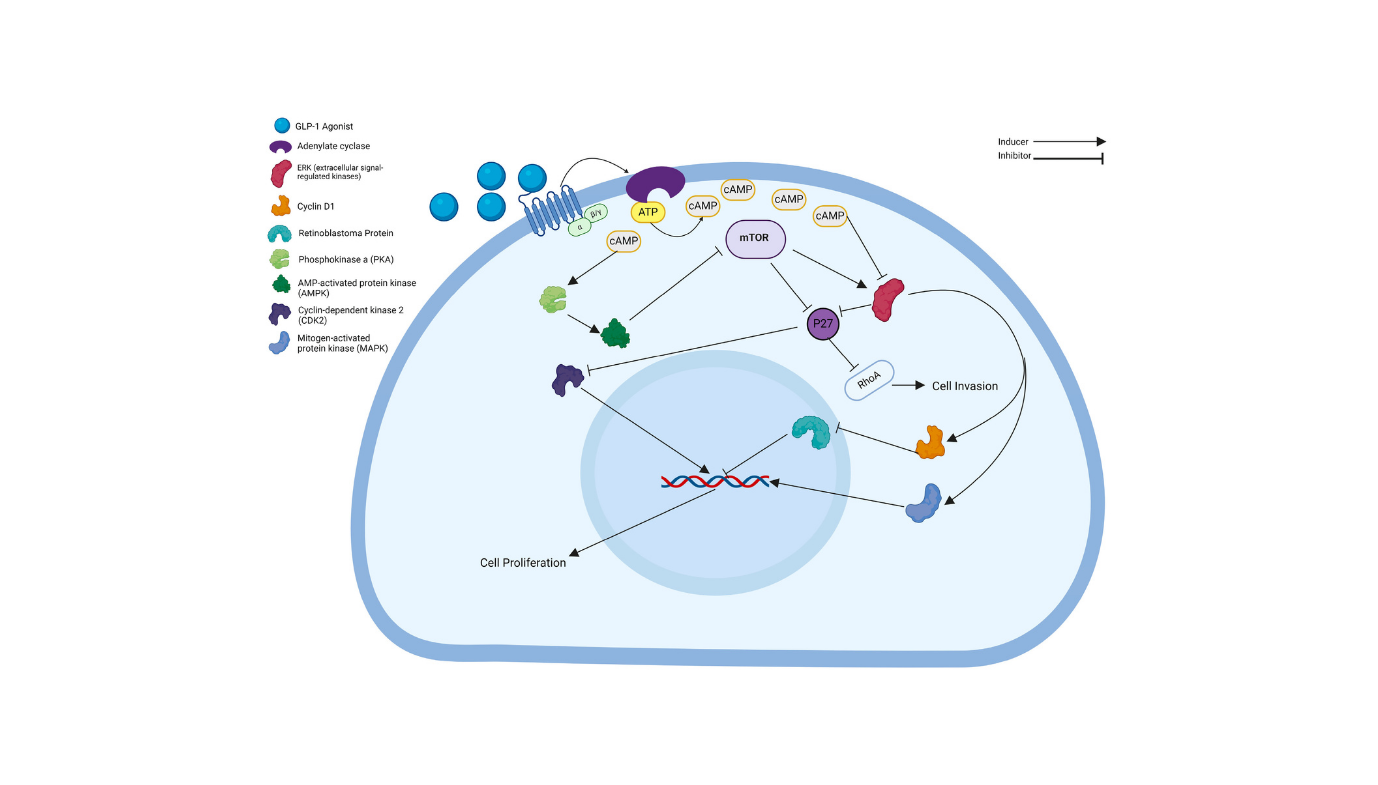
In PCa cells, the activation of GLP-1-R triggers the cAMP cascade, inhibiting extracellular-signal-regulated kinases (ERK) and Cyclin D1, essential for DNA replication and cell cycle progression. By activating phosphokinase A and AMPK, GLP-1 counteracts mTOR, a key regulator of cellular activities, and increases the levels of P27, an antiproliferative protein. This intricate network provides insights into the potential therapeutic impact of GLP-1-RA in PCa.
Dr. Shahait commented, “Our findings suggest that GLP-1-RAs, particularly when combined with treatments like metformin or radiotherapy, exhibit a synergistic effect, significantly reducing tumor size. This opens new avenues for PCa management, especially for patients with metabolic syndrome.”
The researchers highlighted that inflammation, a significant factor in cancer progression, is mitigated by GLP-1-RAs through their anti-inflammatory properties. By reducing cytokine release and macrophage infiltration, GLP-1-RAs inhibit chronic inflammatory processes implicated in insulin resistance and cancer development.
Furthermore, the study investigated the role of metabolic syndrome in PCa. Metabolic syndrome, characterized by insulin resistance and hyperinsulinemia, has been linked to a higher incidence of PCa and poorer patient outcomes. GLP-1-RAs, known for their antidiabetic effects, may reduce this risk by improving metabolic health and inhibiting cancer cell proliferation.
In vitro studies demonstrated that GLP-1-RAs like Ex-4 significantly reduced PCa cell volume and enhanced the efficacy of radiotherapy and docetaxel, a chemotherapy drug. The combination of Ex-4 and radiotherapy showed a notable reduction in tumor size, attributed to their dual impact on cell cycle arrest and apoptosis.
However, the clinical implications of these findings remain under investigation. While GLP-1-RAs have shown promise in preclinical studies, comprehensive clinical trials are necessary to determine their efficacy and safety in PCa patients. Future research should focus on dedicated trials to evaluate GLP-1-RA’s role in PCa management, including its potential as a prophylactic treatment and adjunct therapy in various PCa stages.
This study underscores the importance of exploring new therapeutic avenues for PCa, particularly for patients with metabolic syndrome and diabetes. As Dr. Shahait and his colleagues concluded, “Understanding the intricate relationship between GLP-1-RAs and PCa could lead to innovative treatments that improve patient outcomes and quality of life.”
About the researcher

Dr. Mohammed Shahait
Dr. Mohammed Shahait is a urologist renowned for his expertise and pioneering techniques in the Middle East. A graduate of Jordan University of Science and Technology, his relentless pursuit of excellence led him to advanced training in prestigious institutions.… He completed his residency at the American University of Beirut Medical Center, followed by specialized fellowships in Endourology at the University of Pittsburgh Medical Center and Robotic Urology at the University of Pennsylvania. Dr. Shahait has been instrumental in introducing groundbreaking medical procedures to Jordan, including the first percutaneous Kidney Cryotherapy and Robotic Radical Prostatectomy. Currently, he serves patients with his unparalleled expertise in Dubai. In addition to his clinical accolades, Dr. Shahait's deep-rooted interest in advancing the field has been substantiated by significant studies. He has been awarded substantial grants for his pioneering research, particularly on surgical margins after radical prostatectomy and the bladder cancer genomic landscape in the Jordanian population. Dr. Shahait's academic prowess is further reflected in his editorial roles across various esteemed urological journals.
Journal reference
Alhajahjeh, A., Al-Faouri, R., Bahmad, H. F., Bader, T., Dobbs, R. W., Abdulelah, A. A., Abou-Kheir, W., Davicioni, E., Lee, D. I., & Shahait, M. (2024). “From Diabetes to Oncology: Glucagon-like Peptide-1 (GLP-1) Receptor Agonist’s Dual Role in Prostate Cancer.” Cancers, 16*(1538). DOI: https://doi.org/10.3390/cancers16081538