Critical Enzyme Found Essential for Embryo Implantation
Dr. Maria Laura Zenclussen's team found that silencing the enzyme HO-1 stopped trophoblast spheroids attaching to womb-lining cells, which carbon monoxide reversed, and HO-1-deficient mice showed disrupted uterine genes.
Read the original paper
The earliest stages of life depend on a series of delicate processes, where even a small disruption can prevent an embryo from successfully implanting in the womb. One of the critical factors in this process is an enzyme called heme oxygenase-1 (HO-1), which plays a vital role in creating the right environment by managing oxidative stress and supporting blood vessel formation in the uterus. When HO-1 is absent, this carefully balanced environment is thrown off, leading to significant challenges in early pregnancy.
A groundbreaking study has revealed that the absence of HO-1 critically impairs the implantation process, a crucial event in early pregnancy. This enzyme, encoded by the HMOX1 gene, is involved in various physiological processes, particularly in the reproductive system. The research, conducted by Dr. Maria Laura Zenclussen from Universidad Nacional del Litoral, Dr. Schumacher and Dr. Nicole Meyer from Leipzig University, in collaboration with Sina Ulrich, Dr. Mario Bauer, Beate Fink, and Professor Ana Claudia Zenclussen, delves into the molecular mechanisms that link HO-1 deficiency with implantation failure and uterine stress. Their work has been published in the journal Cells.
Heme oxygenase-1 is pivotal in the degradation of free heme into carbon monoxide (CO), free iron, and biliverdin. These byproducts are essential in mitigating oxidative stress and promoting vascular development, particularly in the uterus during pregnancy. The study highlights the severe consequences of HO-1 deficiency, which include compromised implantation and dysregulation of genes associated with stress and angiogenesis in the uterus.
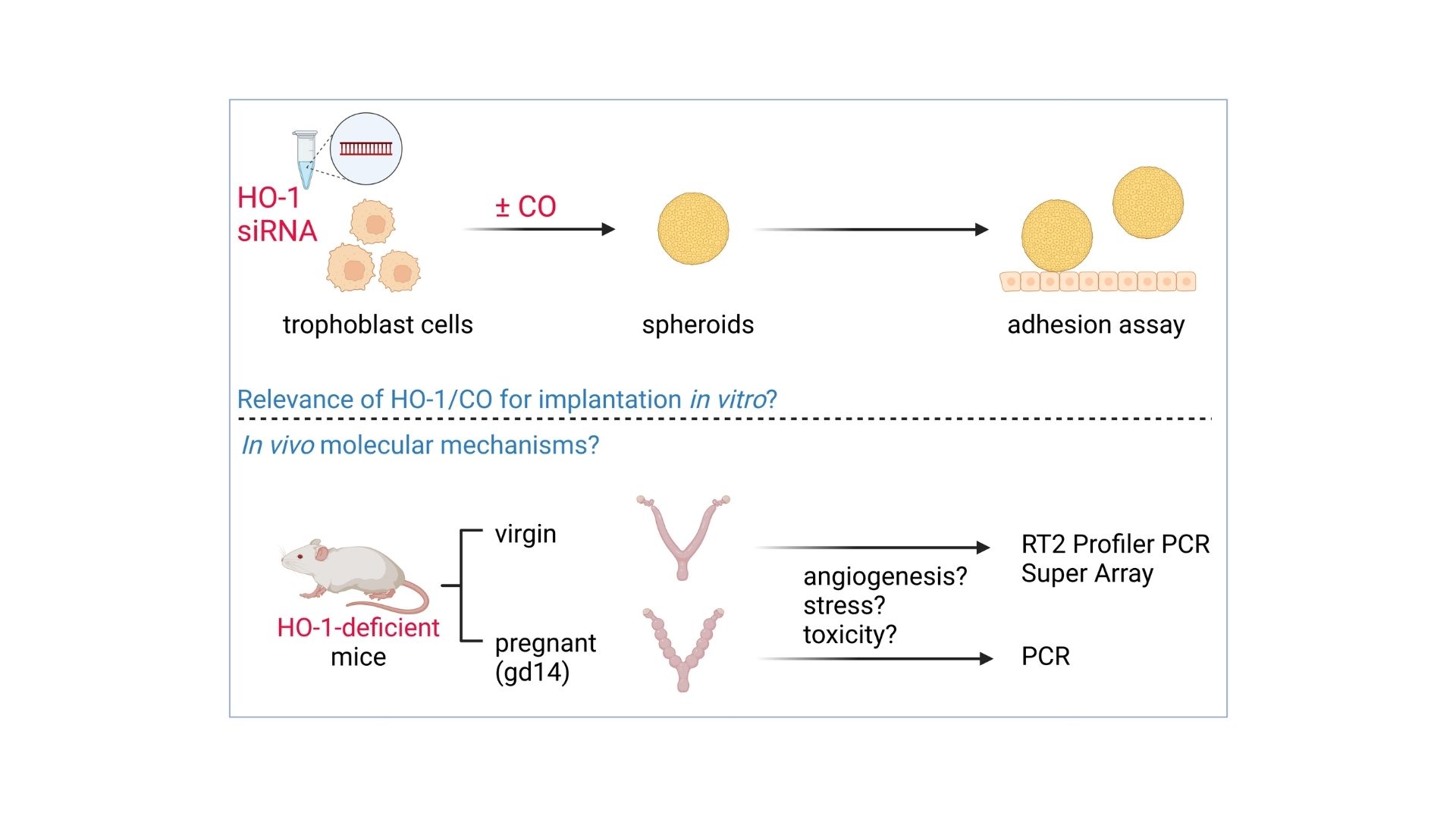
Dr. Zenclussen, Dr. Schumacher, Dr. Meyer, and their team employed an innovative in vitro model using human trophoblastic cell lines to simulate the implantation process. They observed that knocking down HO-1 in these cells resulted in a dramatic reduction in their ability to adhere to endometrial epithelial cells, a crucial step in successful implantation. Specifically, the attachment rate dropped significantly when HO-1 was silenced. This finding strongly supports the hypothesis that HO-1 is essential for implantation.
Interestingly, the researchers also explored whether the negative effects of HO-1 knockdown could be reversed by CO, one of the byproducts of the HO-1 reaction. They found that treating the spheroids with CO restored their attachment capability to levels comparable to untreated controls. This suggests that CO might compensate for the absence of HO-1, possibly by mimicking its protective effects during the implantation process.
Further analysis extended to in vivo experiments on mice, which revealed that uteruses from HO-1 deficient (Hmox1−/−) females exhibited significant dysregulation of key genes involved in stress responses and angiogenesis. Notably, genes such as Rad50, involved in DNA repair, and Gstm3, which protects cells from oxidative damage, were markedly downregulated in HO-1 deficient uteruses. This downregulation indicates a potential vulnerability of the uterine environment to oxidative stress in the absence of HO-1.
Moreover, the study identified a striking alteration in the expression of angiogenesis-related genes in Hmox1−/− uteruses. For instance, Epas1, a gene associated with hypoxia response, was upregulated substantially, while several other genes essential for vascular development, such as Vegfc and Leptin, were downregulated. This imbalance in gene expression may contribute to the impaired implantation observed in HO-1 deficient environments.
The team also examined gene expression on gestation day 14 in Hmox1−/− mice, finding elevated levels of pro-inflammatory cytokines and chemokines, which are critical in mediating immune responses during pregnancy. The excessive expression of these molecules could potentially create an inhospitable environment for the developing embryo, further exacerbating the implantation difficulties caused by HO-1 deficiency.
“Our results strongly suggest that HO-1 is indispensable for successful implantation, and its absence leads to a dysregulated uterine environment that could hinder the early stages of pregnancy,” remarked Dr. Zenclussen, Dr Schumacher and Dr. Meyer. The findings underscore the importance of HO-1 in maintaining a balanced uterine environment conducive to implantation and early pregnancy development.
Dr. Zenclussen, Dr. Schumacher, Dr. Meyer, and their colleagues believe this research not only advances our understanding of the molecular mechanisms underlying implantation but also opens new avenues for exploring therapeutic strategies. By targeting the pathways influenced by HO-1 and its byproducts, such as CO, they suggest it may be possible to develop interventions to support implantation in cases where HO-1 is deficient or dysfunctional.
About the researchers
Journal reference
Zenclussen, M.L., Ulrich, S., Bauer, M., Fink, B., Zenclussen, A.C., Schumacher, A., & Meyer, N. (2024). “Absence of Heme Oxygenase-1 Affects Trophoblastic Spheroid Implantation and Provokes Dysregulation of Stress and Angiogenesis Gene Expression in the Uterus.” Cells, 13, 376. DOI: https://doi.org/10.3390/cells13050376