The structure of an algal toxin that killed a 3-foot shark solved
Professor Allen Place's team showed that sterolysin, a toxin from a decades-old culture of the alga Karlodinium veneficum, kills cells by binding membrane sterols and punching holes.


In James Fraser’s classic 1962 “Nature Adrift—The Story of Marine Plankton”, the author states “A poisonous dinoflagellate lives in British waters: It is Gymnodinium veneficum, which has been grown in culture at the Marine Biological Station at Plymouth.” The author is referring to the work of B.C. Abbott and D. Ballantine who described the partial purification and characterization of a toxin from Gymnodinium veneficum and concluded that the mode of action was “due to membrane depolarization.” A footnote added reads—“The conclusions of this paper are of necessity preliminary and need verifying with a purified sample of the toxin.”
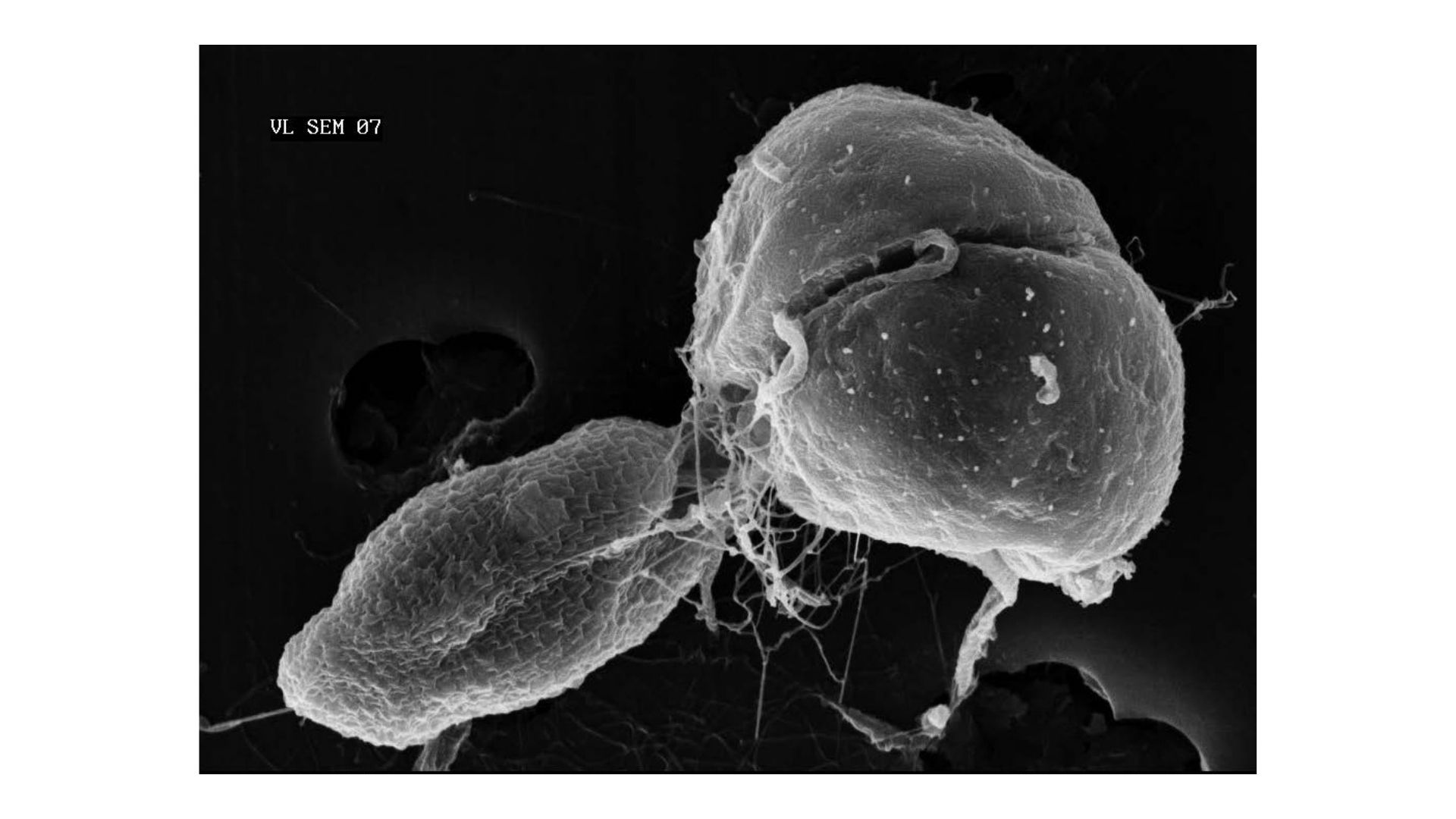
Researchers led by Professor Allen R. Place at the University of Maryland Center for Environmental Science uncovered essential details about this powerful toxin first discovered in the 1950s. This toxin, called sterolysin, is produced by Karlodinium veneficum (previously known as Gymnodinium veneficum), a tiny algal species infamous for large fish kills. Published in the journal Scientific Reports, the study investigates how sterolysin creates harmful pores, or openings, in cell membranes, solving a mystery that has persisted for more than seventy years.
Karlodinium veneficum, originally collected near Plymouth Sound in England during the late 1940s, has a well-known reputation for its deadly effects. The researchers studied a living culture of this species maintained for decades at the Plymouth Laboratory. They identified two toxic substances, abbotoxin and chloro-abbotoxin, which belong to a group of chemicals called karlotoxins. These are natural toxins that damage cells by targeting specific molecules. The researchers showed that these toxins cause gill damage in fish larvae, matching symptoms observed in earlier experiments from the 1950s. “Our findings confirm that the toxin described by Abbott and Ballantine in 1957 is indeed a karlotoxin congener,” Professor Place stated, emphasizing the lasting importance of long term culture collections.
Breaking new ground, the research showed how sterolysin specifically targets sterols, which are fatty molecules found in cell membranes that help maintain their structure. This targeting allows sterolysin to punch holes in the membrane, disrupting its function. Using modern methods like surface plasmon resonance, a technique to measure molecular interactions, and artificial membranes, lab-created models of natural cell barriers, the team demonstrated how the toxin binds tightly to these molecules and creates damage. This supports earlier ideas from 1957 that the toxin disrupts cell function by damaging membranes. As Professor Place explained, “The strength of sterolysin’s attachment to these membrane molecules ensures its effectiveness, making it a key factor in the toxin’s lethal action.”
Further experiments revealed how these toxic holes in the membranes behave. The team of Professor Place found that sterolysin doesn’t harm its producer, K. veneficum, because it can’t act on the specific sterols in the organism’s own cells. This self-protection is a clever natural defense, showing how the species avoids poisoning itself while using the toxin to target others in its environment.
Beyond providing answers to long-standing questions, this research offers potential benefits for medicine and science. The toxin’s ability to target cells rich in the appropriate sterols could inspire new treatments or techniques for fighting specific forms of cancer. It also highlights the value of revisiting earlier studies with today’s advanced tools to confirm theories and expand our understanding.
Concluding their work, Professor Place and colleagues explained how this toxin’s unique properties make it a model for studying other toxins that damage cell membranes, the protective barriers surrounding cells. By combining historical knowledge with state-of-the-art science, they have connected past discoveries to present advancements, creating a full picture of Karlodinium veneficum’s toxic abilities.
About the researcher

Professor Allen Place
Professor Allen Place is a distinguished scientist and educator renowned for his contributions to marine biology and toxicology. With a Ph.D. from Johns Hopkins University, he is a professor at the Institute of Marine and Environmental Technology (IMET) and serves as the Director of the Molecular and Chemical Core Facility.… Over his extensive career, Professor Place has focused on understanding the molecular mechanisms of harmful algal blooms, particularly the toxins produced by dinoflagellates like Karlodinium veneficum. His research revealed groundbreaking insights into the structure and function of karlotoxins, compounds with potential biomedical applications.Beyond his research, Professor Place is an advocate for education, contributing to the BioQUEST initiative to enhance undergraduate biology learning. Recognized for his leadership, he has chaired key scientific conferences and received multiple awards, including the UMCES President’s Award for Excellence in Science Application. Professor Place continues to explore marine toxins' ecological and medical implications.
Journal reference
Place, A.R., Ramos-Franco, J., Waters, A.L., Peng, J., & Hamann, M.T. (2024). “Sterolysin from a 1950s culture of Karlodinium veneficum (aka Gymnodinium veneficum Ballantine) forms lethal sterol dependent membrane pores.” Scientific Reports, 14, 17998. DOI: https://doi.org/10.1038/s41598-024-68669-0