Genetics of Ultra-Rare Brain Tumor Unravels Additional Therapeutic Possibilities
Dr. Carolina Parada's team sequenced intracranial epidermoid cysts and found recurrent NOTCH2 and USP8 mutations and immune-related changes, pointing to existing drugs that might be tested against them.


Intracranial epidermoid cysts are ultra-rare brain tumors that, despite their slow growth, can cause serious problems by adhering to critical parts of the brain. Led by Dr. Carolina Parada and Dr. Manuel Ferreira, Jr., researchers from the University of Washington Medical Center, Department of Neurological Surgery have closely examined these tumors to uncover their underlying genetic causes and find new treatment possibilities. Their innovative work, published in the journal Cancers, highlights important discoveries about how these tumors may develop and behave.
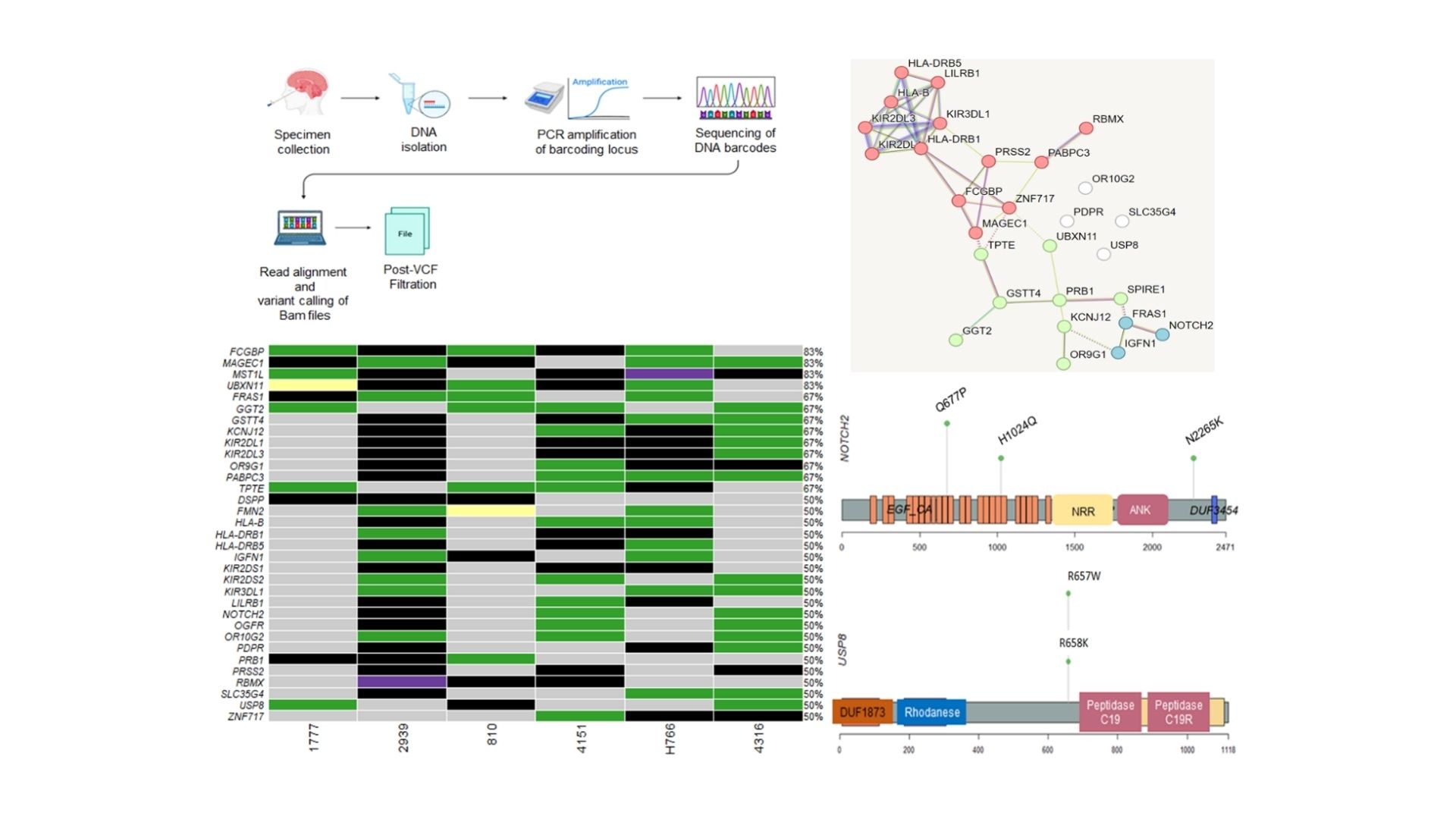
The team used a cutting-edge method called whole exome sequencing, a technique that focuses on decoding the parts of DNA responsible for producing proteins, to study the genetic makeup of intracranial epidermoid cysts. “Epidermoid cysts have not been studied much because they are so rare. As a result, surgery remains the most effective treatment option. When the cysts are located near critical brain structures, surgery becomes complex and, in some cases, may not be viable. Although these cysts typically grow slowly, there is a risk of malignant transformation over time. Unfortunately, no effective drug therapies are currently available for these patients,” explained Dr. Parada. “By utilizing advanced genetic techniques, we can identify the mutations and biological pathways that drive malignancy in these tumors, potentially allowing us to target and block them with existing drugs,” noted Dr. Manuel Ferreira.
Their research found many genetic changes, including specific mutations linked to the immune system and the material surrounding cells, called the extracellular matrix, which plays an important role in cellular interactions enabling them to carry out their biological functions. “The genetics of epidermoid cysts were previously unknown. These results are exciting because they support the presence of a tumor-friendly mechanism that can manipulate the immune system to avoid detection by the body’s immune system and promote tumor progression,” explained Dr. Carolina Parada.
Another major finding was the discovery of mutations in two key genes, NOTCH2 and USP8. These genes play roles in cell signaling and protein regulation, and mutations in them are known to promote cell proliferation and immune escape in other malignancies. Interestingly, mutations in these genes affected a large portion of the cases included in the study. “The identification of recurrent mutations in NOTCH2 and USP8, which are commonly altered and characterized in well-studied tumors, provides valuable information about intracranial epidermoid cysts; the genetic landscape of these tumors was previously unexplored,” explained Dr. Parada.
The study also revealed that the tumors are associated with deregulation of a major cascade known as the phosphoinositide 3-kinase (PI3K), protein kinase B (AKT), and mammalian target of rapamycin (mTOR) pathway. “The PI3K-AKT-mTOR is a well-characterized driver of cancer. Inhibitors targeting this pathway are already FDA-approved and have provided significant benefits to tumor patients,” noted Dr. Ferreira.
Another important aspect of the research focused on the relationship among the frequently altered targets. NOTCH2, USP8, and PI3K-AKT-mTOR have also been closely linked to the immune response in cancer studies, supporting the idea that immune system escape might play a crucial role in the development of intracranial epidermoid cysts. “The crosstalk among all these genetic changes indicates that these brain cysts may hide from the immune system, allowing them to grow and progress, opening the door to exploring treatments that could help the immune system recognize and attack these tumors properly,” noted Dr. Ferreira.
The researchers also emphasized the potential to use existing drugs in new ways to target these genetic mutations. For example, drugs that block the NOTCH2 signaling pathway, a system of molecular communication between cells, already used for treating some cancers, could be adapted to treat these brain cysts. Similarly, medications that target the PI3K-AKT-mTOR pathway could also provide another treatment option. Immunotherapy could be promising for intracranial epidermoid cysts as it could help the patient’s immune system to fight the tumors while inhibiting the tumor’s ability to escape the immune system.
Dr. Parada stressed the importance of these discoveries: “By understanding the genetic changes and mechanisms that drive these brain tumors, we can work towards developing treatments that extend beyond surgery, which is an effective option, but not feasible for all cases.”
This study marks significant progress, laying the foundation for a deeper understanding of the mechanisms behind these rare tumors, paving the way for the development of additional therapies.
About the researchers

Dr. Carolina Parada
Dr. Carolina Parada, M.Sc., Ph.D., is an Assistant Professor at the University of Washington School of Medicine and a member of the Fred Hutchinson Cancer Center. Her research lies at the intersection of biomedical and computer sciences, where she utilizes multi-omics approaches on human surgical specimens.… By integrating multiple molecular layers of the disease, she aims to uncover underlying mechanisms and identify actionable targets of clinical value. Dr. Parada also applies advanced algorithms and machine learning techniques to predict therapy response and advance treatment for rare cancer. Through these efforts, she seeks to accelerate the implementation of precision medicine in clinical practice.

Manuel Ferreira
Manuel Ferreira, M.D., Ph.D., is UW Medicine's chief of Neurological Surgery, Co-director of UW Medicine's Alvord Brain Tumor Center, Director of Skull Base and Minimally Invasive Neurosurgery and surgical director of the Multi-Disciplinary Pituitary Program.… He is also Professor and Vice Chair of Neurological Surgery and holds the Chap and Eve Alvord and Elias Alvord Chair in Neuro-oncology.Dr. Ferreira earned his M.D. at Georgetown University. He is board certified in Neurological Surgery and fellowship-trained in treating brain and skull base complex tumors. His clinical specialties include multi-modality treatment for skull base, brain and spinal cord tumors. His laboratory uses human surgical specimens and multi-omics to study treatment resistance and sensitivity in tumors and vascular lesions.
Journal reference
Kondaboina, S.; Parrish, O.; Parada, C.A.; Ferreira, M., Jr. “Whole Exome Sequencing of Intracranial Epidermoid Cysts Reveals Immune-Associated Mechanistic and Potential Targets.” Cancers, 2024. DOI: https://doi.org/10.3390/cancers16203487