Glioblastoma Breakthrough: Mutation May Improve Patient Outcomes
Dr. Carmen Balana's team found that glioblastoma patients whose tumors carried the C250T TERT promoter mutation lived longer than those with the commoner C228T mutation, in a retrospective analysis.


Glioblastoma is a highly aggressive brain tumor with few treatment options and a generally poor prognosis. However, new research suggests that not all glioblastomas are created equal. Differences in genetic mutations within these tumors might hold the key to predicting patient outcomes more accurately. Specifically, mutations in the TERT promoter, a region of DNA that helps control the production of an enzyme critical for cancer cell survival, could significantly influence how long patients live after being diagnosed.
A recent study has unveiled significant insights into the prognosis of glioblastoma patients with different TERT promoter mutations. Researchers led by Dr. Carmen Balana at the Hospital del Mar Research Institute, Barcelona, in collaboration with multiple institutions, have discovered that the C250T mutation in the TERT promoter (TERTp) may offer a more favorable prognosis compared to the more common C228T mutation. The study, published in the journal Cancers, provides crucial information on how these mutations impact patient outcomes and their potential biological effects.
Dr. Balana and her team conducted a retrospective analysis of glioblastoma patients treated uniformly across various institutions. They investigated the impact of TERTp mutations on patient prognosis, taking into account other known prognostic factors such as age, extent of surgery, performance status, and MGMT promoter methylation status. Their findings revealed that while TERTp mutations in general did not significantly affect prognosis, the specific type of mutation played a crucial role.
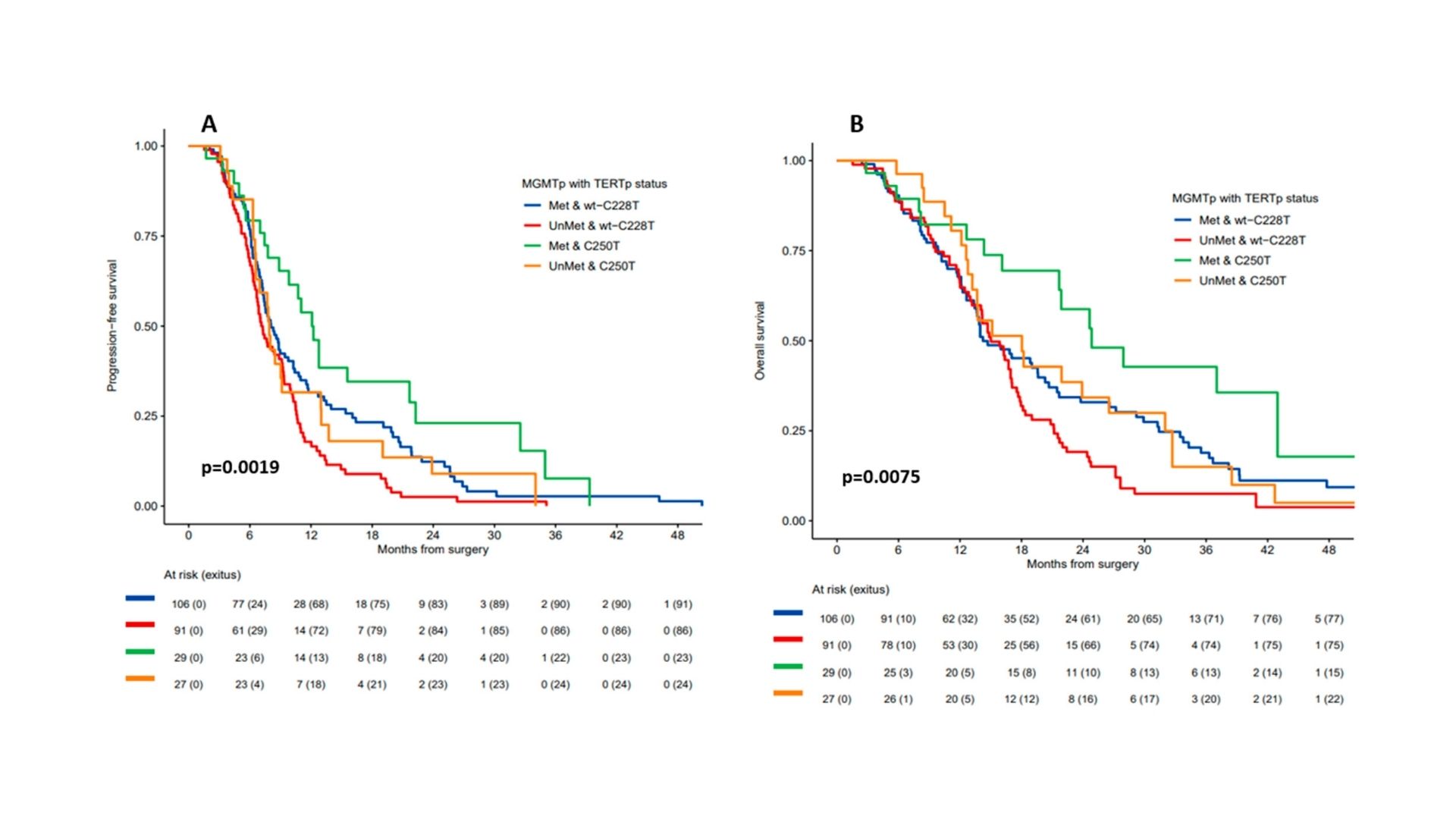
The study found that patients with the C250T mutation had a significantly longer progression-free survival and overall survival compared to those with the C228T mutation or wild-type TERTp. These differences were statistically significant, suggesting that the C250T mutation may exert a less detrimental biological effect on telomeres and chromosomes than the C228T mutation.
Dr. Balana stated, “Our study indicates that the C250T mutation in TERTp could be associated with a better prognosis in glioblastoma patients. This mutation seems to have a reduced impact on telomere maintenance and chromosome stability compared to the C228T mutation, which could explain the improved outcomes observed.”
The researchers also conducted a gene set enrichment analysis, which showed that the C228T mutation was associated with greater enrichment in pathways related to telomere maintenance, DNA damage response, and chromosome condensation. In contrast, the C250T mutation showed a reduced involvement in these pathways, supporting the hypothesis that it exerts a milder biological effect.
Interestingly, Dr. Balana and her team also found that the favorable impact of the C250T mutation was particularly pronounced in patients with MGMT promoter methylation, a known positive prognostic factor in glioblastoma. For these patients, both progression-free survival and overall survival were markedly improved, further highlighting the potential clinical significance of this mutation.
Dr. Balana emphasized, “Our findings suggest that the C250T mutation could be considered in the stratification of glioblastoma patients for clinical trials and personalized treatment approaches. Further research is needed to fully understand the underlying mechanisms and to explore potential therapeutic implications.”
In summary, this comprehensive study by Dr. Balana and her colleagues sheds light on the prognostic significance of TERT promoter mutations in glioblastoma, with the C250T mutation emerging as a potential marker for better outcomes. The research underscores the importance of genetic profiling in glioblastoma to inform treatment decisions and improve patient care.
About the researchers

Carmen Balana
Carmen Balana, Md, PhD graduated in Medicine and Surgery from the University of Barcelona and earned a Doctorate in Medicine in 1986 from the Autonoma University of Barcelona. Specialist in Medical Oncology, trained at Hospital Vall d’Hebron.… Since 1987, involved in the diagnosis and treatment of brain tumors at the Catalan Institute of Oncology (ICO) in Badalona. Head of Care of the Medical Oncology Service at ICO, Badalona.Vice President of the Research Ethics Committee at Hospital Germans Trias i Pujol in Badalona.Member of the Pharmacotherapeutic Committee.President of the Spanish Neuro-Oncology Group.Member of the Scientific Committee of the European Association of Neuro-Oncology (EANO).Developed a significant interest in research, focusing on brain tumors over the years.Participated in numerous clinical trials and the development of clinical guidelines for gliomas promoted by EANO. Professor at the Autonoma University of Barcelona. Directed or currently directing 15 doctoral theses, with 9 focusing on brain tumors. Awarded several scholarships from ISCIII and Fundació La Marató TV3 as the principal investigator, all directed towards CNS tumor research. Currently working at the Institute of Oncology (IOB). Maintains a collaborative relationship with the Institut Investigació Germans Trias i Pujol (IGTP).

Estela Pineda
Estela Pineda, Md, PhD. Graduated in Medicine from the University of Barcelona, 2004. Residency training in Medical Oncology at Hospital Clínic Barcelona, 2005-2009. Master’s degree in Clinical Sciences Research from the University of Barcelona, 2010.… Doctorate in Medicine from the University of Barcelona, 2021.Specialist in Medical Oncology at Hospital Clínic de Barcelona since 2010, with a focus on brain tumors. Throughout her career, she has integrated healthcare activity, clinical research, and translational research. Principal investigator of numerous clinical trials in the Medical Oncology Service at Hospital Clínic Barcelona, with most studies focusing on brain tumors.President of GEINO (Spanish Neuro-Oncology Group). Coordinator of the GEINO course for young medical oncologists since 2019. Member of the GEINO scientific committee since 2014. Founded the GEINO monthly national neuro-oncology committee in 2021, which addresses rare and difficult brain tumor cases, fostering clinical-translational collaboration.Member of the Scientific Committee of the European Association of Neuro-Oncology (EANO).Professor at the University of Barcelona.Teaches courses on brain tumors in the Medicine Degree program, the Master of Biomedicine, and the Master of Immuno-oncology. Her research contributions are well-documented, with a significant number of clinical trials and publications in the field of neuro-oncology.

Dr. Anna Esteve-Codina
Dr. Anna Esteve-Codina leads the Functional Genomics Team at the Centre Nacional d'Anàlisi Genòmica (CNAG) in Barcelona, Spain. With over 100 peer-reviewed articles published and more than 4,000 citations, she boasts an h-index of 35 and an i10-index of 62. Dr.… Esteve-Codina also provides peer-review services for prestigious journals, including Nature Protocols, Bioinformatics, and Human Mutation. In addition to her research, Dr. Esteve-Codina is an associate professor in the Bioinformatics & Biostatistics Master's program at UOC and delivers seminars at the University of Barcelona to both undergraduate and graduate students. She also teaches in the online Master's program "Medicina Genómica y de Precisión en Hematología" and has contributed a book chapter to "Data Analysis for Omic Sciences: Methods and Applications."

Carolina Sanz
Carolina Sanz, PhD, is a Molecular Biologist in the Pathology Department at Germans Trias i Pujol Hospital in Barcelona. She specializes in analyzing tumor tissue samples to detect nucleic acid alterations, thereby contributing to patient diagnosis and treatment assessment.… Her expertise spans a range of techniques, from classical sequencing and PCR to advanced methods like NGS and digital PCR. Additionally, she is actively involved in cancer research, with principal interests in glioblastoma, breast cancer, and microsatellite instability in colorectal cancer.
Journal reference
Gorria, T., Crous, C., Pineda, E., Hernandez, A., Domenech, M., Sanz, C., Jares, P., Muñoz-Mármol, A.M., Arpí-Llucía, O., Melendez, B., et al. “The C250T Mutation of TERTp Might Grant a Better Prognosis to Glioblastoma by Exerting Less Biological Effect on Telomeres and Chromosomes Than the C228T Mutation.” Cancers, 2024, 16, 735. DOI: https://doi.org/10.3390/cancers16040735