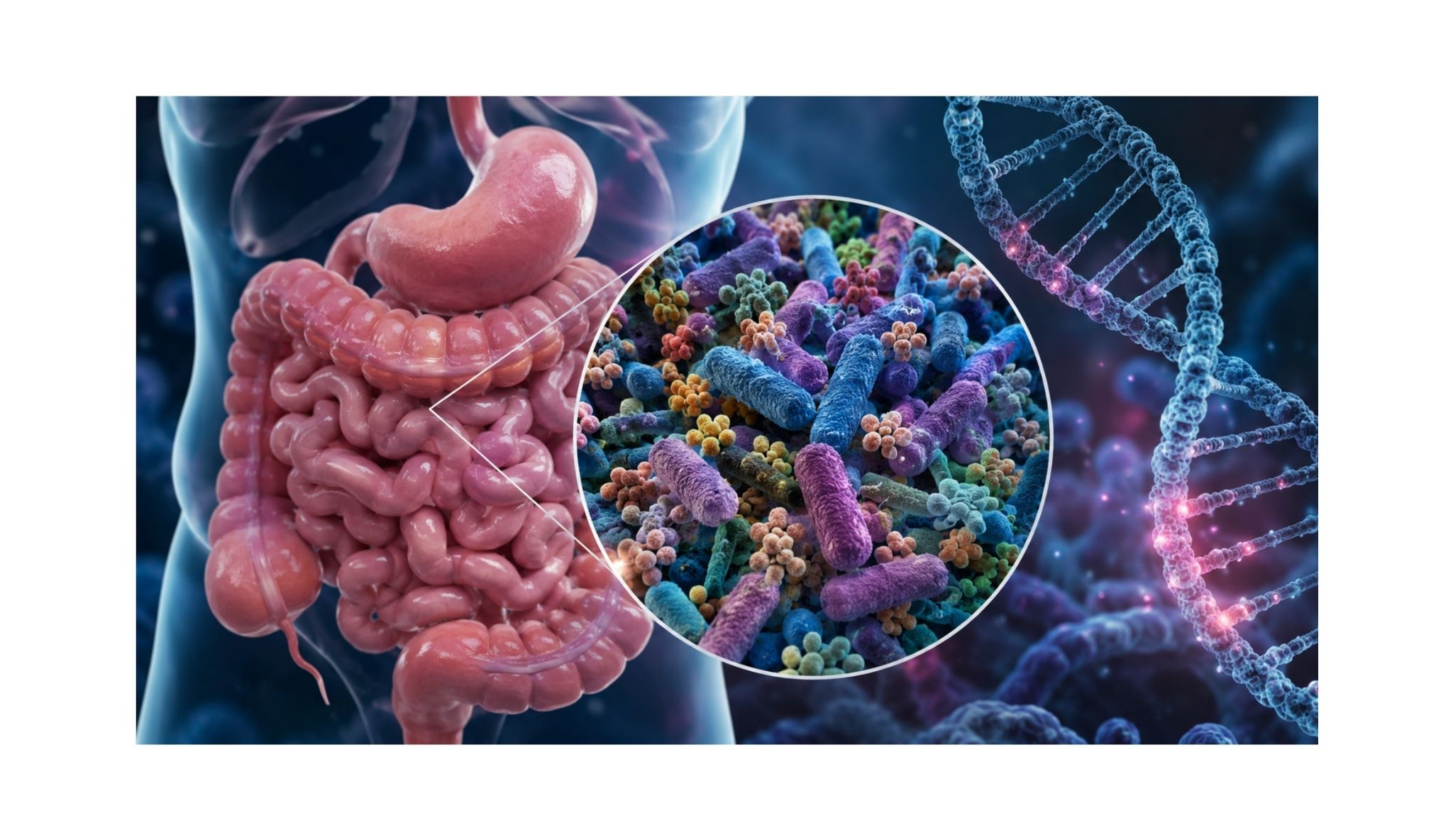
Your Gut Bacteria: A Hidden Epigenetic Regulator of Your Immune System
Professor Alika Maunakea's team reviews how gut microbes and their products, such as short-chain fatty acids, may reshape human gene regulation through DNA and RNA methylation, affecting immunity and disease risk.


The trillions of microorganisms living inside the human digestive tract do far more than help digest food. Scientists are increasingly discovering that these microbes communicate directly with human cells and may even influence how genes are switched on and off. This growing field of research is revealing that the gut microbiome acts almost like a biochemical control center, shaping immune responses, metabolism, aging, and susceptibility to disease through epigenetic regulation, molecular changes that alter gene activity without changing the DNA sequence itself.
Ms. Noelle Rubas and Dr. Amada Torres from the University of Hawaiʻi at Mānoa, together with Professor Alika Maunakea from the university’s John A. Burns School of Medicine, investigated how the gut microbiome interacts with the human epigenome and influences DNA and RNA methylation, a chemical tagging process that controls whether genes are active or silent. Their work, published in the peer-reviewed journal International Journal of Molecular Sciences, reviews the molecular pathways that allow gut microbes to reshape human gene regulation and discusses how these discoveries may open new opportunities for precision medicine, an approach that tailors treatment to an individual’s biology.
Professor Maunakea and his team describe the microbiome as “a metabolically active and ecologically dynamic consortium that profoundly influences host physiology, in part by modulating epigenetic mechanisms such as DNA and RNA methylation.” These epigenetic marks act like biological dimmer switches, determining whether genes become active or remain silent. According to Professor Maunakea, microbial signals generated inside the gut can alter these switches through several interconnected mechanisms, including vitamin production, short-chain fatty acid metabolism, and immune signaling, the chemical communication system used by immune cells. “We suspect this also contributes to biological aging,” says Professor Maunakea.
One major finding highlighted in the review involves compounds known as short-chain fatty acids, small molecules produced when gut bacteria ferment dietary fiber in the intestine. Molecules such as butyrate not only provide energy for intestinal cells but can also alter chromatin structure, the tightly packed arrangement of DNA inside cells, and enhance gene expression. Dr. Torres explains that microbial metabolites, substances generated during microbial metabolism, can influence enzymes responsible for adding or removing methyl groups from DNA, effectively reprogramming cellular behavior. Some bacterial products were also shown to affect RNA methylation, an additional layer of genetic regulation that controls how RNA molecules are processed and translated into proteins.
Professor Maunakea’s team further explored how the microbiome shapes immune function through epigenetic control of FOXP3, a gene essential for regulatory T cells that prevent the immune system from overreacting and damaging healthy tissues. Certain bacteria, including Bacteroides fragilis and members of the Clostridium group, were found to promote anti-inflammatory immune responses by altering methylation patterns and histone modifications, chemical changes to proteins that package DNA, near the FOXP3 gene. Dr. Torres notes that microbial metabolites “may reprogram host cell states in ways that affect immunity, metabolism, neurobiology, and disease susceptibility.” These discoveries suggest that disturbances in gut microbial communities could contribute to autoimmune disorders, where the immune system attacks the body, inflammatory bowel disease, obesity, neurological conditions, and even cancer.
The relationship works in both directions. Professor Maunakea emphasizes that human genetics, diet, stress, aging, and environmental exposures also influence which microbial species thrive in the gut. For example, diets low in fiber can reduce beneficial bacteria that produce epigenetically active compounds, while chronic inflammation may favor microbial populations associated with disease. Professor Maunakea’s team discusses how aging is linked to both microbial imbalance and accelerated epigenetic aging, a biological measure of aging based on DNA methylation patterns, potentially increasing vulnerability to metabolic and immune disorders later in life.
Professor Maunakea’s review also examines future technologies that could transform this field. Advanced single-cell sequencing, which studies genetic activity in individual cells, artificial intelligence models, gut-on-a-chip systems that mimic the intestine in laboratory devices, and organoid cultures, miniature lab-grown tissues, are now enabling scientists to study host–microbe interactions at unprecedented resolution. These tools may eventually help physicians identify personalized microbial and epigenetic signatures associated with disease risk. Professor Maunakea is particularly interested in developing live biotherapeutic products, beneficial microbes used as medical treatments, and microbiome-based interventions capable of restoring healthy epigenetic regulation.
Professor Maunakea and colleagues emphasize that translating these discoveries into clinical therapies will require careful standardization and ethical oversight. The review highlights the importance of FAIR and CARE data principles to ensure that microbiome and epigenetic research remains reproducible, transparent, and equitable across diverse populations. Professor Maunakea and the team also point out that future therapies may need to account for differences in ancestry, diet, geography, and lifestyle, since these factors strongly shape both microbial composition and epigenetic patterns.
Professor Maunakea concludes that understanding how gut microbes influence gene regulation could fundamentally reshape medicine. As Professor Maunakea explains, “Deepening our understanding of how the gut microbiome modulates host epigenetic programs offers novel opportunities for precision health strategies and equitable clinical translation.” Professor Maunakea, Dr. Torres and Ms. Rubas’ findings suggest that future treatments may not only target human genes directly, but also the microbial ecosystems that help control them.
About the researchers

Noelle Rubas
Noelle Rubas received her M.S. under Dr. Alika Maunakea’s mentorship and has continued her educational pursuit as a Ph.D. student whose continued research expands on the interactions between animals and their associated microbial communities.… Her work is particularly centered on the relationship between the microbiome and host epigenetic regulation, and how these interactions influence health outcomes and disease susceptibility.Her research encompasses key areas including microbiota–host methylome interactions, microbial modulation of host gene expression and cellular function, and the role of microbial communities in shaping and priming host immune responses.

Dr. Alika K. Maunakea
Dr. Alika K. Maunakea is a Professor in the Department of Anatomy, Biochemistry, and Physiology at the John A. Burns School of Medicine (JABSOM), University of Hawaiʻi at Mānoa. A Native Hawaiian born and raised in Waiʻanae, Hawaiʻi, he received his B.Sc. in Biology from Creighton University (2001), earned his Ph.D.… in Biomedical Sciences from the University of California, San Francisco (2008), and completed postdoctoral training at the National Institutes of Health (2012). Over the past two decades, Dr. Maunakea has established an internationally recognized research program in epigenetics and multiomics, developing and applying innovative high-throughput, genome-wide technologies to study DNA methylation, chromatin structure, histone modifications, transcriptomics, and microbiome biology. His pioneering work uncovered novel roles for DNA methylation in regulating alternative promoter usage and pre-mRNA splicing, advancing our understanding of gene-environment interactions underlying disease development.Dr. Maunakea’s research integrates epigenomics, immunology, and gut microbiome science to investigate the socioecological determinants of chronic inflammatory diseases that disproportionately impact Native Hawaiian and Pacific Islander (NHPI) communities, including diabetes, obesity, cardiovascular disease, and accelerated biological aging. Through community-based participatory research approaches, he leads multidisciplinary efforts that combine biomarker discovery with social and environmental data to better understand disease risk and enable prevention. His work has contributed to major NIH-funded cohort studies, including the Hawaiʻi Social Epigenomics of Early Diabetes (HI-SEED) study, the Pacific Ocean Native Observational (PONO) Health Legacy Study, and the Maui Wildfire Exposure Study (MauiWES), a landmark longitudinal study examining the long-term health impacts of the 2023 Maui wildfires.In response to the COVID-19 pandemic, Dr. Maunakea led statewide efforts to establish community-based testing and vaccine education programs for underserved NHPI populations through the NIH RADx-UP initiative. Notably, he helped develop the first CLIA-certified molecular diagnostics laboratory within a Federally Qualified Health Center in Hawaiʻi serving one of the state’s largest NHPI communities. He also founded and oversees the Epigenomics Core Facility of Hawaiʻi, the state’s only next-generation sequencing facility integrating epigenomic, transcriptomic, and microbiome analyses, and directs the Consortium of Research Advancement Facilities and Training (CRAFT), a NIH COBRE-supported multiomics and bioinformatics resource within the Integrative Center for Precision Nutrition and Human Health at UHM.Beyond his scientific contributions, Dr. Maunakea is deeply committed to advancing diversity and equity in biomedical research. He mentors and trains underrepresented minority students in multidisciplinary scientific careers while collaborating with community organizations, clinicians, economists, behavioral scientists, and Indigenous scholars to translate biomedical discoveries into culturally grounded health solutions. His work has received national recognition, including being named the 2024 ARCS Foundation Honolulu Scientist of the Year for his groundbreaking contributions to epigenetics, community-engaged science, and Native Hawaiian health equity research.
Journal reference
Rubas, Noelle C.; Torres, Amada; Maunakea, Alika K. “The Gut Microbiome and Epigenomic Reprogramming: Mechanisms, Interactions, and Implications for Human Health and Disease.” International Journal of Molecular Sciences, 2025; 26:8658. DOI: https://doi.org/10.3390/ijms26178658