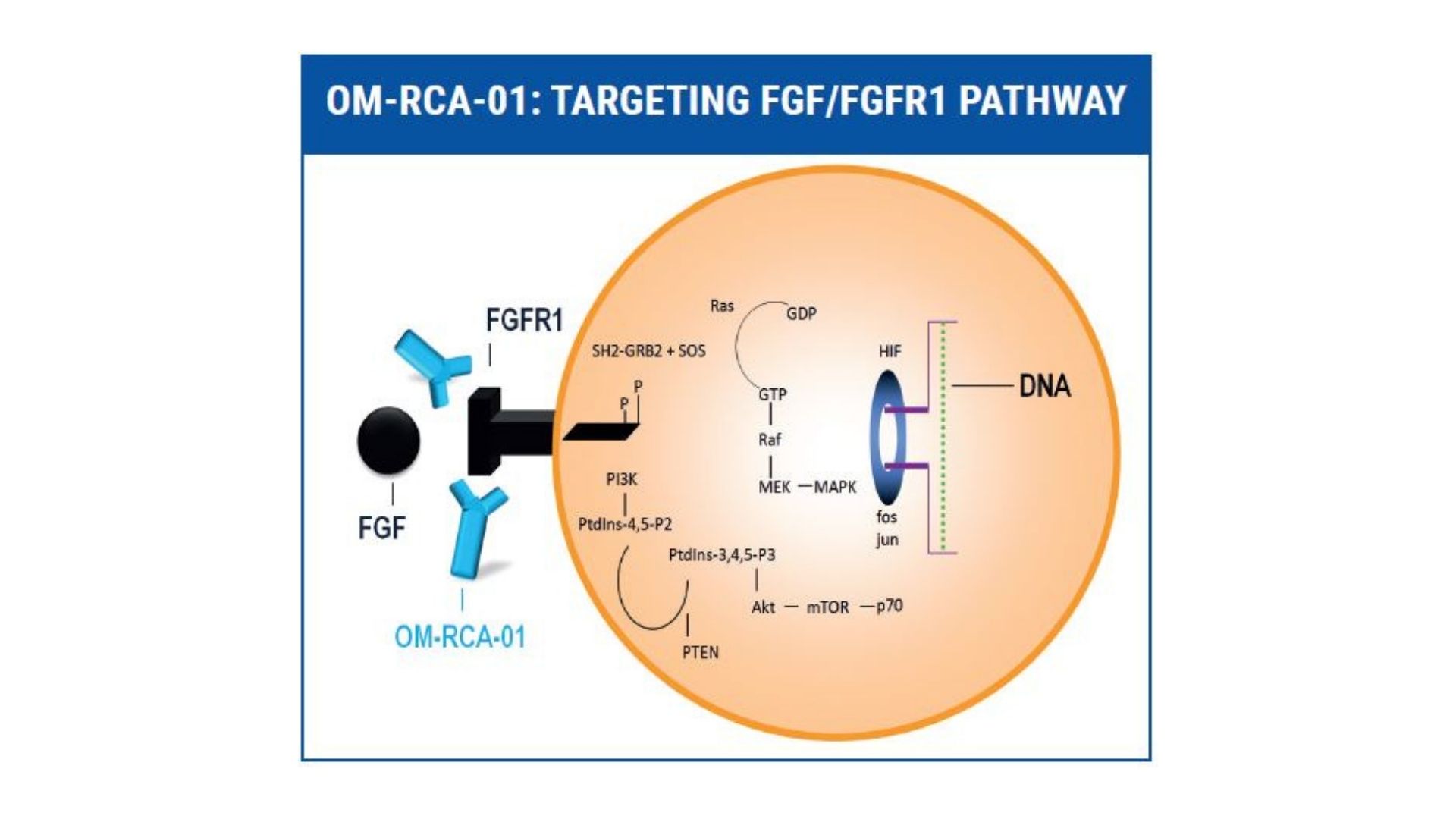
A drug candidate, an anti-FGFR1 humanized antibody, offers fresh approach to battling aggressive lung cancer
Dr. Ilya Tsimafeyeu's team found that an antibody blocking the FGFR1 receptor shrank lung tumours in animal models and strengthened the effect of existing immunotherapy drugs.


Researchers have introduced a new antibody-based treatment, OM-RCA-01, that has shown impressive potential in fighting lung cancer in experimental models. This treatment, developed by a team led by Dr. Ilya Tsimafeyeu from BUCARE in New York with collaborators from the Fox Chase Cancer Center, Altogen Labs, and other institutions, was recently featured in the ESMO journal Immuno-Oncology and Technology. The therapy works effectively on its own and enhances the impact of existing immunotherapy drugs like nivolumab and pembrolizumab. Immunotherapy drugs help the immune system recognize and attack cancer cells more effectively.
Fibroblast growth factor receptor 1, the protein targeted by OM-RCA-01, is known to help cancer cells grow and resist therapies that activate the immune system. This receptor is like a switch that promotes tumor survival and spread, making it a critical target for treatment. Scientists conducted a series of carefully designed experiments to study how this antibody affects cancer cell behavior, immune system function, and the reduction of tumor growth. According to Dr. Tsimafeyeu, “Targeting fibroblast growth factor receptor 1 is both a challenge and an opportunity because of its critical role in helping tumors survive and evade the immune system.”
Results from the study were remarkable. Using OM-RCA-01 alone led to a dramatic reduction in tumor size in lung cancer experimental models. These models involve growing human-like tumors in animals to study treatment effects. When paired with immunotherapy drugs that help activate the immune system, this antibody significantly boosted the levels of proteins that signal immune activity. For example, tumor growth was almost completely halted in just a short amount of time when the two therapies were combined, highlighting its potential to significantly improve current treatment approaches.
Encouragingly, anti-FGFR1 antibody was also found to be safe, even when used at doses higher than what is typically needed. Safety studies showed no harmful effects in animals at therapeutic levels or even above. In one key experiment, combining OM-RCA-01 with pembrolizumab resulted in far greater tumor reduction compared to using pembrolizumab alone. Pembrolizumab is a well-known immunotherapy that blocks a protein called programmed cell death protein 1, which prevents the immune system from attacking cancer cells. Dr. Tsimafeyeu emphasized, “These findings highlight the potential of OM-RCA-01 to change the way we treat cancers by addressing resistance to therapy.”
Further studies demonstrated that OM-RCA-01 not only directly affects cancer cells but also counteracts barriers created by the tumor’s surrounding environment. This environment, called the tumor microenvironment, includes various cells and molecules that shield the tumor from attacks by the immune system. The antibody weakened these barriers, allowing immune cells to perform more effectively. The dual ability to target cancer cells and their surroundings makes OM-RCA-01 a powerful tool for cancer therapy.
Optimism surrounds the potential for this therapy to move into human clinical trials. Clinical trials are research studies involving volunteers to test new treatments. Plans are already underway to test OM-RCA-01 in lung cancer patients who express fibroblast growth factor receptor 1 and have not responded to standard treatments. Researchers believe this antibody could be a major advancement in cancer treatment, offering new hope for patients facing difficult-to-treat and aggressive forms of the disease.
About the researcher

Dr. Ilya Tsimafeyeu
Dr. Ilya Tsimafeyeu is a medical oncologist and researcher specializing in preclinical and clinical drug development. He is the director and founder of the Bureau for Cancer Research - BUCARE, formerly known as the Kidney Cancer Research Bureau.… Over the past decade, BUCARE has led numerous clinical and translational trials, contributing valuable insights into the role of fibroblast growth factor (FGF) and its receptors in the development of various cancers. These early findings have supported the development of new therapies by companies such as Eisai and OncoMax. Dr. Tsimafeyeu pioneered the discovery of a first-in-class allosteric FGFR2 inhibitor (alofanib, currently in Phase 1b trials) and an anti-FGFR1 humanized antibody (OM-RCA-01, in late preclinical stages).Dr. Tsimafeyeu is also a faculty member of the College of the European School of Oncology (ESCO, Italy) and serves on the IESG group of the American Society of Clinical Oncology (ASCO, USA). He has received several prestigious awards, including the IDEA ASCO Award, ASCO Merit Award, AACR-AstraZeneca Award, First Prize at the EMUC conference, and the Gold Ribbon for Late-Breaking Abstract at ENDO, among others.
Journal reference
Tsimafeyeu I., Makhov P., Ovcharenko D., et al., “A novel anti-FGFR1 monoclonal antibody OM-RCA-01 exhibits potent antitumor activity and enhances the efficacy of immune checkpoint inhibitors in lung cancer models.” Immunooncol Technol. 2024 Jul 26;23:100725. DOI: https://doi.org/10.1016/j.iotech.2024.100725