Digestion Makes One Age: The Downside of a Meal
Professor Geert Schmid-Schönbein's team found that in older rats, digestive enzymes leaked from a weakened gut into organs and damaged tissue, and an enzyme blocker reduced this.


Aging has long puzzled scientists, as it involves the gradual decline of how our cells and tissues work. Researchers Professor Geert Schmid-Schönbein and Professor Frank DeLano from the University of California San Diego have introduced a surprising explanation for aging: the body may harm itself through digestion-related enzymes. Their important findings were shared in the journal PLOS ONE.
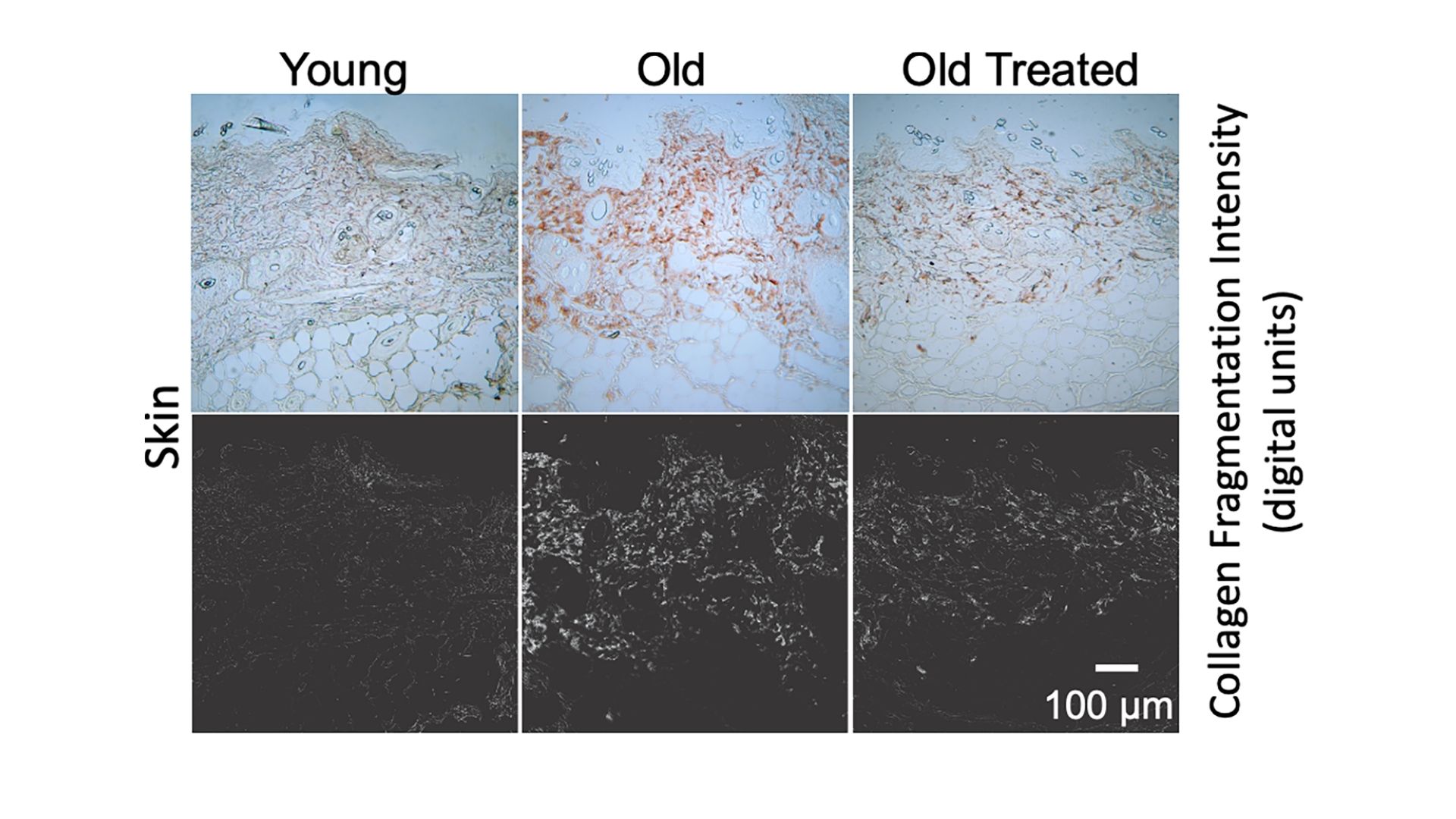
The study shows that enzymes, which usually stay in the digestive system, can leak into other parts of the body as the protective barrier in the intestine weakens with age. This barrier in the small intestine normally stops these powerful enzymes from spreading. The barrier is damaged with each meal and, in time, no longer completely restored. As this protection fades, enzymes like trypsin, elastase, lipase, and amylase start building up in vital organs like the liver, brain, skin, and heart. This buildup is linked to tissue damage, including the breakdown of collagen and damage to insulin receptors, both common signs of aging.
“Our findings suggest that the natural digestion process can unintentionally lead to harm in tissues,” said Professor Schmid-Schönbein. “When these enzymes escape the intestine, they might attack the body’s own tissues, causing chronic inflammation and disrupting essential functions.”
Through tests on young and old rats, the researchers presented strong evidence to support their idea. Older rats showed significant levels of these enzymes in different organs, where they caused noticeable harm. For instance, trypsin was found between cells, causing severe damage to collagen, which gives tissues their structure. The study also found that giving older rats a specific enzyme blocker, tranexamic acid, reduced the enzyme leakage, strengthened the intestinal barrier, and helped protect tissues.
“High blood sugar levels in older rats were linked to the breakdown of insulin receptors on cell surfaces,” Professor DeLano noted. They explained that enzyme activity could interfere with how the body controls sugar levels, highlighting the broader impact of these leaks.
The findings reveal an unexpected twist: the enzymes that are vital for digestion might also contribute to aging by attacking the body itself. The team’s research offers new possibilities for treatments that could slow down aging by targeting these enzymes. “This discovery changes how we think about aging and opens up potential strategies to protect against its effects,” Professor Schmid-Schönbein commented.
Bringing together their results, the researchers suggested that this self-digestion process might explain many age-related health problems, such as diabetes and heart disease. By focusing on reducing enzyme leakage, this study points to new ways to keep tissues healthy and slow down the aging process.
About the researchers

Geert W. Schmid-Schönbein
Geert W. Schmid-Schönbein is Distinguished Professor and former Chair in the Shu Chien-Gene Ley Department of Bioengineering at the University of California San Diego (UCSD). He teaches bioengineering and biomechanics of living tissues, microcirculation, lymphology, biorheology, and cell and molecular biomechanics with application to human diseases.… Schmid-Schönbein was president of the Microcirculatory Society and the Biomedical Engineering Society, serves as a consultant for the National Institute of Health, is a founding member of the American Institute for Medical and Biological Engineering, and was chair of the World Council for Biomechanics. The current research focus of his team is to answer a fundamental question: What are the trigger mechanisms for inflammation that cause diverse tissue injuries and organ dysfunctions? His team discovered a mechanism due to pancreatic digestive enzymes, which they designated “Autodigestion”. It is due to a leak of pancreatic digestive enzymes across the mucin/epithelial barrier out of the gastrointestinal tract into the circulation and peripheral organs. The team provided evidence that cell dysfunctions in Metabolic Syndrome X are due to unchecked activity by pancreatic digestive proteases leaking out of the gastrointestinal tract. The digestive enzymes activate secondary proteases and cause cleavage of the extracellular domain of membrane receptors, for example, in addition to many other cell dysfunctions, insulin resistance due to cleavage of the insulin receptor ectodomain or capillary rarefaction due to cleavage of endothelial growth factor receptors and endothelial apoptosis. Furthermore, the team showed in acute hemorrhagic and septic shock, pancreatic digestive enzymes leak in high concentrations out of the gastrointestinal tract and cause severe cell dysfunction, leading to complete organ failures. The team has shown that enteral blockade of pancreatic digestive enzymes attenuates acute organ dysfunctions in shock and reduces morbidity. Schmid-Schönbein proposes that Autodigestion may be a fundamental mechanism for aging, disease, and death.

Professor Frank DeLano
Professor Frank DeLano: My philosophy has been to understand the basic mechanisms of disease at the microvascular level rather than treatment of the disease. As a Bioengineer I have applied physical sciences and engineering principles to biomedicine to create new knowledge and to use this knowledge for understanding human diseases and improving health care.… I have used my research to translate this knowledge from bench to bedside. To just treat a disease with medication is of importance, but of even more significance is an understanding of the microvascular mechanisms that fail when a tissue or organ is diseased. Dedication and hard work best describe my work habits. Success of my research endeavors came about only because I never gave up on a research project due to its difficulties or failures. My passion for the microcirculation is evident, since I have remained in the Microcirculation Laboratory (University of California, San Diego) for nearly fifty years. I have made seminal contributions to a wide range of areas including hypertension, shock (sepsis, hemorrhagic) and developing technologies for treatments for understanding human diseases and improving health care (breath analysis, novel techniques for identification of proteins in tissues). I have maintained long-standing collaborations with other research laboratories and was the recipient of two prestigious microcirculatory awards. In 1980 I was awarded the Malphigi Gold Medal Award, European Societies for Microcirculation and the Lafon Award, European Societies for Microcirculation in 1994. In 2006 I was made Special Invited Professor at the Institute of Microcirculation in China (Peking Union Medical College, Chinese Academy of Medical Sciences). I am the author of numerous manuscripts and multiple patents have been awarded to me for treatments of shock and Type 2 diabetes and development of technology (breath analysis) for the diagnosis of the onset of shock. My current research is understanding how digestive enzymes escape from the gut in aging and how to minimize the leakage of digestive enzymes and maintain the mucosal layer in the small intestine. Since digestive enzymes are unable to distinguish tissue from food, they break down collagen and destroy many receptors on cell membranes, such as the insulin receptor which leads to Type 2 diabetes. Of special interest in the most recent manuscript was the observation of elevated levels of trypsin in the brain and skin of aged rats and its prevention by administration of a protease inhibitor to the drinking water. The ramifications from this study are numerous. Many illnesses and diseases associated with aging could in part be linked to leaking digestive enzymes over time. Dementia (neuron destruction) and skin wrinkles (collagen degradation) are prime candidates for our basic hypothesis.
Journal reference
DeLano F.A., Schmid-Schönbein G.W. “Aging by autodigestion.” PLOS ONE. 2024; 19(10): e0312149. DOI: https://doi.org/10.1371/journal.pone.0312149