Diet Drinks Match Water for Keeping Weight Off Over Two Years
Professor Joanne Harrold’s two-year trial found that adults in a weight-management programme kept off similar amounts of weight whether they drank diet drinks or water.
Read the original paper
Sugary drinks are a major source of dietary sugar, and too much sugar contributes to weight gain and metabolic disease. Dietary guidelines recommend switching to water or diet drinks, which are sweetened without adding meaningful calories. Yet the World Health Organization advises that such drinks should not be used to help control weight, a view driven mainly by uncertain findings from studies that observe people’s habits rather than by randomised trials, in which participants are assigned to one option by chance. Their role in keeping lost weight off has been debated.
Professor Joanne Harrold, Scott Hill, Cristina Radu, Paul Thomas, Paula Thorp, Professor Charlotte Hardman, Professor Paul Christiansen and Professor Dan Cuthbertson from the University of Liverpool, Professor Jason Halford from the University of Liverpool and the University of Leeds, Dr. Una Masic from the UK Ministry of Defence and Dr. Lauren McGale from Edge Hill University compared diet drinks with water over two years in a randomised trial. The work is published in the peer-reviewed journal, British Journal of Nutrition.
Professor Harrold’s trial recruited healthy adults with overweight or obesity who regularly drank cold drinks. Each was assigned by chance to drink at least two servings a day of either diet drinks, such as diet colas and flavoured waters, or bottled water, with the water group also avoiding sweeteners in hot drinks. Everyone joined a group weight-management programme, meeting a nutritionist weekly for three months and then monthly for the rest of the year. The voluntary second year offered no nutritionist sessions, testing whether people kept the weight off unaided.
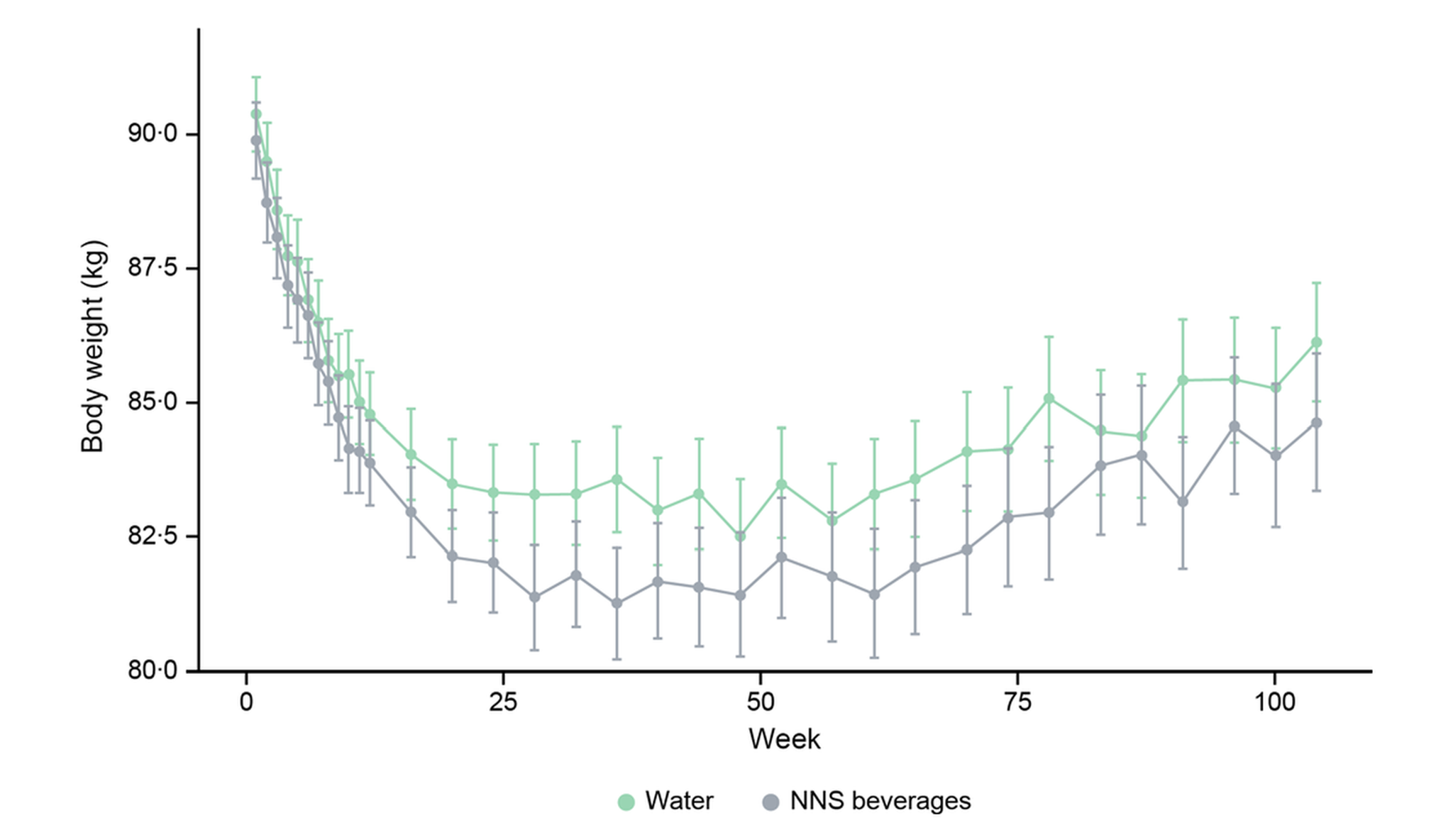
Both groups lost weight fastest in the first months, with loss appearing slightly greater on diet drinks, and both later regained some weight. After two years, both groups remained significantly lighter than at the start, and the difference between them was not significant. Waist and hip size shrank and sugar intake fell in both groups. Whether participants were already used to diet drinks made no difference to their final weight.
“After the final unassisted phase of the behavioural weight-management programme, water and diet drinks showed equivalence regarding weight change from baseline,” explained Professor Harrold. Health checks showed some smaller differences: cholesterol rose slightly with diet drinks, while long-term blood sugar and the lower blood pressure reading improved more with water. Professor Harrold’s team considers these differences not clinically relevant: blood sugar and blood pressure changes stayed below meaningful thresholds and cholesterol remained in the healthy range, although few participants had blood tests.
Concerns about diet drinks stem from the idea that sweetness without calories might upset appetite and lead people to overeat. In Professor Harrold’s trial, diet drinks did no worse than water for weight over two years. “Few randomised controlled trials have been of sufficient duration or size to provide robust data comparing the effects of diet drinks with water on long-term weight maintenance after initial weight loss,” she said.
The trial took place at a single site in England, did not record ethnicity, and fewer than half of those who started stayed to the end, possibly owing to the COVID-19 pandemic, the trial’s length and its voluntary final phase. The results apply to people in a structured weight-management programme and compare diet drinks with water, not sugary drinks. The trial was funded by the American Beverage Association, a drinks industry trade body. According to the funding statement, the association played no part in the trial’s design, conduct, analysis or interpretation, although a representative could review the manuscript; final decisions on content rested with the researchers, and an outside organisation audited the trial data.
Professor Harrold’s study suggests that, for people losing weight with a programme’s support, choosing water or diet drinks need not change the long-term result. “Our findings suggest people can lose weight and maintain it for two years, when drinking either diet drinks or water and taking part in weight-management programmes,” she said.
Journal reference
Harrold J.A., Hill S., Radu C., Thomas P., Thorp P., Hardman C.A., Christiansen P., Masic U., McGale L., Cuthbertson D.J., Halford J.C.G. Effect of non-nutritive sweetened beverages v. water on body weight: long-term results of a randomised controlled trial. British Journal of Nutrition. 2026; 136:482–493. DOI: https://doi.org/10.1017/S0007114526108150
Funding: This trial was funded by the American Beverage Association. The American Beverage Association was not involved in the design, conduct, analysis of data or interpretation of this trial; a representative was given the opportunity to review the manuscript, and final decisions regarding the content were made by the research team. The manuscript was developed with the assistance of a medical writer, funded by the American Beverage Association, under the direction of the research team. Trial registration: ClinicalTrials.gov NCT02591134.