One Gut Bacterium Is Linked to Stronger Muscles in People and Mice
Dr. Borja Martinez-Tellez's team found that people carrying more of one gut bacterium had stronger muscles, and that mice fed the same species gained grip strength without exercising.
Read the original paper
Muscle fades with age. The loss of muscle and strength seen in sarcopenia, the slow wasting of muscle in later life, and in cachexia, the wasting that comes with serious illness, leaves people frail and less mobile. Exercise and good food help, yet no bacterium had been pinned down as a direct cause of stronger muscle. Attention has turned to gut bacteria, which help shape how the body handles energy and inflammation. Scientists speak of a gut-muscle axis, an exchange of signals between microbes and muscle, but which bacteria matter has stayed unclear.
Dr. Borja Martinez-Tellez of the University of Almeria, who also works at the University of Granada and Leiden University Medical Center, led the study with Jonatan Ruiz and Lourdes Ortiz-Alvarez from the University of Granada, Milena Schönke, Artemiy Kovynev, Aswin Verhoeven, Wiep-Klaas Smits, Martin Giera and Patrick Rensen from Leiden University Medical Center, Esther Garcia-Dominguez and Maria del Carmen Gomez-Cabrera from the University of Valencia, Ranko Gacesa, Arnau Vich Vila and Rinse Weersma from the University of Groningen, David Jimenez-Pavon from the University of Cadiz, and Quinten Ducarmon from the European Molecular Biology Laboratory. The work is published in the peer-reviewed journal, Gut.
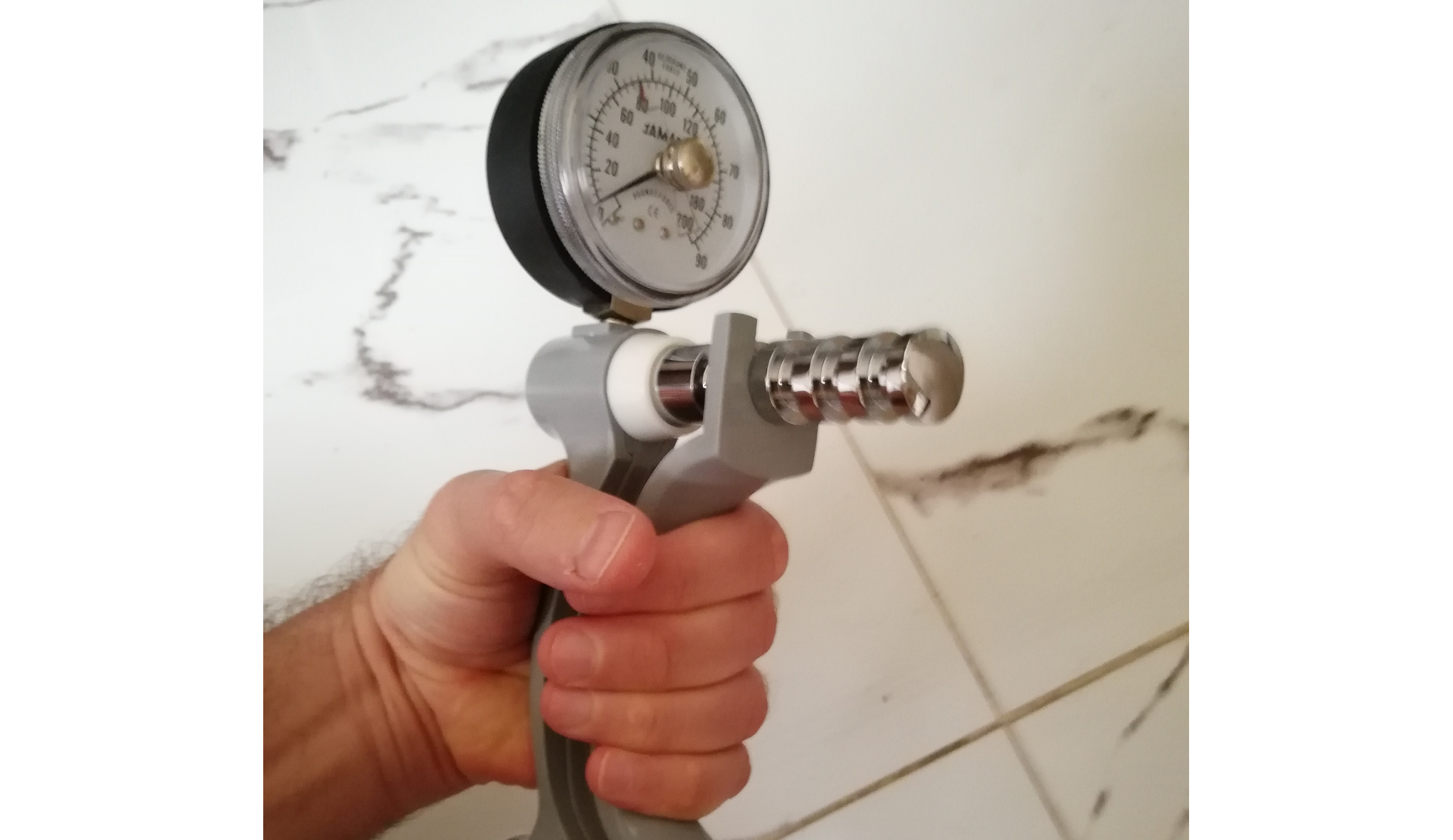
Stool samples came from two groups of inactive volunteers in Spain, one of young adults and one of people in their late sixties, whose strength and fitness had already been tested with a grip gauge, leg and chest presses and a treadmill. The team identified each sample’s bacteria from a short stretch of their genetic code. To test cause rather than company, mice were given antibiotics to strip out their own gut microbes, then fed one of three closely related bacteria of the genus Roseburia, or a liquid containing none. Grip strength, endurance, muscle tissue and the chemistry of gut contents, blood and muscle were followed.
Of all the bacteria present, one species stood out. People carrying more Roseburia inulinivorans had a significantly stronger grip, in both the younger and the older group, and the younger volunteers also pressed more weight with the legs and the chest. Closely related species of the same genus were not linked to grip strength. Because this part of Dr. Martinez-Tellez’s work compared people as they were, it shows an association and cannot prove the bacterium made anyone stronger.
The mouse experiment pointed the same way. Mice fed Roseburia inulinivorans developed a markedly stronger grip than those given other species or none, and their muscle fibres grew larger, shifting towards the fast, powerful type. Endurance and body weight did not change. The bacterium never settled permanently in the mouse gut, suggesting that passing signals carry the effect. “Our findings provide robust evidence supporting a gut-muscle axis in which Roseburia inulinivorans positively modulates muscle metabolism and muscle strength,” said Dr. Martinez-Tellez.
Chemical profiling offered an explanation. Rather than making more of the short-chain fatty acids these microbes are best known for, Roseburia inulinivorans lowered the amounts of several protein building blocks in the gut and blood, and muscle responded by stepping up two linked pathways that supply raw material for growth. In the young volunteers carrying the most of it, the gut bacteria present pointed to the same shift in amino acid handling.
Dr. Martinez-Tellez’s data also suggest that the species tends to be less plentiful in older adults than in young ones, in step with the rise of muscle wasting in later life. “Its abundance appears to decline with advancing age, a period during which the prevalence of sarcopenia increases, suggesting a potential role for Roseburia inulinivorans as a probiotic candidate for preserving muscle strength,” he said. That is a prospect, not advice: no one has yet given the bacterium to people, and several of the researchers, Dr. Martinez-Tellez among them, are named inventors on a patent application. “The next step involves rigorous human intervention studies to determine the therapeutic potential of oral supplementation with Roseburia inulinivorans,” he added.
Journal reference
Martinez-Tellez B., Schönke M., Kovynev A., Garcia-Dominguez E., Ortiz-Alvarez L., Verhoeven A., Gacesa R., Vich Vila A., Ducarmon Q.R., Jimenez-Pavon D., Gomez-Cabrera M.C., Weersma R.K., Smits W.K., Giera M., Ruiz J.R., Rensen P.C.N. Roseburia inulinivorans increases muscle strength. Gut. 2026; 75:2130-2142. DOI: https://doi.org/10.1136/gutjnl-2025-336980
Funding: The study was supported by the Spanish Ministry of Science, Innovation and Universities and the Spanish State Research Agency, the Instituto de Salud Carlos III through the Biomedical Research Networking Centre on Frailty and Healthy Aging, the Fundacion Alfonso Martin Escudero, the Generalitat Valenciana, European Regional Development Funds, the Dutch Research Council, an EMBO postdoctoral fellowship and the Health + Life Science Alliance Heidelberg Mannheim.