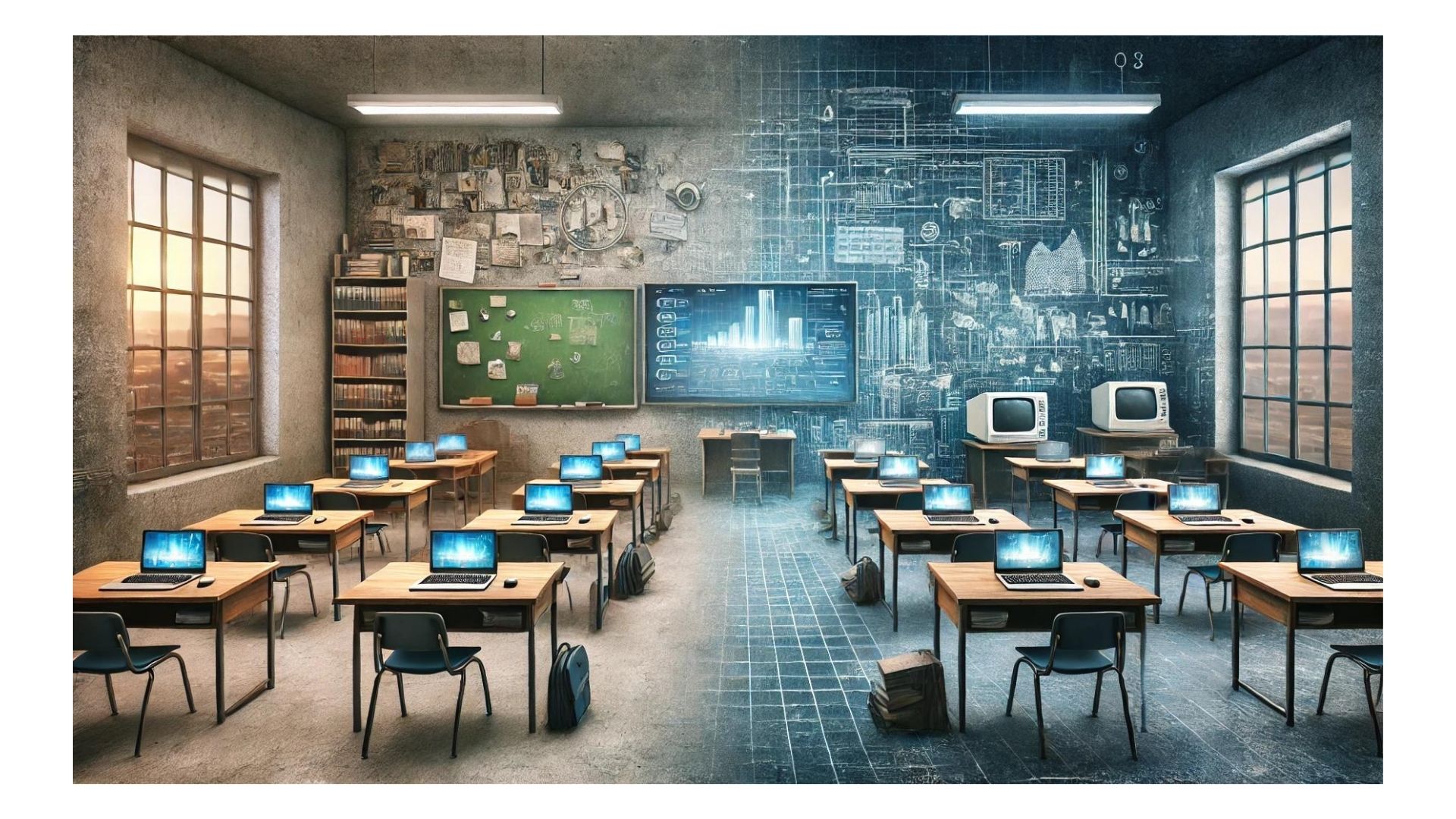
Education’s Digital Divide Exposes Inequality in Technology Access
Dr. Glenn Pierce and Dr. Paul Cleary found that many American schoolchildren lack internet access at school or home, with gaps tied to household income and parents' education.


Access to technology in education is more critical than ever, yet a significant gap persists, leaving many students without the necessary tools for academic success. This disparity, often termed the “educational digital divide,” has far-reaching implications, not only affecting individual students but also contributing to broader societal inequalities. The COVID-19 pandemic has highlighted these issues, making remote learning a necessity and starkly revealing disparities in access to technology. This article explores the persistent educational digital divide in the United States, its impacts, and the urgent need for comprehensive solutions.
A recent study by Dr. Paul Cleary from the University of Massachusetts-Boston and Dr. Glenn Pierce from Northeastern University, published in PLOS ONE, underscores the persistent digital divide in the United States and its profound implications for societal inequality.
The research reveals stark disparities in access to educational technology among school-age children. The team found, surprisingly, that a significant portion, over one fourth (28%) of children, reported not using the internet either at school or at home, while another considerable segment used the internet at home but not at school. This divide is influenced by various demographic factors, such as household income, education level, and geographic location, as well as the availability of computing resources and the Internet at home. “It is clear that if fundamental educational technology and the resources needed to achieve academic success are unavailable in the home, they must be provided in schools,” the authors emphasized, highlighting a critical need for policy intervention.
Dr. Pierce’s and Dr. Cleary’s study also examines the broader societal impacts of this digital divide. They argue that without equitable access to educational technology, the societal benefits of growing digital integration—such as improved educational outcomes and economic opportunities—cannot be fully realized. The research indicates that the lack of access to digital tools hampers not only academic performance but also the long-term economic competitiveness of individuals and communities.
Significantly, the findings also address the challenges posed by the COVID-19 pandemic, which exacerbated existing inequalities. The shift to online learning highlighted the disparities in access to technology, with those lacking resources at a distinct disadvantage. The researchers found that children from households with lower income levels and less educated parents were less likely to have access to computers and the internet, thereby widening the achievement gap.
The study employs a value chain approach to understand the implications of this digital divide. According to this approach, the initial access to computers and the internet is a crucial link in the educational technology value chain, affecting subsequent stages such as educational content delivery and academic achievement. The authors suggest that addressing this initial gap could significantly enhance educational outcomes and reduce inequality.
The autors conclude that substantial policy efforts are needed to bridge this divide. “Committing to increasing educational technology resources in schools will have multiple future societal benefits,” they argue, calling for a coordinated approach involving government, educational institutions, and the private sector. This includes not only providing access to technology but also ensuring that students have the necessary skills and support to use these tools effectively.
In summary, the study by Dr. Pierce and Dr. Cleary provides a comprehensive analysis of the persistent educational digital divide in the United States. It highlights the urgent need for policy interventions to ensure equitable access to technology, thereby enabling all students to achieve their full potential and contributing to a more equitable society. Addressing this divide is not only critical for individual academic success but also for the long-term socio-economic development of communities. By closing this gap, we can foster a more inclusive and competitive workforce, support innovation, and enhance overall societal well-being. The findings underscore that investing in educational technology is an investment in the future, with far-reaching benefits that extend beyond the classroom.
About the researchers

Glenn L. Pierce
Glenn L. Pierce, Ph.D., is a Principal Research Scientist in the School of Criminology and Criminal Justice and previously, and he was Director of the Institute for Security and Public Policy and Principal Research Scientist for the School of Criminology and Criminal Justice at Northeastern University.… At Northeastern, he has also served as Director of Strategic Planning and Research for Information Services, Director of Academic Computing, and Director of the Center for Applied Social Research. Dr. Pierce has conducted research on a broad range of social and economic issues and has obtained funding for his research from a variety of agencies including the National Institute of Justice, the National Institute of Mental Health, the Bureau of Alcohol, Tobacco, Firearms and Explosives, the National Science Foundation, and the Department of Homeland Security. His most recent research has focused on firearms violence, counter-proliferation of dual-use technologies and weapons of mass destruction, criminal justice information and intelligence systems, and intergroup conflict. As Director of Academic Computing, he helped lead the implementation of Northeastern University’s institution-wide computer network, developed centralized computer support services, and delivered software applications and other network services.

Paul F. Cleary
Paul F. Cleary earned his PhD from Northeastern University in Boston. He has over 30 years of research experience in applied economics and economic development, on both the state and federal government levels.… He was previously a senior researcher in the Institute for Security and Public Policy at Northeastern University and a senior research and program analyst at the U.S. Department of Labor. He was the Director of Occupational Analysis for U.S. Department of Labor programs in Boston. His background includes both applied and academic experiences, reflecting an interdisciplinary approach in applied economics, and business systems and operations. He has also co-authored numerous articles on social and economic issues published in these areas. He currently teaches at Boston University and the University of Massachusetts and has over 30 years teaching experience that reflects an interdisciplinary perspective. He regularly teaches mathematics, statistics, decision making, business operations, business analytics and economic policy on both the undergrad and graduate levels. His areas of research interest include systems analysis, business analytics, telecommunications, economic development and the interrelationship between AI and human interaction in decision making.
Journal reference
Pierce, G. L., & Cleary, P. F. (2024). “The persistent educational digital divide and its impact on societal inequality.” PLOS ONE, 19(4), e0286795. DOI: https://doi.org/10.1371/journal.pone.0286795