Why Some Cities Are Keeping Confederate Statues and Others Are Tearing Them Down
John Jameson traces how views of Confederate monuments have shifted and sets out the options communities use, from removal and added context to museum relocation and educational reuse.


The role of Confederate monuments in American society has sparked ongoing debate. Some believe they should be removed, while others argue they should be preserved as historical artifacts. In a recent study, John Jameson from ICOMOS ICIP, an international organization focused on cultural heritage preservation, examines how people’s views on these monuments have changed over time and explores different ways communities are dealing with them. His research, published in the journal Humanities, looks at how these statues influence public memory and what should be done with them.
Jameson explains that these monuments were put up for different reasons—some to honor fallen soldiers, others to celebrate military leaders. However, many statues built during the Jim Crow and Civil Rights eras, periods marked by racial segregation and the struggle for equal rights, were intentionally placed to reinforce racial inequality and intimidate Black communities. “Over the years, these monuments have become deeply connected to shifting social and political beliefs,” said Jameson. His research explores how Americans see these memorials today and the different ideas for preserving or reinterpreting them.
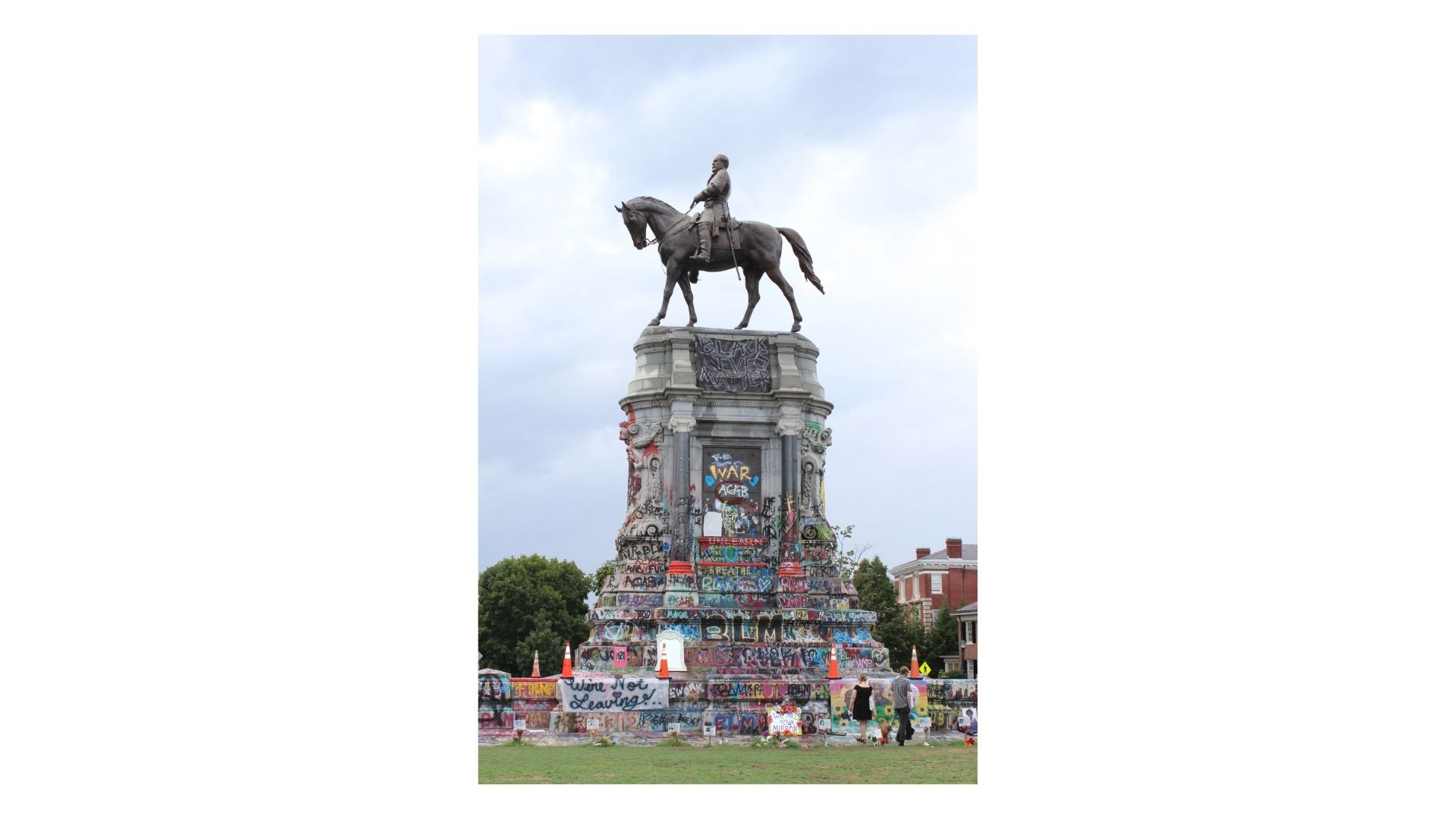
The study finds that while some communities want Confederate statues removed entirely, others suggest alternative solutions. These include changing their meaning by adding context, moving them to museums, or turning them into educational displays. One example is Richmond, Virginia’s Monument Avenue, where statues were removed after nationwide protests following the murder of George Floyd in 2020. Some of these monuments, once seen as representations of Southern pride, became backdrops for protest art highlighting racial justice movements. “Instead of viewing them only as symbols of oppression, we should consider how they can be used to encourage reflection and learning,” Jameson stated.
This issue isn’t unique to the United States. Similar debates have taken place worldwide, such as with colonial-era statues in South Africa and Soviet-era monuments in Eastern Europe. Colonial-era statues often honor historical figures associated with European imperialism, while Soviet-era monuments commemorate leaders and ideologies from the former Soviet Union. In some cases, parts of removed statues—such as their bases—are left in place as reminders of history. Jameson suggests that instead of simply erasing the past, communities should have open discussions about what these monuments mean and how they can be used to educate future generations.
The study also highlights how technology is changing the way history is remembered. Online tools like interactive maps and augmented reality experiences, which overlay digital information onto real-world images, allow people to engage with historical events in new ways. Jameson points out that while many support the complete removal of Confederate statues, others believe keeping some of them can help remind society of past injustices and encourage deeper conversations about history.
Ultimately, Jameson’s research encourages people to rethink how to handle controversial historical artifacts. Are Confederate monuments just symbols of oppression, or can they be repurposed to promote more inclusive discussions about the past? Jameson’s work invites policymakers, historians, and the public to carefully consider how these monuments shape public memory and social change.
Image Reference
Photo courtesy of Richard Veit 2020.
About the researcher

John H. Jameson
John H. Jameson is retired from the U.S. National Park Service, where he was a leader in archaeology and cultural heritage interpretation, receiving the NPS Sequoia Award for career achievements. His work has encompassed a broad range of projects in cultural heritage management, preservation, and interpretation in several regions of the United States and Europe.… He has edited and contributed to several seminal works on cultural heritage public interpretation. He is a founding member, and served in leadership roles, within the ICOMOS Interpretation and Presentation Committee (ICIP) and recently served as a member of a UNESCO WHIPIC Working Group on Drafting Principles of Interpretation and Presentations. A member of several editorial boards and review panels, he is the author/editor of over forty scholarly books and articles. His latest works focus on the promulgation of heritage narratives related to up-to-date and relevant topics such as ‘Art and Archaeology’ and ‘Monuments and Memory’.
Journal reference
Jameson, John H. “Artifacts of Glory and Pain: Evolving Cultural Narratives on Confederate Symbolism and Commemoration in a New Era of Social Justice.” Humanities, 2024. DOI: https://doi.org/10.3390/h13060153