Teaching Robotics in Schools Boosts Kids’ Coding Skills and Career Aspirations
Professor Gisele Ragusa's team found that a robotics and coding program for urban elementary pupils improved their coding and robotics design skills and raised interest in computing careers.


Early exposure to robotics can significantly shape students’ understanding of coding, robotics design, and interest in computing careers, according to a study published in Sensors. Conducted by Professor Gisele Ragusa and Lilian Leung from the Viterbi School of Engineering at the University of Southern California, this extensive research examined children from urban schools aged between seven and ten. The researchers aimed to tackle the lack of STEM education in early childhood by introducing robotics and coding in a meaningful way. Their work highlights the potential of early robotics education in boosting students’ skills and aspirations in technology fields.
The study spanned several years and engaged a large number of children, measuring the impact of a robotics and coding intervention program. “The goal was to help children learn not only robotics design and coding but also to inspire their interest in computer science as a potential career,” said Professor Ragusa. This intervention focused on increasing children’s confidence in technology and providing a foundation for future computing careers. The work is published in Sensors and represents a robust effort to integrate technology into the education of young learners.
The research yielded impressive results. Over the course of the program, participating students showed significant improvement in their understanding of robotics design and coding skills. Moreover, the program fostered a notable increase in students’ aspirations toward careers in computing, specifically in areas like robotics and computer science. These gains are especially significant given that most of the participants came from low-income families with limited access to technology outside of the classroom. According to the study, only about one-third of these households had access to computers, further highlighting the importance of this educational intervention.
One of the most critical aspects of the program’s success was its ability to engage diverse groups of students. Over half of the participants were girls, and the study found no significant gender differences in performance, underscoring the program’s success in creating an inclusive learning environment. “This gender parity was deliberate and mirrors the urban school populations we were working with,” Professor Ragusa noted. The diverse demographic makeup of the program, which included children from Hispanic, African American, and other ethnic backgrounds, was key in promoting technology access to underrepresented groups in STEM fields.
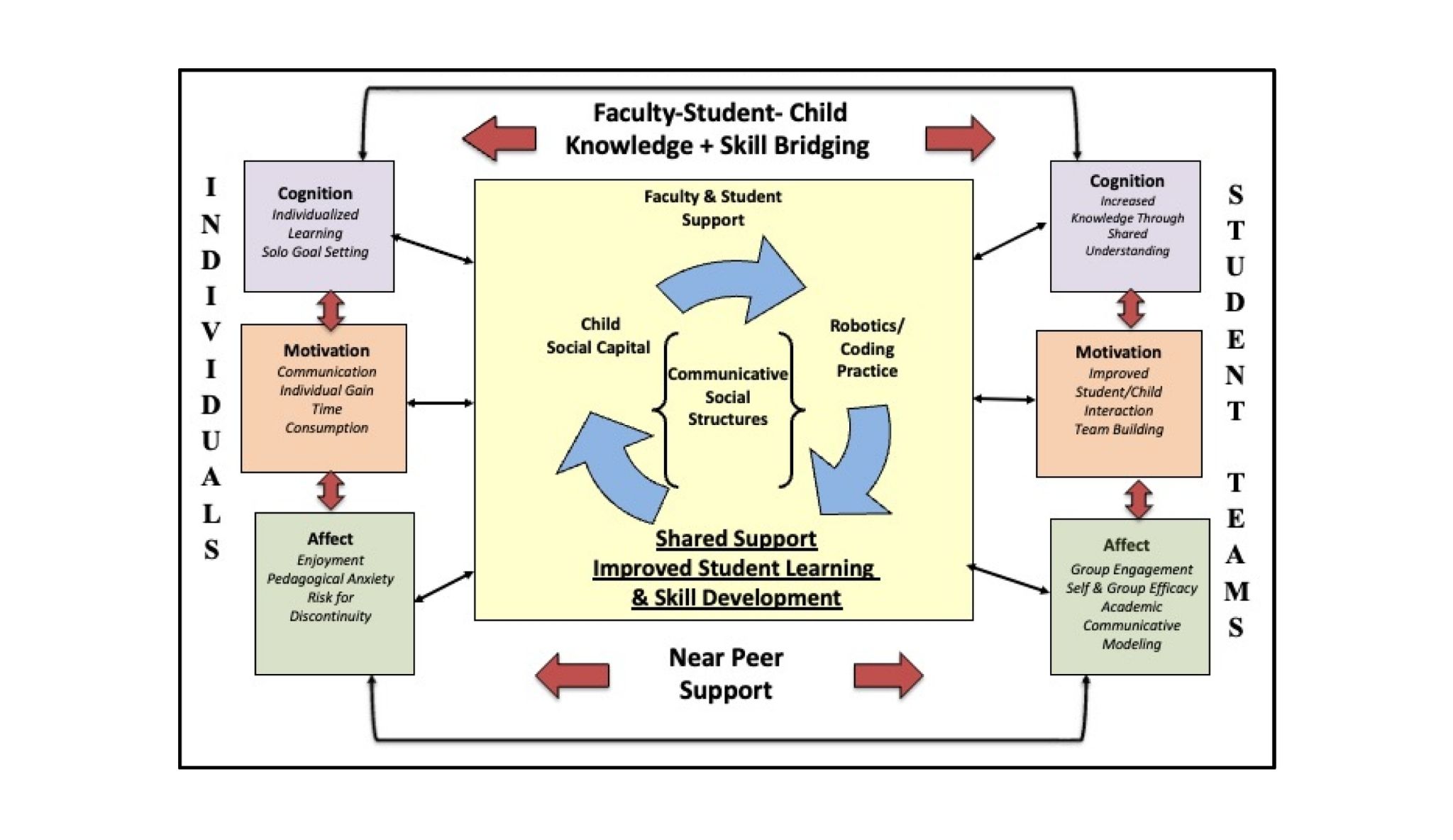
The study also demonstrated that students who participated in the program for more than one year saw continued growth in their skills and aspirations. This positive correlation between the time spent in the program and knowledge gains further supports the notion that early, sustained engagement in STEM education is crucial for long-term interest and success. Importantly, the program’s design, which paired children with near-peer mentors from the university, helped create a supportive learning environment that fostered both skill development and career aspirations.
In summary Professor Ragusa and Leung’s research concluded that the Robotics and Coding Academy has far-reaching implications for how we approach early STEM education. The introduction of robotics and coding in elementary education has the potential to not only improve technical skills but also inspire the next generation of computer scientists and engineers. “Our results show that early engagement with robotics and coding can be a game-changer for children, particularly those from underserved communities,” said Professor Ragusa.
These findings highlight the importance of providing early and equitable access to STEM education, particularly in under-resourced schools. By fostering curiosity and building foundational skills in technology, programs like the Robotics and Coding Academy can help bridge the gap in STEM participation and ensure a more diverse and prepared future workforce.
About the researchers

Dr. Gisele Ragusa
Dr. Gisele Ragusa is a professor at the University of Southern California (USC) in the Viterbi School of Engineering’s Division of Engineering Education. She co-chairs and directs USC’s STEM Education Consortium.… She serves in the School of Engineering’s Division of Engineering Education and is also on the University’s Academic Senate (faculty governance) as chair as the University’s Library Committee. She has led the Viterbi School of Engineering Dean’s Engaged Learning Initiative for three years. Her research interests and areas of expertise include: STEM and in particular engineering education, engineering innovation and global preparedness, college access for first generation college students and students from diverse backgrounds, STEM PK-12 education and teacher education, STEM literacy education, as well as assessment and measurement in STEM. She teaches courses in applied research design, measurement theory, advanced statistical analyses, critical pedagogy in STEM and courses in learning and instructional theory. Dr. Ragusa extensive expertise in multimodal research design, assessment, psychometrics, advanced quantitative analyses, and impact focused pedagogy in STEM. She is active in many professional associations in the engineering and science education, teacher education, distance learning, program evaluation and special education fields. She has been principal investigator on more than 30 federal grants through the US Department of Education, the National Institute of Health, and the National Science Foundation. She has greater than 100 publications of varying types.

Lilian Leung
Lilian Leung is an Assistant Director of CSCI Student Affairs at the University of Southern California (USC) Viterbi School of Engineering. She specializes in program management, professional development, data-driven decision-making, interpersonal communication, and professional leadership.… She focuses on initiating changes and closing the equity gap in the culture of Science, Technology, Engineering, and Mathematics (STEM) education and Community College students. Lilian received a Bachelor of Art (B.A.) degree in Applied Mathematics and a Minor in Science and Math Education from the University of California, Berkeley in 2018. She received a Master of Science in Education (M.S. Ed.) and a graduate certification in Leadership in Technology Integration in 2020 from Johns Hopkins University.
Journal reference
Ragusa, G., & Leung, L. (2023). “The Impact of Early Robotics Education on Students’ Understanding of Coding, Robotics Design, and Interest in Computing Careers.” Sensors, 23, 9335. DOI: https://doi.org/10.3390/s23239335