Common HIV Drug Linked to Lower Levels of an Untreatable Virus
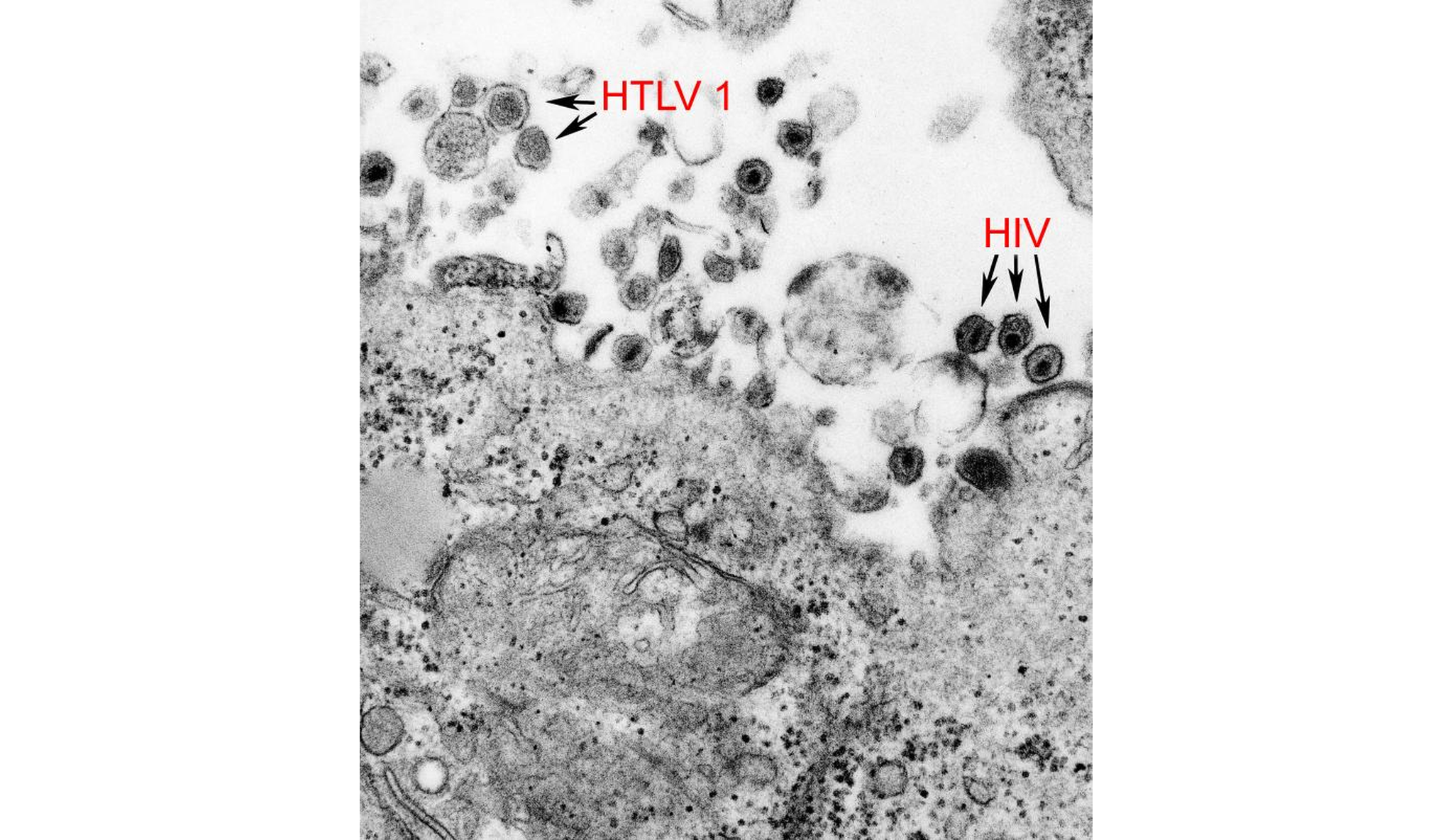
Professor Carlos Brites’ team found that people with both HIV and HTLV-1 who took the HIV drug dolutegravir carried markedly less HTLV-1 in their blood than people infected with HTLV-1 alone.
Read the original paper
Millions of people around the world carry a little-known virus called HTLV-1, one type of human T-cell lymphotropic virus. Like HIV, it infects white blood cells. A small share of them go on to develop serious illnesses, such as a blood cancer or a disabling disease of the spinal cord, yet there is no specific treatment for the infection. Unlike HIV, which copies itself rapidly, this virus persists mainly as infected cells divide and carry its genetic material with them. The amount of viral DNA built into a person’s blood cells, known as the proviral load, is closely tied to the risk of disease, so lowering it is an important goal.
Tatiana Fernandez, María Arriaga, Rafaela Mayoral, Dr. Eduardo Netto and Professor Carlos Brites from the Federal University of Bahia in Brazil tested whether a widely used HIV drug could help. The drug, dolutegravir, blocks integrase, an enzyme HIV uses to insert its genetic material into human cells, and the T-cell virus relies on a similar enzyme. Professor Brites’ team found that people taking dolutegravir carried markedly less of this second virus in their blood. The work is published in the peer-reviewed journal, Communications Medicine.
Professor Brites’ study took place at a major referral hospital in Salvador, in the state of Bahia, where some people living with HIV also carry the T-cell virus. His team compared adults infected with both viruses, most of them on long-term HIV treatment, with a group of the same size infected only with the T-cell virus, who took no such drugs. From blood samples, they measured viral DNA in white blood cells with a sensitive genetic test and counted key immune cells. Because age, time on treatment and immune cell counts could also affect virus levels, Professor Brites’ team used a statistical method that balances these factors.
More than half of the people with both infections were taking dolutegravir as part of their HIV care. Their typical level of the T-cell virus was lower than that seen in people infected with the T-cell virus alone. Participants on other HIV drug combinations showed no such difference. Once age, time on treatment and immune cell counts were taken into account, dolutegravir use remained linked to lower levels on every measure tested, including a much greater chance of having virus levels too low to detect. The link held up when the results were re-checked on many resampled versions of the data.
“Despite decades of research, there is currently no effective antiviral therapy to target this virus, and treatment options for its associated diseases remain limited and largely supportive,” explained Professor Brites. To his team’s knowledge, this is the first study to show a significant drop in the virus’s DNA levels linked to HIV treatment, and one of the largest of its kind so far.
Professor Brites’ findings also challenge a long-held view that the virus survives mainly by riding along as infected cells multiply, with little active copying of its own. If a drug that blocks viral copying lowers its levels, active copying may matter more than believed. “This finding opens the perspective of antiviral treatment and prevention with antiretroviral therapy, as occurs in HIV-1 infection,” he said.
Professor Brites’ team note that the groups on each type of HIV treatment were small, too small to show a clear difference between dolutegravir and other drug combinations, and that other drugs taken alongside dolutegravir may have played a part. Because the study looked at patients at a single point in time, larger studies that follow patients over time are needed to confirm the effect. A later pilot clinical trial led by Professor Brites, published in Clinical Infectious Diseases, has since confirmed this proof-of-concept study: patients with the T-cell virus treated with dolutegravir showed lower proviral load and improved symptoms. Dolutegravir is already the first-choice HIV drug in Brazil and was well tolerated. If confirmed in larger studies, the finding could influence treatment guidelines for people carrying both viruses. “This finding provides a basis for future research aimed at optimizing treatment strategies for coinfected patients,” he added.
About the researcher
Journal reference
Fernandez T., Arriaga M.B., Mayoral R., Netto E.M., Brites C. Dolutegravir use is related to lower HTLV-1 proviral load in people co-infected by HIV-1. Communications Medicine. 2026; 6:54. DOI: https://doi.org/10.1038/s43856-025-01312-9