Pandemic Moves to the Countryside Strained Housing in Rural Northeast Towns
Dr. Omur Damla Kuru’s team found that when city dwellers moved to rural Northeast towns during the pandemic, housing could not keep up, prices climbed and lower-income residents bore the heaviest burden.
Read the original paper
When the COVID-19 pandemic struck, many city residents headed for small towns and the countryside. Little is known about what this shift meant for the American communities that took in the newcomers. Fresh arrivals can bring new energy, but a rapid influx can also strain housing and services in places with limited resources. The question matters beyond the pandemic: as climate change worsens, more people are expected to relocate to escape floods, heat and other hazards, and the northeastern United States is seen as a likely destination.
Dr. Omur Damla Kuru from the University of Utah, together with Professor Elisabeth Infield, Professor Henry Renski, Paromita Shome and Emily Hodos from the University of Massachusetts Amherst, examined who moved where in the Northeast during the pandemic and how receiving communities fared. Dr. Kuru’s team combined population data with the experience of local housing experts. The work is published in a special issue—Strategic Planning for Urban Sustainability (Second Edition)—of the peer-reviewed journal Land.
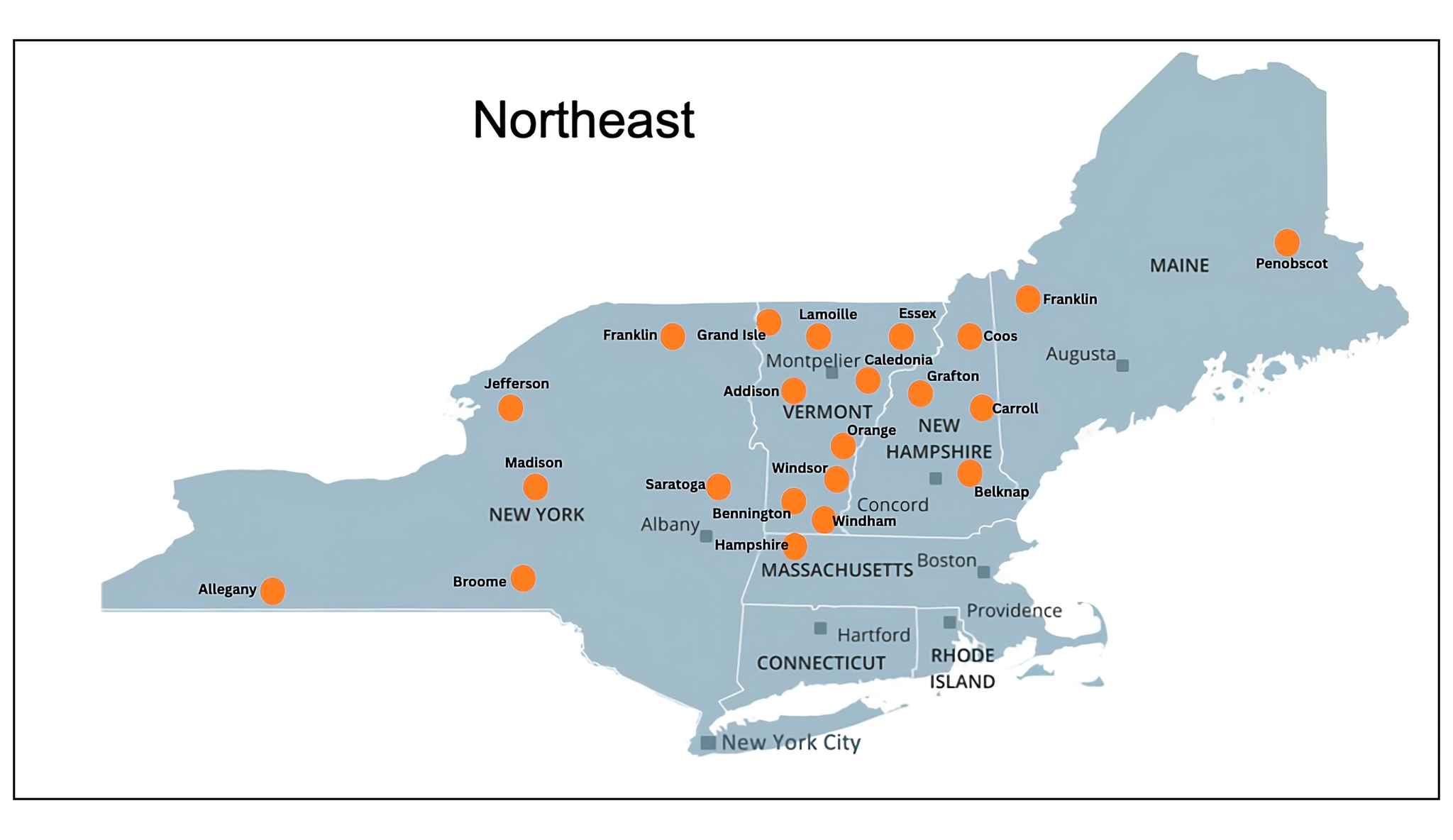
The team used federal tax records, which show when people file from a different county than the year before, to follow moves to the Northeast counties. Dr. Kuru’s team compared the pandemic peak with earlier years and identified rural, inland counties with unusually high inflows. There, they held online group discussions with local housing specialists, mostly real estate brokers, asking who was arriving, why, and with what effects.
The largely rural states of Maine, New Hampshire and Vermont saw a notable influx during the pandemic. Most newcomers to the main destination counties came from elsewhere in the Northeast, largely from a few populous counties around New York City and Boston. Counties rich in seasonal homes saw especially strong inflows, suggesting many people moved into second homes. According to the housing experts, movers sought cheaper housing, good schools, nature and room to work remotely.
Dr. Kuru’s team found that local housing experts saw communities used to little growth caught by surprise. All of the experts reported that housing supply could not keep up with demand, and nearly all pointed to a lack of affordable homes. They described wealthier newcomers, often cash buyers, outbidding locals, and short-term rentals eating into year-round housing. According to the experts, home and rental prices nearly doubled in some areas within a short time. They also pointed to aging infrastructure, patchy internet and crowded schools.
Most of the experts described displacement and gentrification, meaning longtime residents priced out as wealthier people move in. In their accounts, the burden fell hardest on lower-income households, some of whom ended up in affordable but flood-prone areas, and homelessness rose in some towns. “Big cities and metro areas, the traditional hubs of resources, are no longer the only attraction points,” said Dr. Kuru. To her team’s knowledge, this is the first United States study gathering empirical data from communities shaped by pandemic moves, and Dr. Kuru’s research points to challenges that may arise as people flee floods, wildfires and heat.

Drawing on the experts’ recommendations, Dr. Kuru’s team calls for regional planning, which coordinates decisions across towns and counties, to tackle existing problems before growth makes them worse. The experts emphasized that regional planning should first address pre-existing deficits exacerbated by in-migration, notably by revisiting restrictive zoning and land-use regulations and by incentivizing affordable and rental housing through regulatory and financial tools. They further identified retrofitting aging infrastructure, including wastewater, transportation, internet, and stormwater systems, as essential to accommodating growth while enhancing resilience and limiting development in hazard-prone areas. Given the constraints of slow, fragmented, and growth-resistant local governance, participants underscored the need for long-horizon, multi-jurisdictional collaboration between state and local governments, appropriately timed policy action, and sustained community engagement to build public trust.
Dr. Kuru’s case-study findings rest mainly on the views of volunteer housing experts, and pandemic movers tended to be better off, so future migrations may unfold differently. Still, the study shows how quickly a wave of arrivals can test small communities. “COVID-19 was a unique moment, but it also brought a window into possible futures. Planning can use that window to prepare communities for a climate-changed future,” she added.

About the researchers
Journal reference
Kuru OD, Infield E, Renski H, Shome P, Hodos E. Population Mobility in the Wake of COVID-19 in the US Northeast Region: Lessons for Regional Planning. Land. 2026; 15:3. DOI: https://doi.org/10.3390/land15010003
Funding: Sustainable Regional Systems Research Network: Preparing Receiving Regions for a Just and Sustainable Climate Migration – Systems and Scenarios for New England. E.M. Hamin Infield, H. Renski, PIs. NSF Award 016949-00002.