Evening Phone Calls After Cataract Surgery Calm and Reassure Patients
Professor Oliver Findl’s team found that patients phoned shortly after cataract surgery were highly satisfied with the call, and that a call on the evening of the operation may reassure them most.
Read the original paper
Cataract surgery, which replaces the eye’s clouded lens with an artificial one, is among the most common planned operations worldwide. It is quick and relatively safe, and most patients go home the same day. Rarely, however, serious problems such as a severe infection inside the eye can develop shortly afterwards. Patients are therefore advised to have an eye examination within the first week, but doctors still debate whether this visit is needed and when it should happen. Some patients are unsure whether symptoms justify a visit; others miss check-ups because of age or distance. Contacting patients remotely could save time and costs.
Manuel Ruiss, Viktoria Pai, Caroline Pilwachs, Natascha Bayer, Dr. Stefan Palkovits and Professor Oliver Findl from the Vienna Institute for Research in Ocular Surgery at Hanusch Hospital in Austria tested whether a telephone call shortly after cataract surgery could fill this role. Professor Findl’s team examined how satisfied patients were with such calls, what complaints they reported, and whether calling on the evening of the operation or the next morning worked better. The work is published in the peer-reviewed journal, PLOS ONE.
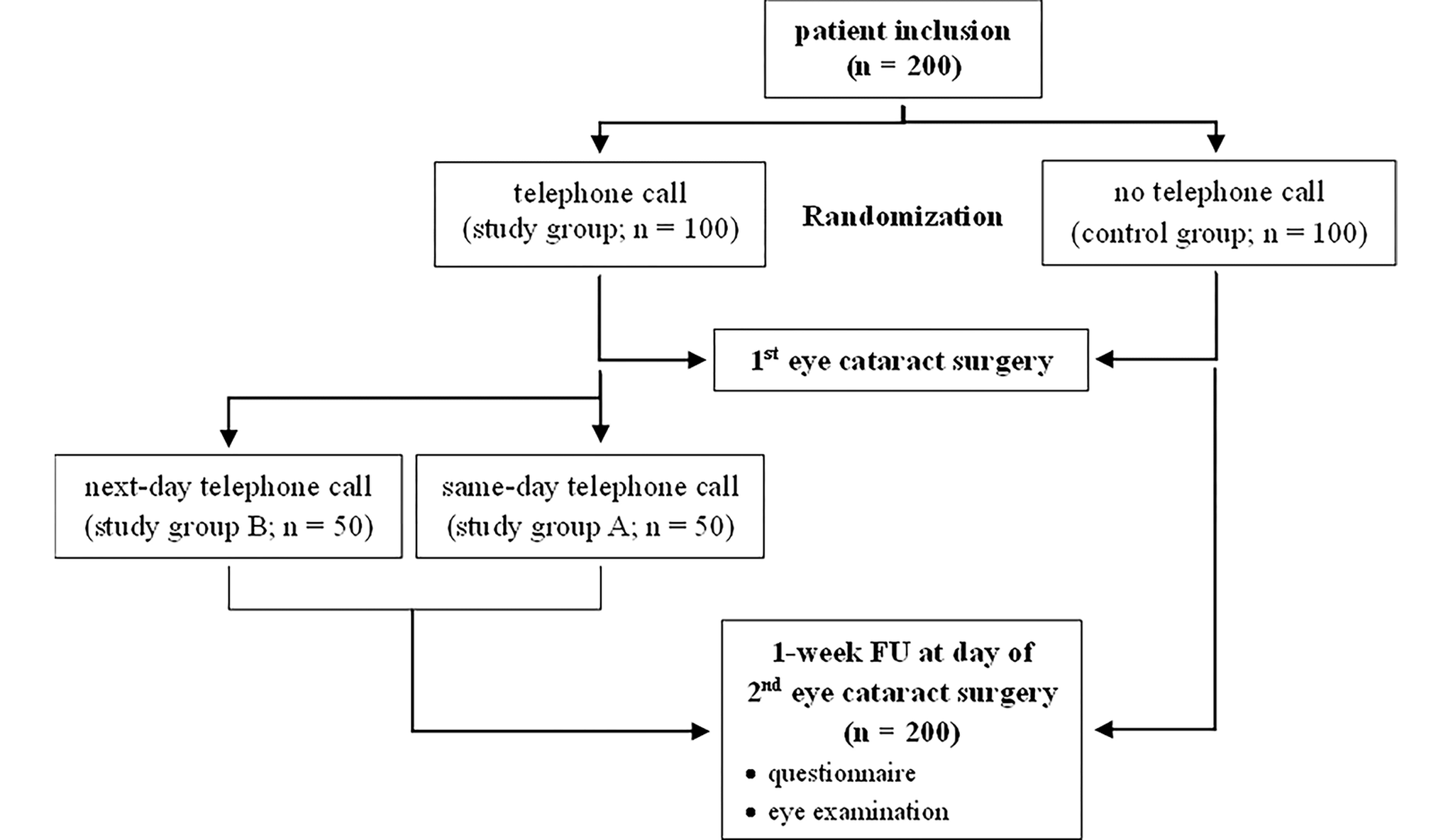
Patients due to have surgery on both eyes were randomly assigned to receive a telephone call or no call. Those called were split again: some heard from the clinic in the late afternoon or evening after surgery, others the following morning. One trained staff member asked each of them about symptoms, check-ups booked with an ophthalmologist, a doctor specialising in eyes, and any extra visits made because of sudden complaints. One week later, every patient completed a questionnaire, and those who had been called also rated the call.
Professor Findl’s study found that the most common early complaints were problems of the eye’s surface, such as itching, burning and watering, and that these became significantly less frequent within a week. “In our study, patient satisfaction with telephone calls shortly after cataract surgery was very high,” explained Professor Findl. Nearly all called patients would like a similar call after any future eye operation, and no one said the call had unsettled them. No serious complications were detected.
Evening calls may be even more calming: more patients called on the evening of their operation said the call had strongly calmed them than those called the next morning. The evening group mentioned slightly more complaints on the phone, a difference that was not significant, but a week later reported significantly fewer than on the call, suggesting irritation and the stress of the day may settle overnight. “A phone call immediately on the day of the surgery could be more useful to calm the patients and to avoid any unnecessary visits to the hospital compared to contacting the patients the day after,” said Professor Findl.
Patients who were called made about as many planned and extra visits to eye doctors as those who were not, which the study takes as a sign that the calls did not frighten or confuse anyone. Extra visits were more likely among patients with complaints or extra treatment. In one case, an anxious patient who noticed flashes of light, which can signal a detached retina, came for an examination only because of the call. The flashes proved to be a minor optical effect. Because serious complications are rare, the study may have been too small to reveal differences in visits.
Professor Findl’s team points to practical advantages: calls ask little of patients or staff, spare patients travel and waiting, and help them decide what to do, while hospitals could save costs. People with hearing loss, language barriers or memory problems may be harder to reach by phone, although no such difficulties arose here. “Telephone reviews after surgery appear to be a good approach to decide which patients should be examined by an ophthalmologist and which patients do not need any further check-up in the early phase after surgery,” concluded Professor Findl.
About the researcher
Journal reference
Ruiss M, Pai V, Pilwachs C, Bayer N, Palkovits S, Findl O. Quality assurance via telephone interviews after cataract surgery: An explorative study. PLOS ONE. 2024; 19:e0298149. DOI: https://doi.org/10.1371/journal.pone.0298149